Hong Kong Music Educator Lydia Wong on Why Her Students Learn Music by Travelling Abroad
The founder of Strings Camerata has taken young players from Hong Kong to Switzerland, Japan, Taiwan, Italy and New York, and is preparing a second masterclass and concert on Lake Como for July 2027.

Strings Camerata
Shaylee Siu came away from her performance at Weill Recital Hall at Carnegie Hall this year saying, "I can easily play with volume in Carnegie Hall, Weill Hall!" For her teacher, Lydia Wong, the remark showed a student discovering something "that is difficult to teach from a book or inside a classroom", and discoveries like that are the reason she takes her students abroad.
Lydia founded Strings Camerata in Hong Kong 21 years ago. It is a music studio and ensemble where young musicians train on their instruments, play together, enter competitions and, more and more often, travel. Shaylee took third prize in the chamber category of the NY Classical Debut Awards. The next trip is to Lake Como in July 2027, for the Strings Camerata Italy Masterclass and Concert.
The Benefits of Music Education Outside the Classroom
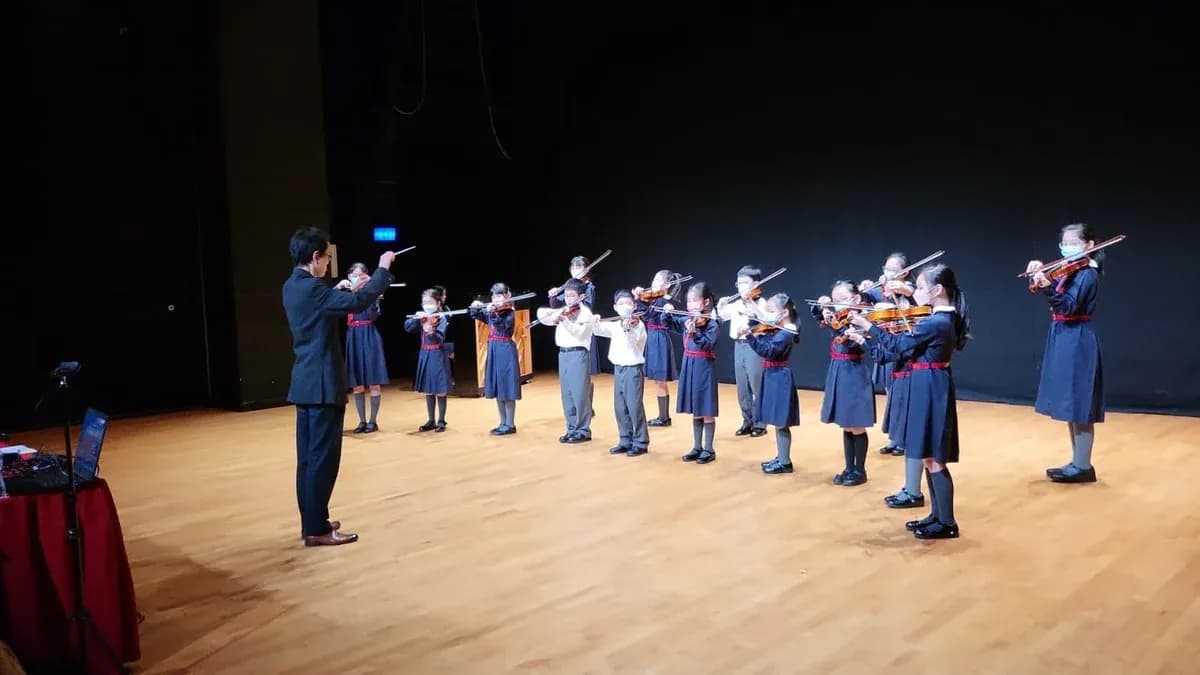
Lydia describes the idea behind the trips as "learning through experience and discovery". In Hong Kong, her students can go to concerts, hear their teachers' stories and learn about musicians who studied at the major conservatories overseas. "All of this is valuable, but it is still indirect," she says. "I wanted students to experience these things themselves."
Abroad, they meet Western culture, historic architecture and different musical traditions directly. They can perform in a historic palace or cathedral, get a sense of the place some of their repertoire came from, and hear how the acoustics of a room change the way they play, which is what Shaylee noticed in New York.
Lydia quotes the saying "He that travels far knows much". She describes her students' progress as a move "from learning an instrument individually to exploring world culture through music". "I believe students gain knowledge not only through lessons but through encounters, with places, cultures, musicians and people whose lives are different from their own," she says.
Strings Camerata's Early Years in Hong Kong
Strings Camerata started as a string ensemble, set up with the support of Lydia's own violin teacher, Boris Cheung Man To, a former student of the American violinist Ruggiero Ricci. From the start the group played widely: classical repertoire, avant-garde pieces, Chinese music, Cantonese pop and even music from cartoons. "Our philosophy has always involved exploration," Lydia says.
After Covid-19, when the music industry had almost stopped, she used video competitions to keep her students practising and working towards a goal. Then one of them, Ayden Au, won a scholarship to an overseas masterclass in Finland. "We almost could not believe the news at first," she says. His family supported the trip, and they went. After the masterclass, Lydia saw greater confidence in his piano playing.
From then on, overseas masterclasses and performances became something the studio pursued seriously. Strings Camerata students have since travelled to Switzerland, Japan, Taiwan, Italy and, this year, New York. "What began as a dream has gradually become part of Strings Camerata's educational identity," Lydia says. The New York trip has also brought her an invitation to sit on the jury of the International Chamber Music Prize of New York, a new international competition.
Lydia plays piano, violin, French horn and harp, and conducts choirs and symphony orchestras. She holds a Master of Education from The Education University of Hong Kong and teaches music education as a part-time assistant lecturer at the Vocational Training Council.
A Harp Masterclass in Lugano with Jasmine Gitti
The link to Italy began in Lugano, Switzerland, in 2023, at a masterclass for Lydia's harp student Artemisia Hou-Yue Lai, who was seven at the time. Her teacher there was the Swiss-Italian harpist Jasmine Gitti.
Lydia was struck by how patient Jasmine was with such a young child. Jasmine used body movement and singing to work on rhythm, one lesson ran for more than three hours, and she even showed Artemisia's mother how to help a young child practise the harp at home. Artemisia went on to win a major competition in Hong Kong, and Lydia could see how far her technique and playing had come.
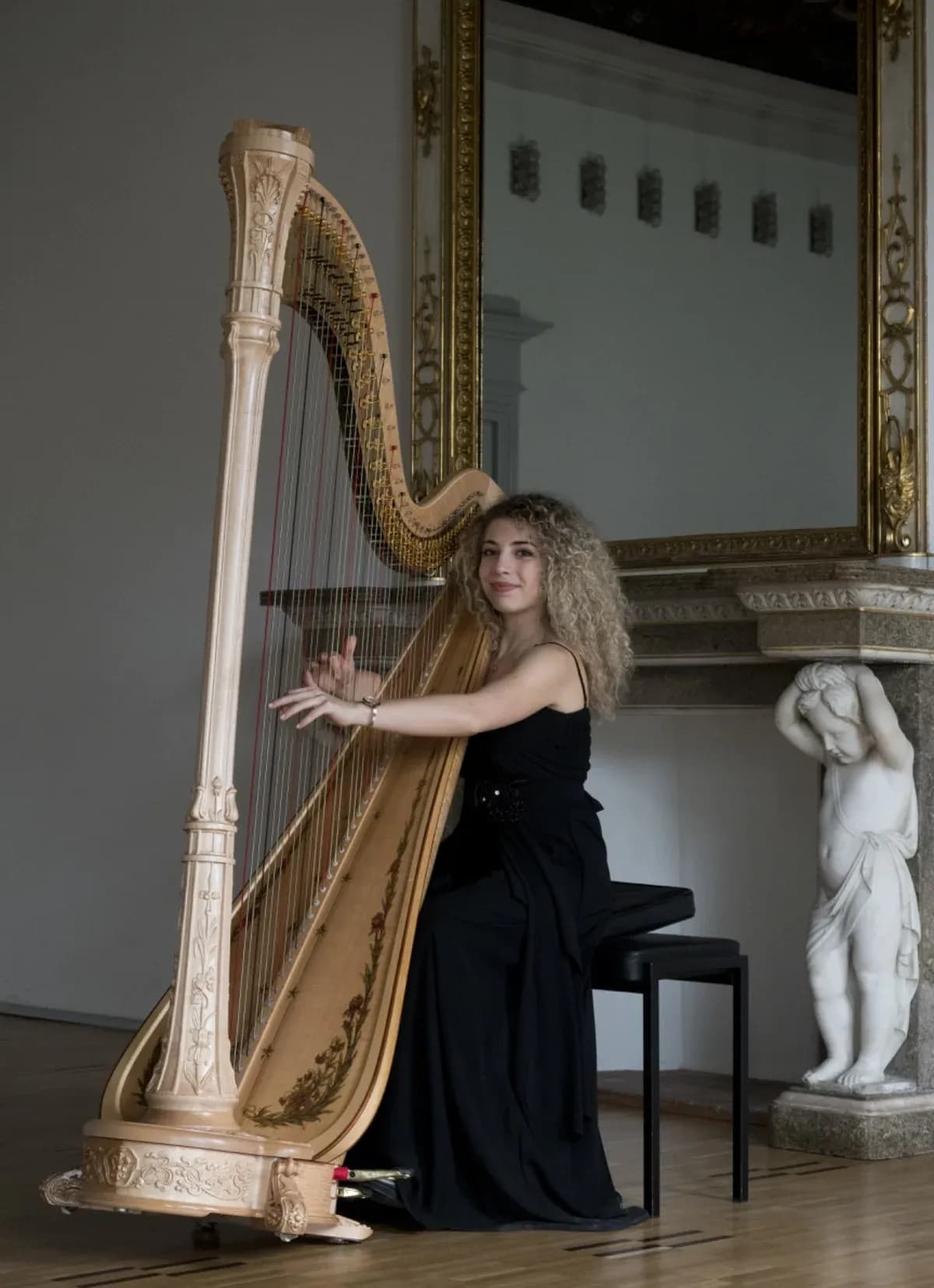
Jasmine trained at the Accademia del Teatro alla Scala in Milan and has played with the Bern Symphony Orchestra. She began the harp as a child herself, and has since prepared students for competitions, performed at major festivals and appeared on Swiss radio. "What impressed me from the beginning was that her teaching goes beyond simply telling a student what notes to play," Lydia says. "She introduces practical ideas about rehearsal, sound and technique while understanding the psychology of young musicians."
Lydia invited Jasmine to Hong Kong to teach a masterclass in 2024. Her work in the city now goes beyond private lessons, with school visits, a seminar for young harpists, performances and plans to start a harp ensemble and build up the harp section of the Strings Camerata competition.
"Ms Wong has demonstrated not only that she is a skilled music teacher, but also a visionary professional," Jasmine says, "deeply committed to and capable of building an international network of musicians who can collaborate with one another with the aim of educating and inspiring younger and future generations."

The 2025 Lake Como Concert at Palazzo Manzi in Dongo
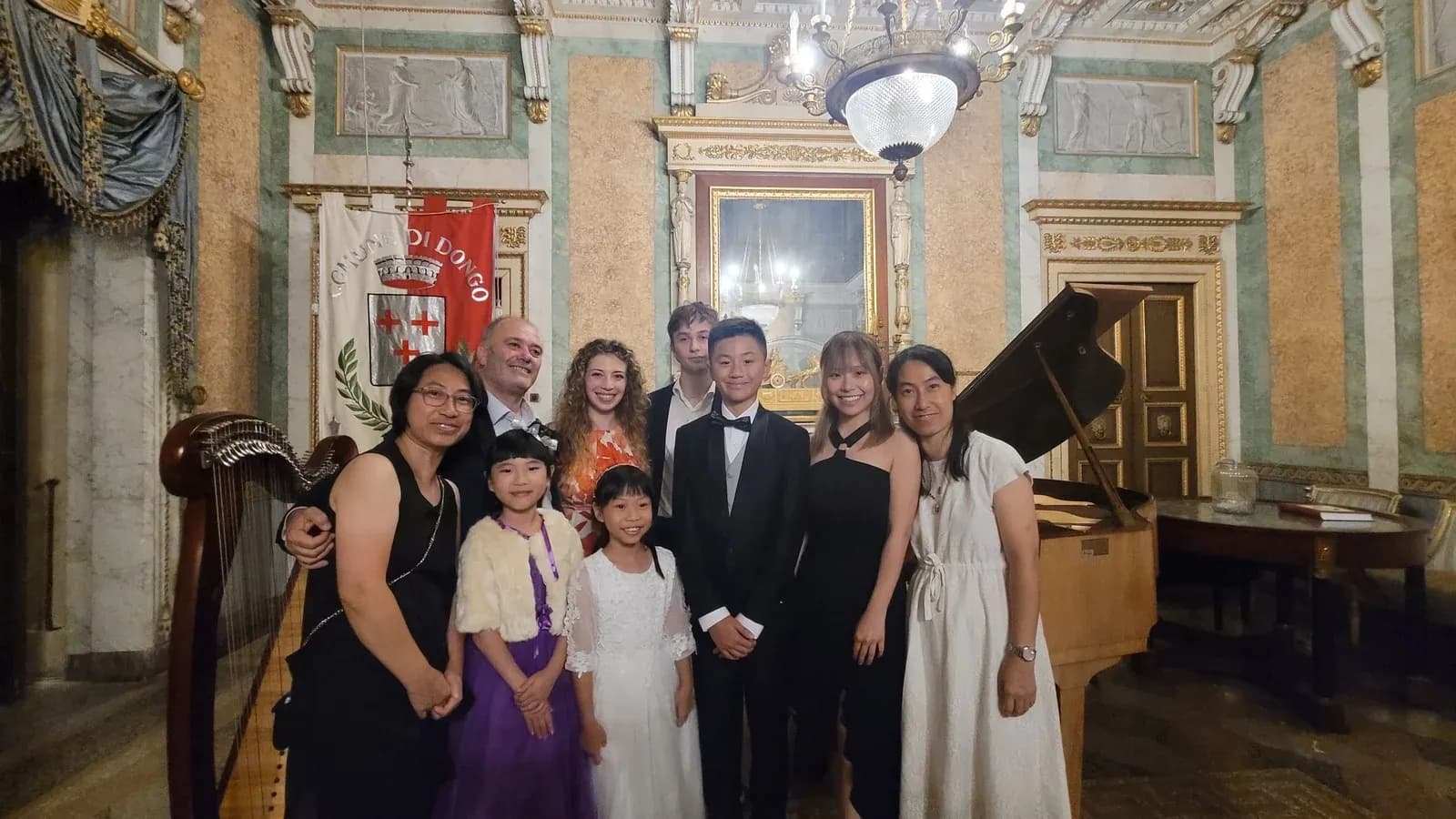
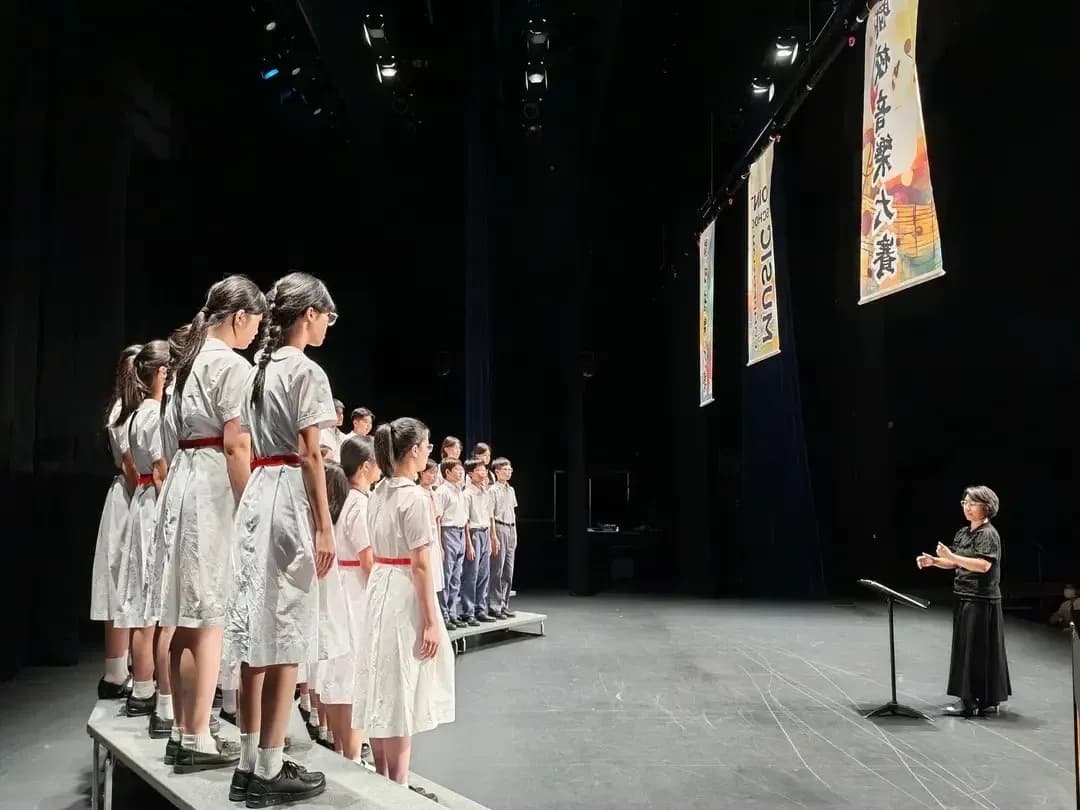
Jasmine helped Strings Camerata connect with the Istituto Civico Musicale di Dongo, the town's music school, and the City of Dongo, and in 2025 Lydia took her students to their first music masterclass and concert on Lake Como. The concert was held at Palazzo Manzi, the neoclassical palace that houses Dongo's town hall. The hall was full, tourists came in to listen, and some people listened from outside because there was no room left inside.
"For our students, parents and tutors, it felt extraordinary," Lydia says. "The students were no longer simply practising for a lesson or performing in their familiar environment in Hong Kong. They were performing for an audience in Italy and becoming part of a different cultural environment."
Strings Camerata Italy Masterclass and Concert 2027
The 2027 edition is planned for July on Lake Como, with Jasmine, Maurizio Moretta, director of the Istituto Civico Musicale di Dongo, and the City of Dongo all involved again. This time it is tied to the Strings Camerata music competition. A place at the Lake Como masterclass and concert is planned as one of the prizes, and selected winners of the violin, piano and harp concerto categories will have the chance to perform with an orchestra.
"I want the project to become more than an occasional overseas performance," Lydia says. Her longer-term plan is lasting partnerships with international institutions and masterclass teachers, so that students work with professional performers, and with each other, year after year.
"What we, as teachers, are committed to offering is not simply the technical tools needed to learn how to play an instrument," Jasmine says, "but also the conditions and guidance necessary for students to develop the ability to express themselves through music."
Lydia looks for humility, openness, passion and patience in the students who take part. "I want students to absorb knowledge like a sponge," she says. "Technical ability is important, but students also need to be willing to listen, learn from others and enter an unfamiliar environment with an open mind." For 2027 she hopes to bring a broader group, including solo instrumentalists, string ensembles, piano duos and harp students, so that friendships and musical exchanges can form between players with different experience.
The Teachers Behind Strings Camerata
"One of the strengths of Strings Camerata is that it is not built around one person," Lydia says. Harpist Cherry Fung brings her harp expertise and is a partner in the competition. Concert pianist Andy Chung sits on the advisory board of the Strings Camerata International Music Competition and teaches students solo and four-hand piano. Woo Chi Wing works across violin, viola, string ensemble and orchestra, and is also on the competition's advisory board. The Italian partners coordinate the Lake Como programme and provide the local connections that make it possible.
The word camerata means a society or group, and Lydia sees her tutors, each with their own responsibilities, as that idea in practice. Seeing them work together that way is also how she would judge the 2027 project a success. "I don't want everything to depend on my decisions," she says. "I see my role more as a transformational leader, someone who helps people work towards a collective vision and grow through the process."
"As a teacher, I am always learning," she adds. Every teacher eventually meets new problems and new questions, she says, and she is always looking for educational ideas that help her solve them for her students.
The Cost of Taking Young Musicians Abroad
Lydia names funding as one of the greatest challenges. Travel, accommodation and moving students and their families to another country are expensive, and because many participants are young, their parents often travel too. She wants to develop funding that brings those costs down, so that students from lower-income families are not left out because of their financial circumstances.
Some retired school principals and professionals have already offered to sponsor cash prizes in the studio's competition. Lydia says support of this kind encourages talented students and helps connect them with international opportunities.
What Students Bring Home from Performing Abroad
Lydia hopes her students remember much more than the concert: how demanding the masterclasses were, the happiness of meeting musicians from another country, the pride they felt after performing, and even the difficulties of the journey. "Those memories build confidence," she says.
She says the confidence, independence and adaptability they gain abroad stay with them whatever profession they eventually choose. "We do not necessarily wish for every student to become a professional artist," she says. "We want them to take these experiences into their lives and develop the confidence to face unfamiliar situations."
FAQ
What is a masterclass in music?
What are the benefits of learning music?
What are the benefits of studying abroad for students?
Enjoying this article?
Subscribe to our newsletter and never miss a story. No spam, ever.
Editor-in-Chief
Editor-in-Chief of Rich Woman Magazine, founder of Sovereign Magazine, author of many books, Dr Marina Nani is a social edification scientist coining a new industry, Social Edification. Passionately advocating to celebrate your human potential, she is well known for her trademark "Be Seen- Be Heard- Be You" running red carpet events and advanced courses like Blog Genius®, Book Genius®, Podcast Genius®, the cornerstones of her teaching. The constant practitioner of good news, she founded MAKE THE NEWS ( MTN) with the aim to diagnose and close the achievement gap globally. Founder of many publications, British Brands with global reach Marina believes that there is a genius ( Stardust) in each individual, regardless of past and present circumstances. "Not recognising your talent leaves society at loss. Sharing the good news makes a significant difference in your perception about yourself, your industry and your community."