Four Sentences to Say to a Small Child Before a Storm
Sesame Workshop has published free guides that give parents the exact words to use at each age, along with a caution about what repeated news footage does to a young child.

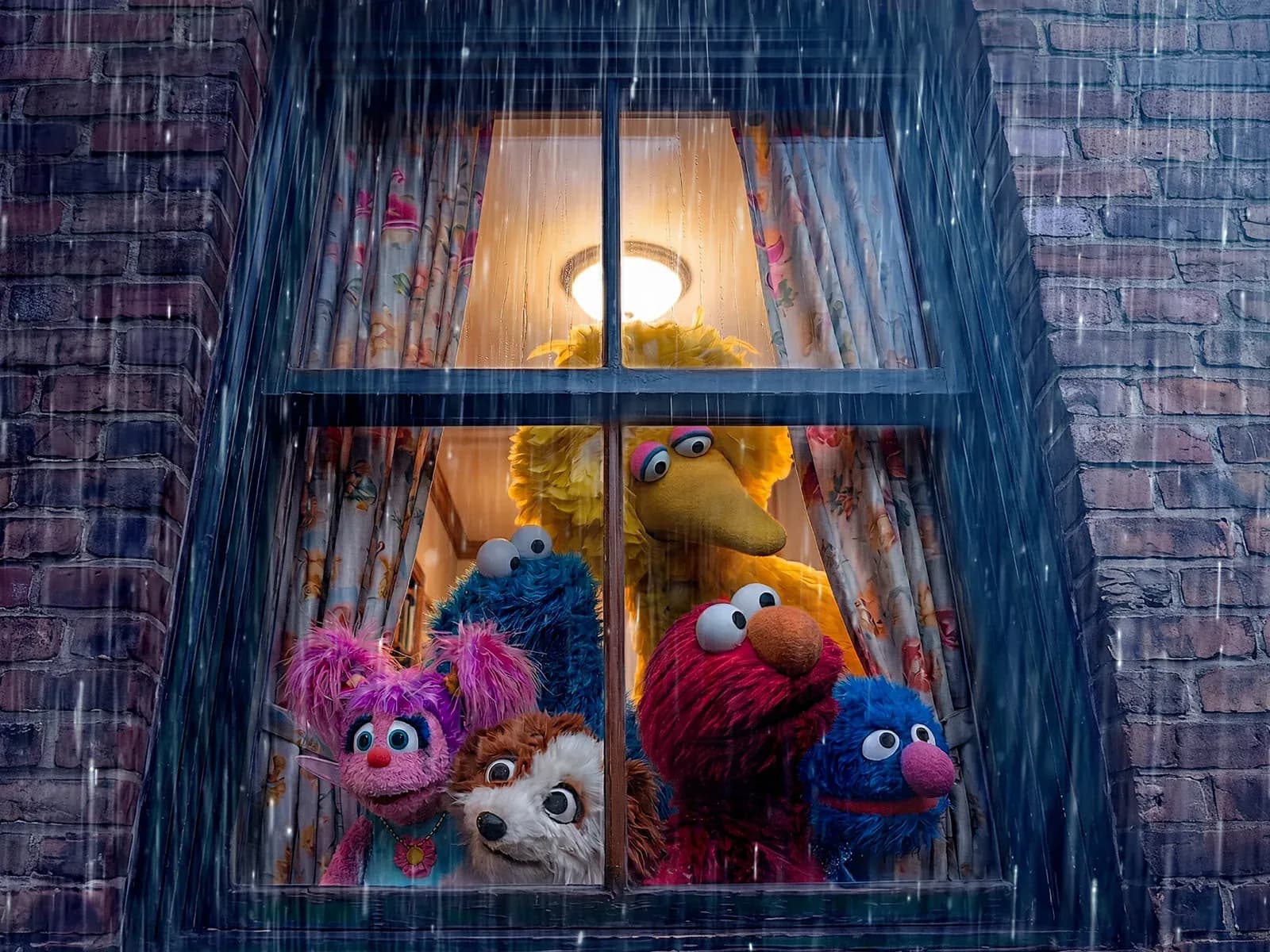
Image: Sesame Workshop
For a child under three, Sesame Workshop suggests saying this, and not much more:
"A storm is coming. There will be a lot of wind and rain. I know how to keep us safe. Lots of helpers will be helping us, too."
Four short sentences, in that order. They come from a family guide the nonprofit has published alongside Storm on Sesame Street, a new special premiering on Netflix and PBS KIDS on 3 August and arriving on YouTube in September, in which Elmo and his friends get ready for a big storm and then help their neighbors rebuild. Post Malone and Michelle Buteau appear as guests.
The special is the visible part of a wider extreme weather initiative, funded by the PSEG Foundation, that Sesame Workshop announced this week. The more useful part for a parent is the library of guides sitting behind it, which is free, printable, offered in English and Spanish, and sorted by age band from toddlers through children of seven and over. It covers hurricanes, floods, wildfires, blizzards, house fires, heat waves, poor air quality, earthquakes and tornadoes.
"Extreme weather is now a reality for many families, and young children need support they can understand and trust," said Joseph Giraldi, chief operating officer of Sesame Workshop.
Repeated Footage Can Make a Storm Look Like It Is Happening Again
The single most practical warning in the guides has nothing to do with the weather itself. Young children who see storm coverage on a screen may believe the storm is happening again, and again, in real time. The guide asks parents to be mindful of what is playing in the room.
For children of three and over, the advice runs the other way: bring them closer to the information rather than further from it. The guide suggests tracking the storm online together to see where it is and how fast it is moving, and notes that some children are genuinely curious about the science of extreme weather. When questions come, it advises answering honestly "without giving more information than they are asking for". When a parent does not know, the guide offers a line to use out loud: "I don't know. Let's find out."
An Emergency Is Something We Did Not Expect
Sesame Workshop's guide to talking about emergencies gives parents a definition small enough for a child to hold: an emergency is "when something happens that we don't expect, and we have to act quickly to keep ourselves safe."
It leans on comparisons a child already knows. Getting ready for an emergency, the guide says, is like getting ready for a car ride by putting on a seat belt, or going out on a bike by putting on a helmet. It also asks parents to point out the people a child can trust, listing teachers, firefighters, emergency responders, doctors and police officers, and to make clear that those helpers will be there even when a parent is not.
The Kit Starts With What Is Already in the House
Sesame Workshop's preparation advice is deliberately unintimidating. Its own framing is that you do not have to do everything at once.
The five steps it sets out are to help children practice saying their own and their family's whole names; to practice addresses and phone numbers; to point out the helpers in the neighborhood, which it suggests turning into a game of I Spy; to write down a family emergency plan and post it where everyone can see it, keeping copies in the car, in children's backpacks, at work, with childcare providers and with an out-of-town contact; and to put together an emergency kit.
The kit guide is written to be done with children rather than for them. Start with what you already own, it says, such as an extra water bottle, or an empty bottle or carton that can store water, alongside canned food and a change of clothes. A backpack is not required; grocery bags or anything easy to carry will do. Anything missing goes on the shopping list at a rate of an item or two a week until the kit is finished. Then decide together where it lives, somewhere everyone can find it quickly.
After the Storm, Saying What Happened Helps
A separate guide covers the days afterward, with child-friendly explanations of what happened, activities for working through big feelings, information about community helpers, and, unusually, a section on self-care for the adults.
Its message to parents is that the reaction they are seeing is ordinary. "It's normal for children (and grown-ups!) to feel shaken or scared after a storm like this, especially if your family is coping with new challenges," it reads. "Even when things look different outside, your love and calm presence help your child feel safe." Children, it adds, feel more secure when they understand what happened and what is coming next.
The same guide carries plain safety instructions for the household: keep away from floodwater, which may be dirty or unsafe, and watch for broken glass, sharp objects and fallen branches; stay clear of downed power lines and damaged buildings; use flashlights or battery-powered lights rather than candles if the power is out; keep any generator outside and away from windows; use bottled water, or water that has been properly treated or boiled, if the supply may have been affected; stay in touch with family, friends and neighbors; and do not go back into a building until emergency workers say it is safe.
This Is Not the First Storm on Sesame Street
Sesame Workshop has done this before, and the earlier attempt outlived its broadcast. Sesame Street Gets Through a Storm first aired on PBS KIDS in 2001, and was shown again after Hurricane Katrina in 2005 and Superstorm Sandy in 2012. In it, Big Bird's nest is destroyed by a hurricane and the neighborhood comes together to rebuild it.
The organization says the need has widened since. Children born in 2020, it says, are projected to experience up to seven times more extreme weather events than those born in 1960, and one in five Americans has had to evacuate home because of such an event. In a national survey it cites, two in three parents reported living through at least one extreme weather event in the past two years, and among those parents, 78% worried about the effect on their children.
Alongside the guides, Sesame Workshop is distributing Sesame Care Kits, go-bags carrying Elmo and Abby and holding comfort items and essentials such as backpacks, blankets and toothbrushes, for families who are evacuating or displaced. With support from Ford Motor Company and Amazon, it plans to hand them out at libraries, community centers, recovery shelters and rebuilding sites, working with PBS stations, Catholic Charities USA, Project:Camp and Team Rubicon.
The free guides are at sesameworkshop.org.
FAQ
How do you explain a hurricane to a young child?
How can I help a child who is anxious about a storm?
When does Storm on Sesame Street air?
Are the Sesame Workshop emergency guides free?
Enjoying this article?
Subscribe to our newsletter and never miss a story. No spam, ever.

Editor-in-Chief
Editor-in-Chief of Rich Woman Magazine, founder of Sovereign Magazine, author of many books, Dr Marina Nani is a social edification scientist coining a new industry, Social Edification. Passionately advocating to celebrate your human potential, she is well known for her trademark "Be Seen- Be Heard- Be You" running red carpet events and advanced courses like Blog Genius®, Book Genius®, Podcast Genius®, the cornerstones of her teaching. The constant practitioner of good news, she founded MAKE THE NEWS ( MTN) with the aim to diagnose and close the achievement gap globally. Founder of many publications, British Brands with global reach Marina believes that there is a genius ( Stardust) in each individual, regardless of past and present circumstances. "Not recognising your talent leaves society at loss. Sharing the good news makes a significant difference in your perception about yourself, your industry and your community."