Only One in Four Teens Is Sure School Is Preparing Them for AI
The same teenagers are far more certain about something else: half say flatly that they learn best when they can use what they are being taught.

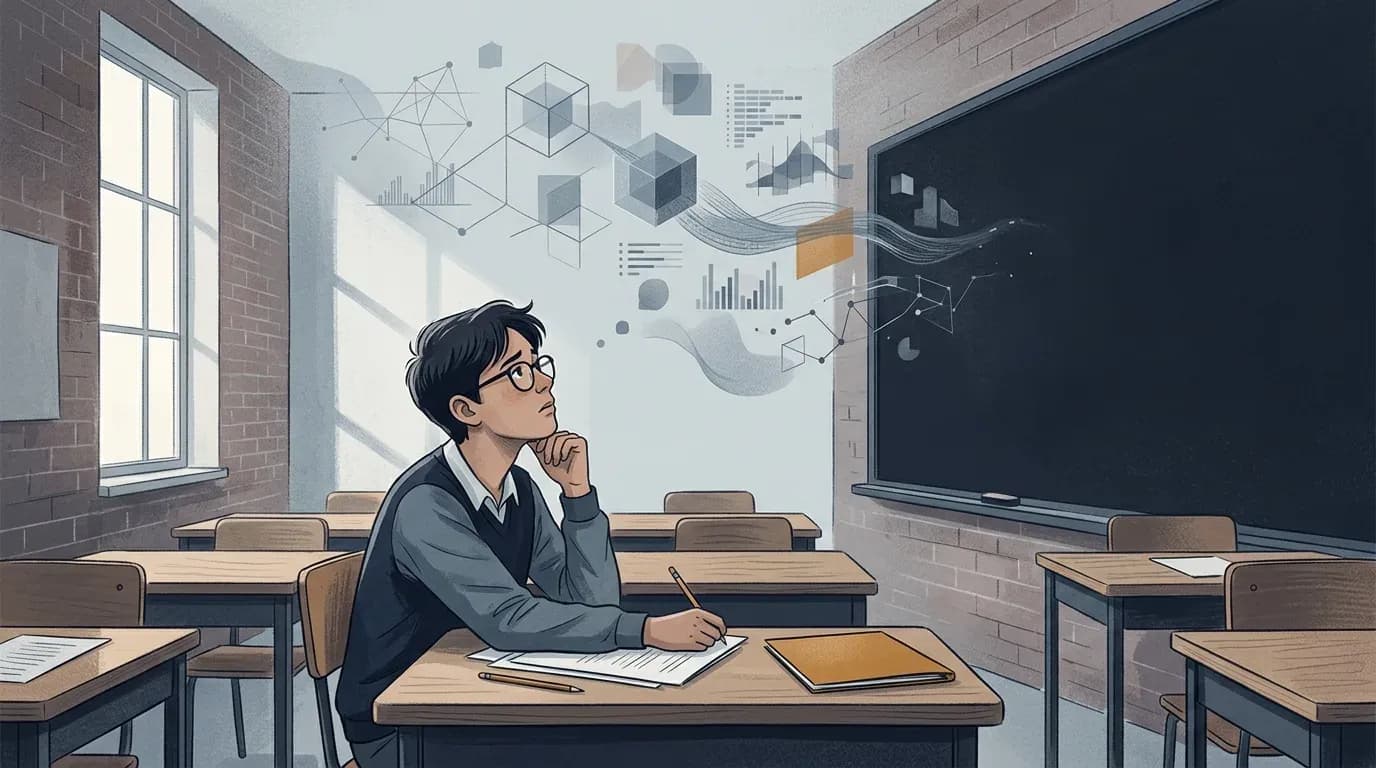
Image: Nani Media House
Six in ten American teenagers say their school is doing a good job of preparing them for a world being changed by artificial intelligence. That number thins on a second look. Only 23 percent strongly agree. The other 38 percent agree just somewhat.
The figures come from a Junior Achievement survey of 1,005 teenagers aged 13 to 17, with data collection by the polling firm Ipsos, conducted on June 29 and 30.
On one question the same teenagers left almost no room for doubt. Asked whether they learn best when they can apply what they are learning to real-world situations, 87 percent agreed, and 50 percent agreed strongly. Two percent somewhat disagreed. Nobody strongly disagreed.
Most Agree, Few Agree Strongly
Alongside the 61 percent who agree their school is readying them for AI, 18 percent neither agree nor disagree, and 19 percent disagree, 13 percent of them somewhat and 6 percent strongly. Roughly a third of teenagers, then, are either unconvinced or unwilling to say.
Teenagers rate their schools a little higher on money than on machines. Sixty-five percent agree their school teaches things that will help them be financially successful, 27 percent of them strongly, and 18 percent disagree.
Half Answered Without Hesitation on How They Learn
The real-world learning question drew the firmest response in the survey. Half of every teenager surveyed strongly agreed with it, more than twice the share who strongly agreed that their school is handling AI well, and 37 percent agreed somewhat.
Junior Achievement runs experiential learning programs, so it has an interest in that answer. It reaches more than 4.8 million students a year across nearly 100 US markets through programs including its Finance Park, BizTown and Dream Accelerator centers, and it is part of JA Worldwide, which serves more than 19.9 million students in over 100 countries.
More Than Half Worry AI Will Cost Them a Job
Fifty-five percent of teenagers agree they are concerned about the impact AI will have on their ability to get a job in the future, 21 percent of them strongly. Twenty percent neither agree nor disagree and 22 percent disagree.
That worry sits alongside a broadly hopeful outlook. Asked to pick the word that best described how they feel about the future, 34 percent chose optimistic and another 34 percent chose hopeful. Fourteen percent said curious. Ten percent said concerned, 5 percent said unprepared and 1 percent said sad.
Jack Harris, chief executive of Junior Achievement USA, says education leaders are looking for partners to help students develop durable skills such as critical thinking and problem solving.
“The potential impact of AI on their futures is top-of-mind for teens.”
— Jack Harris, chief executive of Junior Achievement USA
FAQ
How many teens say their school is preparing them for AI?
How do teens say they learn best?
Are teens worried AI will cost them a job?
Who ran this survey and how many teens took part?
Enjoying this article?
Subscribe to our newsletter and never miss a story. No spam, ever.

Editor-in-Chief
Editor-in-Chief of Rich Woman Magazine, founder of Sovereign Magazine, author of many books, Dr Marina Nani is a social edification scientist coining a new industry, Social Edification. Passionately advocating to celebrate your human potential, she is well known for her trademark "Be Seen- Be Heard- Be You" running red carpet events and advanced courses like Blog Genius®, Book Genius®, Podcast Genius®, the cornerstones of her teaching. The constant practitioner of good news, she founded MAKE THE NEWS ( MTN) with the aim to diagnose and close the achievement gap globally. Founder of many publications, British Brands with global reach Marina believes that there is a genius ( Stardust) in each individual, regardless of past and present circumstances. "Not recognising your talent leaves society at loss. Sharing the good news makes a significant difference in your perception about yourself, your industry and your community."