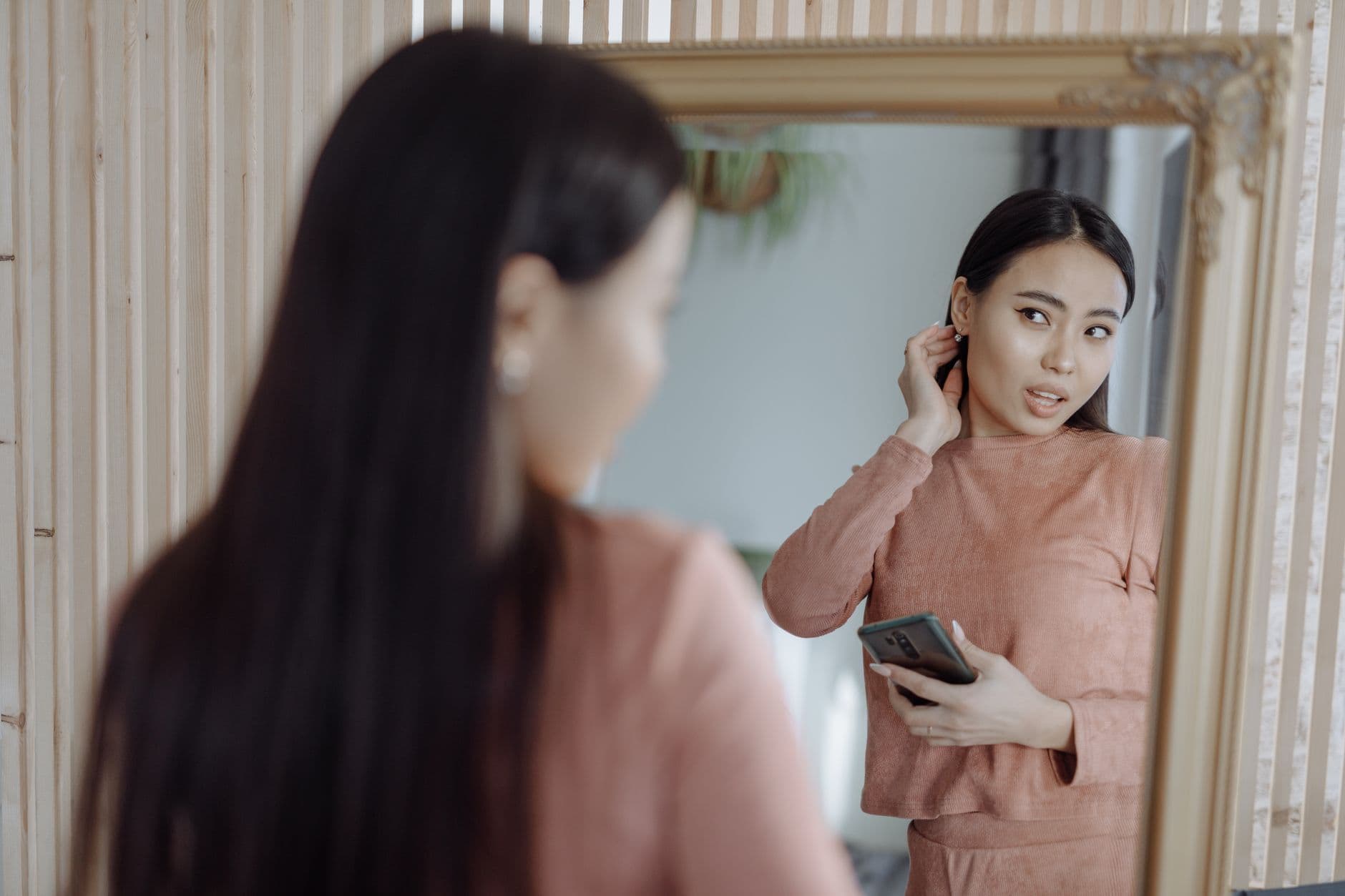
The Estrangement Conversation: What No One Tells You When Your Adult Child Doesn’t Need You In Their Life
You did not fail them. But someone told them you did — and that is a different problem entirely, with a different answer.


I am with my friend, having coffee. It is Tuesday morning, and she checks her son’s Instagram, as he just published a post about last night party. There is a photograph of her grandchildren at a birthday party she was not invited. She looks at it for a long time. Then she puts her phone down and she talked about the time when her son, her only child, was a little boy. Now he is an adult. The estranged son. “Nobody could fully understand how excruciating is when a child goes away. When your child doesn’t remember how you sacrificed everything for them. When your own child doesn’t need you in their life”.
This is what grief looks like when there is no name for it. Your child is alive. You know this because of the photographs. You are not allowed to be as devastated as you are, because nothing has officially happened. There was no funeral, no phone call, no final conversation. There was just a gradual going quiet, and then nothing at all. And somewhere out there, in the cultural conversation that has been happening for the past decade, people are nodding along to the idea that this was probably for the best. This article is not for those people. This is for you.
Somewhere in the last decade of social media, a particular idea entered the mainstream and never left. It went like this: if a relationship causes you pain, it is toxic. If someone in your family causes you pain, they are toxic. The brave and healthy thing — the thing Oprah said, the thing the therapist said, the thing a million podcasts said — was to remove that person from your life, call it self-care, and move on.
None of the people who spread this idea meant harm. Many of them had genuinely painful histories, and they were trying to give language to experiences that they never had themselves. But when that message gets simplified and amplified and handed to millions of people through a screen, it stops being a framework for genuine healing and starts being something much blunter. A permission slip. And millions of adult children used it — some rightly, many just following the crowds — to sever the most important relationship they had.
What nobody said loudly enough, in all those years of conversation on social media, is that most mothers are not toxic. They are human. They made mistakes. They also made lunches and held hands and answered the phone at midnight and worried in ways that never fully vanished. The idea that this can be neatly labelled and set aside because someone on television told you it was healthy to do so is not wisdom. It is a story with too many pages being ripped off in a moment of anger and, sometimes, entire chapters are missing.
The people who got in between
There is something else that the estrangement conversation almost never mentions, and it matters more than most people are comfortable saying. In a significant number of cases, the distance does not begin with a genuine grievance. It begins with a new person becoming the most important person in your life, maybe a partner, or a friend, or even a therapist you pay by hourly rate. Let’s explore the real price you end up paying.
A controlling or insecure partner (someone who needs to be the only important person in their partner’s world) has a silent but powerful interest in weakening every other bond that person has. It does not have to be dramatic. It can be a comment here, a suggestion there, a slow and steady reframing of the mother as difficult, as intrusive, as the reason for every tension in the household. The adult child, who loves this person and is trying to make the relationship work, adjusts. And the mother, watching from a distance, feels the ground shift without understanding why.
Then there is the therapist. Who is, in fairness, trying to help. But who is working from one person’s account of a relationship, validated over months or years, with the other person never in the room. Some frameworks in psychology are particularly vulnerable to this. Apply the language of narcissism and toxicity to a one-sided account of any relationship, and you will almost always find what you are looking for. The mother never gets to speak. The story hardens. And the child, in genuine good faith, believes they are healing. You are not imagining this. It is happening.
The grief that has no name
Psychologists have a term — ambiguous loss — for the grief of losing someone who is still alive. It was originally used for families of missing soldiers, for people whose loved ones have dementia, for anyone living in the particular limbo of a loss that cannot be completed. It applies here, and it is only beginning to be spoken about honestly.
You cannot wear black for this. There are no condolences, no rituals, no social permission to fall apart. The world does not know how to hold your grief because there is no coffin, no clear before and after. There is only the Tuesday morning, and the photograph, and the putting the phone down and getting on with the day. This grief is real. You are allowed to feel it without apologising for it, and without it meaning that you did everything wrong.
And underneath that grief — beneath the waiting and the not-knowing and the photographs on someone else’s phone — is something that does not go away with distance or silence or years. A mother’s love does not end when her child leaves home. It does not reduce itself to fit the circumstances or decide it has been given enough. It simply continues, in full, regardless of what the circumstances say it should do. And with it comes a kind of knowing that is very difficult to explain to anyone who has not felt it. When her child is suffering — whether she spoke to them last week or not in two years — she feels it. Not as a thought. As something closer to an actual fact. She knew regardless the silence set in between. She knows now, on the ordinary days when she is just living her life and something catches in her chest without warning. She cannot always name it. But she has never been wrong about it.
What the path back actually looks like
There is no tidy resolution to offer, and you deserve honesty more than comfort. But there are things that tend to matter in the families where the door eventually opens again. And they do open. More often than the current conversation would have you believe.
The first is making yourself available, without demanding. A birthday message that asks for nothing in return. A photograph sent, a card that arrives, a quiet and consistent signal that says: “I am still here for you, no matter what. I have not disappeared and I have not stopped loving you.” Not silence — silence can be read as confirmation of everything they have been told — but a low, warm, steady love that does not require a response to continue to be true and clear.
The second is holding your own truth. You know who you are. You know what you gave. You do not have to accept a version of yourself that you do not recognise, and you do not have to perform guilt for a crime that was named in a room you were never invited into.
The third is time. The only constant in your lifetime is change. Partners change. Friends change. Therapists change. Adult children have children of their own, and when they do, the view from inside a family looks completely different from the view they had before holding their own child in their arms. Before they could only look in your love from the outside. The mothers who are still here when that shift happens are the ones who stayed — not desperately, not with conditions, but with the patience of someone who knows that mother’s love outlasts everything else.
Respect, in the end, is not a performance and it is not a test. It is the decision, made quietly and held consistently, to see another person as they actually are — not as you need them to be, not as a story someone else told you about them.
The respect between a mother and her child, is the kind that asks nothing back. It is the love that was there before the child could do anything to earn it, and that remains long after any reasonable person would have given up on it. It does not mean accepting mistreatment. It does not mean endless waiting with nothing offered in return.
It means leaving the door open. And trusting that on the other side of whatever happened — the partner, the podcast, the friend or the therapist who had never met you — your child still knows, in some part of themselves they may not be ready to admit, exactly who you are.
That knowledge does not disappear. And neither does the love that carried it into existence. A mother does not stop being a mother when the door closes. She does not stop loving her child across the silence, across the years, across whatever story has been told about her in rooms she was never invited into. She carries that thread even when there is nothing on the other end of it, because she knows — in the way that only mothers know — that somewhere on the other side of everything that happened, or did not happen, her child is still there. And, deep in some part of themselves they may not yet be ready to admit, your child knows it too.
My friend tells me that she envies me, for being so lucky and having my younger son in my life. The truth is that I am grateful beyond words could ever say. When she is about to leave, she tells me that she will try to get on with the rest of her day, but it is really hard to focus on anything, it is as if she is carrying a heavy cross in her arms. “What else is there to do about it?” At this point I feel I need to talk a bit more about our work as a mother- son team and the possibility of writing her own story and publishing it as a memoir. The thought is scary, but who knows, one day, she could discover the healing power of writing, as I did.
Enjoying this article?
Subscribe to our newsletter and never miss a story. No spam, ever.

Editor-in-Chief
Editor-in-Chief of Rich Woman Magazine, founder of Sovereign Magazine, author of many books, Dr Marina Nani is a social edification scientist coining a new industry, Social Edification. Passionately advocating to celebrate your human potential, she is well known for her trademark "Be Seen- Be Heard- Be You" running red carpet events and advanced courses like Blog Genius®, Book Genius®, Podcast Genius®, the cornerstones of her teaching. The constant practitioner of good news, she founded MAKE THE NEWS ( MTN) with the aim to diagnose and close the achievement gap globally. Founder of many publications, British Brands with global reach Marina believes that there is a genius ( Stardust) in each individual, regardless of past and present circumstances. "Not recognising your talent leaves society at loss. Sharing the good news makes a significant difference in your perception about yourself, your industry and your community."
Related Articles

Stress Off-Switches: Simple Laugh Resets You Can Use Anytime to Calm Anxiety and Tension in Seconds

Your Wellbeing Horoscopes: Sky Map for the Week Starting 21 September 2026
John Bissell's The Power of Negative Thinking Draws on 14 Years Rescuing Failing Businesses in Portland