
We the People Won the 2026 Pulitzer for History With the Story of Americans Who Tried to Rewrite the Constitution
Jill Lepore tells the history of the US Constitution through the people who tried to change it, and shows why almost none of them succeeded.

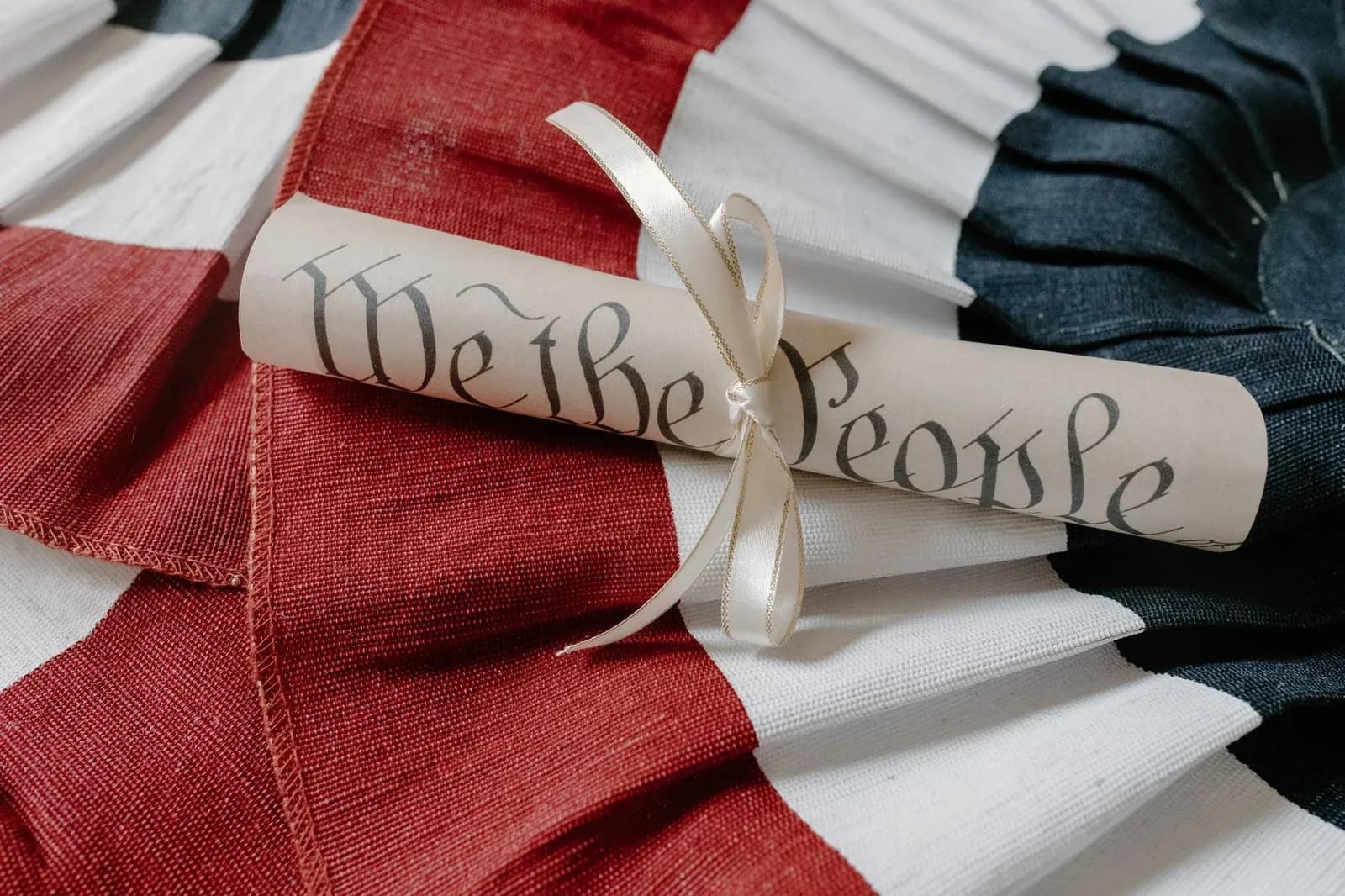
Photo: Tara Winstead / Pexels
You probably picture the US Constitution as a document behind glass in Washington, finished in 1787 and settled ever since. Jill Lepore's We the People: A History of the U.S. Constitution replaces that picture with another one. For more than two centuries, ordinary Americans have tried to change it. Almost every one of them failed.
Featured Book
We the People
A History of the U.S. Constitution
by Jill Lepore
Winner of the 2026 Pulitzer Prize for History. Published for the 250th anniversary of American independence, Jill Lepore's history of the US Constitution explains why it is so hard to amend: only 27 amendments have been ratified, and none of real weight since 1971. Drawing on the Amendments Project, a database she built, Lepore tells the story of the mostly ordinary Americans who tried to change the Constitution, nearly all of whom failed.
WaterstonesWe may earn a commission from purchases made through this link.
The book won the 2026 Pulitzer Prize for History, the prize for a distinguished and appropriately documented book on the history of the United States. Liveright published it for the 250th anniversary of American independence.
Ordinary Americans who tried to change the rules
Lepore tells the story of the Constitution through the people who wanted to amend it, most of them ordinary Americans rather than lawyers or politicians. To find them, she built the Amendments Project, a database of proposed changes to the Constitution gathered from across American history. Each failed proposal records what someone, somewhere, thought the country had got wrong.
The result reads less like a legal history than a long conversation between Americans and their founding document. You meet Americans asking for rights and protections they believed the framers had left out, and you watch their hopes run into the machinery of ratification.
Twenty-seven amendments, and none of real weight since 1971
Only 27 amendments have ever been ratified, and the Constitution has not been meaningfully amended since 1971. Lepore makes the case that this was never the plan. In her telling, the framers expected the document to be revised, and the power to amend it sits at the heart of American constitutional government.
She also warns about what happens when that power stops working. A constitution that cannot be changed through amendment, she contends, raises the risk of political violence and leaves change to presidents and judges instead. Lepore challenges the Supreme Court's near-monopoly on interpreting the Constitution and takes on originalism, the theory that the document should be read as its authors understood it. Supporters of originalism see it as the best way to keep judges bound to the text rather than to their own views, and readers on that side will find much to dispute here.
A history built on a database of failed amendments
Lepore is a professor of American history at Harvard University and a professor at Harvard Law School, and she writes for The New Yorker. That mix shows on the page: the scholarship of a historian and the storytelling of a magazine writer, carrying you from the founding to the present through people rather than clauses.
You do not need any legal background to follow it. If you have ever wondered why the United States finds it so hard to change its own rules, or why so many of its fiercest disputes end up in front of nine judges, the book gives you the history behind those questions in plain language.
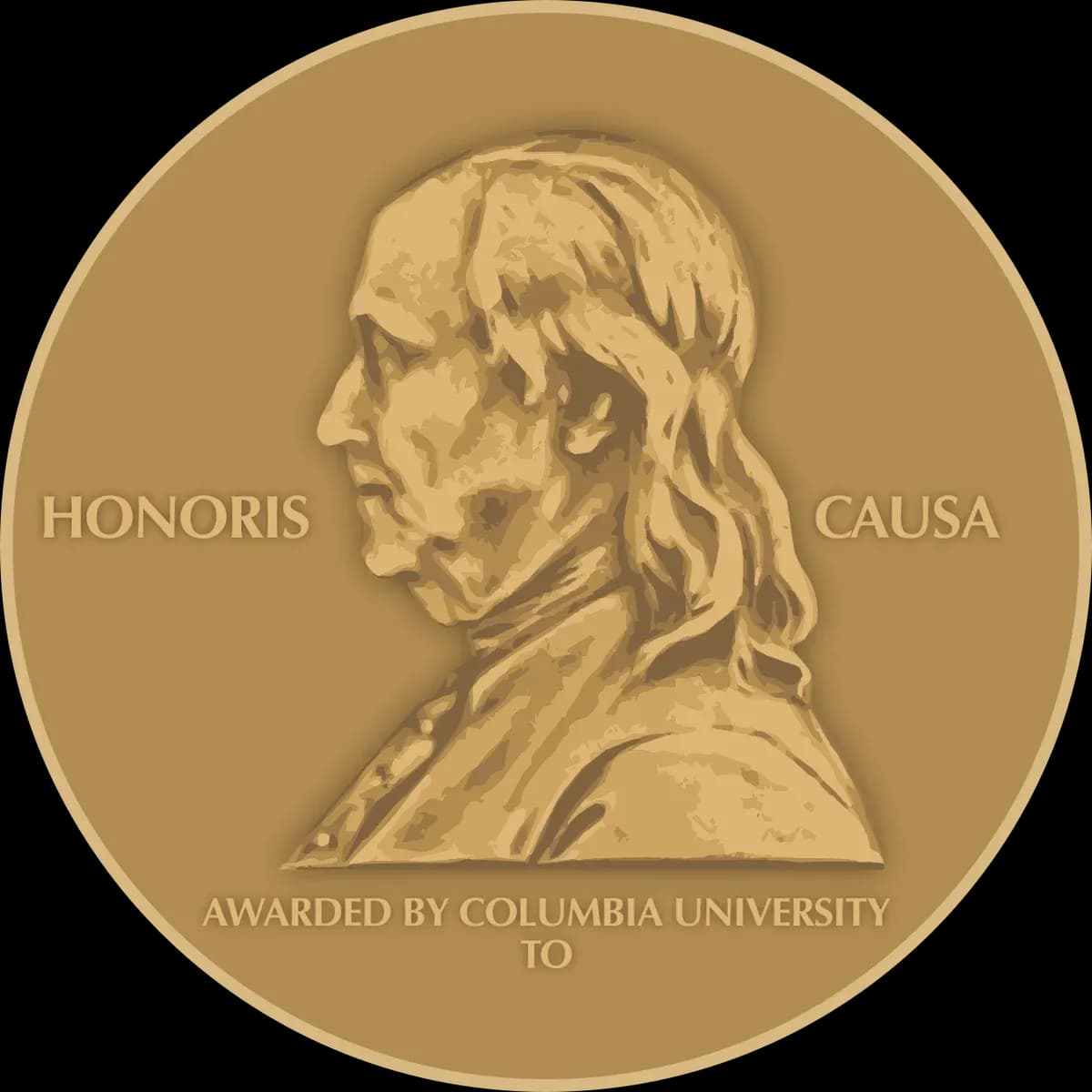
Women have won five of the last six history prizes
The Pulitzer for History is the oldest of the book prizes, first awarded in 1917. For most of its life it was a man's prize: women have written or co-written 17 of the 110 winning books, roughly one in six. No woman won until Margaret Leech in 1942, and after Constance McLaughlin Green won in 1963, no woman took the prize again until Laurel Thatcher Ulrich in 1991.
The picture has changed fast. Since 2021, women have won or shared the prize in five of the six years: Marcia Chatelain in 2021, Nicole Eustace and Ada Ferrer in 2022, Jacqueline Jones in 2024, Kathleen DuVal and Edda L. Fields-Black in 2025 and now Lepore. The jury that chose We the People was chaired by Jacqueline Jones and included Ada Ferrer. The other finalists were Bench Ansfield, with Born in Flames, a history of the landlord-driven arson that destroyed large parts of New York City from 1968 to the early 1980s, and Scott Anderson, with King of Kings, on the fall of the Shah of Iran and the American miscalculations behind it.
Last year's winners widened who counts as the people
The 2025 prize was shared by two books. Kathleen DuVal's Native Nations: A Millennium in North America tells a thousand years of Indigenous history on the continent. Edda L. Fields-Black's Combee recounts the Combahee River Raid of 1863, the rebellion led by Harriet Tubman that freed 756 enslaved people in a single day.
Read them alongside We the People and you see the same instinct at work across three years of winners. Each book asks who was left out of the founding story, and each answers by putting those people back at the centre.
What stays with you after the last chapter
You will never hear the phrase 'we the people' the same way again. Lepore leaves you with the sense that the Constitution is unfinished business, and that the long line of Americans who tried to change it, and failed, belongs in the story as much as the men who signed it in 1787. It is the rare history of a legal document that leaves you thinking about people.
Read it if you want to understand the debates shaping American politics today, you love history told through ordinary lives, or you enjoyed Lepore's journalism and want her at full length.
Buy the book
Also in this piece
- Born in Flames on Waterstones / Barnes & Noble
- King of Kings on Waterstones / Barnes & Noble
- Native Nations on Waterstones / Barnes & Noble
- Combee on Waterstones / Barnes & Noble
Featured Book
Born in Flames
The Business of Arson and the Remaking of the American City
by Bench Ansfield
Finalist for the 2026 Pulitzer Prize for History. A scholarly account of the landlord-instigated arson that destroyed large parts of New York City's apartment buildings and tenements from 1968 to the early 1980s, mainly in working-class and poor neighbourhoods.
WaterstonesWe may earn a commission from purchases made through this link.
Featured Book
King of Kings
The Iranian Revolution
by Scott Anderson
Finalist for the 2026 Pulitzer Prize for History. A dramatic account of the fall of the Shah of Iran, the American miscalculations behind it and the revolution that created an Islamic state.
WaterstonesWe may earn a commission from purchases made through this link.
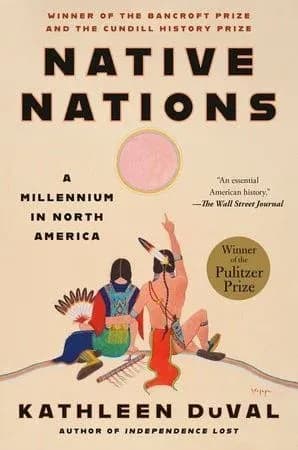
Featured Book
Native Nations
A Millennium in North America
by Kathleen DuVal
Joint winner of the 2025 Pulitzer Prize for History and winner of the Bancroft Prize. Kathleen DuVal tells a thousand years of Indigenous North America, from cities that rivalled any in the world to nations that held the upper hand over European colonists for centuries, and shows how their sovereignty continues today.
WaterstonesWe may earn a commission from purchases made through this link.

Featured Book
Combee
Harriet Tubman, the Combahee River Raid, and Black Freedom During the Civil War
by Edda L. Fields-Black
Joint winner of the 2025 Pulitzer Prize for History. Edda L. Fields-Black tells the story of the June 1863 raid in which Harriet Tubman guided Union gunboats up South Carolina's Combahee River and 756 enslaved people freed themselves in a single day. A descendant of one of the soldiers, she rebuilds the lives of the people who escaped.
WaterstonesWe may earn a commission from purchases made through this link.
Next in the series: Pride and Pleasure by Amanda Vaill, winner of the 2026 Pulitzer Prize for Biography.
Enjoying this article?
Subscribe to our newsletter and never miss a story. No spam, ever.

Editor-in-Chief
Editor-in-Chief of Rich Woman Magazine, founder of Sovereign Magazine, author of many books, Dr Marina Nani is a social edification scientist coining a new industry, Social Edification. Passionately advocating to celebrate your human potential, she is well known for her trademark "Be Seen- Be Heard- Be You" running red carpet events and advanced courses like Blog Genius®, Book Genius®, Podcast Genius®, the cornerstones of her teaching. The constant practitioner of good news, she founded MAKE THE NEWS ( MTN) with the aim to diagnose and close the achievement gap globally. Founder of many publications, British Brands with global reach Marina believes that there is a genius ( Stardust) in each individual, regardless of past and present circumstances. "Not recognising your talent leaves society at loss. Sharing the good news makes a significant difference in your perception about yourself, your industry and your community."
Related Articles

Angel Down Won the 2026 Pulitzer for Fiction With a War Story Told in a Single Sentence

There Is No Place for Us Won the 2026 Pulitzer for Reporting on Homeless Families Who Work Full Time
Joseph Howse's Soviet-Era Novel The Circus and the Atom Wins World Literature and Audiobook Fiction at the 2026 NYC Big Book Award