
Ars Poeticas Won the 2026 Pulitzer for Poetry by Asking What Poems Can Do in Dark Times
Juliana Spahr writes six poems about why poetry still matters in an age of ecological crisis and political anger, and finds her answer in coral, pop songs and comradeship.

Photo: NEOM / Unsplash
You probably think of poetry as a place to escape the news. Juliana Spahr's Ars Poeticas walks straight into it. Written while the oceans warm and populist anger rises, the book asks a question every poet faces sooner or later: what is the point of writing poems when the world is on fire?
Featured Book
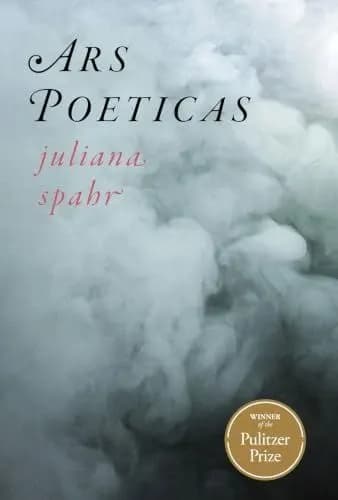
Ars Poeticas
by Juliana Spahr
Winner of the 2026 Pulitzer Prize for Poetry. Lyric meditations on writing poetry in a time of ecological crisis and right-wing populism, written while rereading Brecht's question about whether there will be singing in dark times. Across six ars poeticas, Juliana Spahr writes about the dark times, coral, the liberating possibilities of the pop song and love among comrades, and traces how poetry and politics have shaped each other.
WaterstonesWe may earn a commission from purchases made through this link.
The collection won the 2026 Pulitzer Prize for Poetry. The Pulitzer committee said the book takes stock of Spahr's own disillusionment and uses it to examine her relationship with her art, her community and her politics. Wesleyan University Press published it in 2025 in its poetry series.
Six poems about why anyone writes poems
An ars poetica is a poem about the art of poetry itself. The name comes from the Roman poet Horace, whose treatise on the craft has shaped how writers think about their work for two thousand years. Spahr writes six of them. They take on the dark times, coral, the liberating possibilities of the pop song and the love that grows between comrades.
She wrote the book while rereading the German playwright Bertolt Brecht, who once asked whether there would still be singing in dark times. Spahr's answer is a cautious yes, and the book shows you what that singing might sound like now. It traces the nuclear age from the Castle Bravo bomb test in 1954 to the present, and it follows the long history of poetry and politics shaping each other.
Poetry in an age of ecological crisis and political anger
Spahr has written about the links between ecological and economic catastrophe for years, most notably in her 2015 collection That Winter the Wolf Came. In Ars Poeticas she turns those questions on her own work. 'What does poetry do in these moments?' she asked in an earlier interview. 'What role does it have in this moment of ecological crisis?'
The book does not pretend that poems can stop a hurricane or win an election. What it offers instead is a way of paying attention: to coral in warming seas, to the pop songs that move people and to the comradeship that holds communities together. Spahr has said that politics is constantly shaping literary practices, and the book makes that shaping visible on every page.
A scholar's mind and a poet's ear
Spahr is a poet and literary scholar who teaches English at Northeastern University's Oakland campus. Her scholarship includes a study of how governments have tried to contain literary resistance, and she co-edited an anthology of 21st-century American women poets with Claudia Rankine. That double life shows in Ars Poeticas, which moves between lyric poem and essay, between feeling and history.
You do not need to be an expert in poetry to read it. Much of the book is a meditation on poetry itself, so it rewards readers who come to it curious rather than learned. Read it slowly, and give each of the six poems a sitting of its own.
Women have won a little over one in four poetry prizes
The first Pulitzer for poetry, a special prize in 1918, went to Sara Teasdale. Since the regular award began in 1922, women have written 29 of the 105 winning books, a little over one in four. The longest drought came after Marya Zaturenska won in 1938: no woman took the prize again until Gwendolyn Brooks in 1950, who became the first Black writer to win a Pulitzer in any category.
The balance has shifted in recent years. Women have won four of the last six poetry prizes: Natalie Diaz in 2021, Diane Seuss in 2022, Marie Howe in 2025 and now Spahr. This year's jury was chaired by Tracy K. Smith, who won the prize in 2012. The other finalists were Douglas Kearney, with I Imagine I Been Science Fiction Always, a collection built from collage, comics, music and wordplay, and Patricia Smith, with The Intentions of Thunder: New and Selected Poems, in which she talks back to her own earlier work.
Last year's winner also took stock of a life in poetry
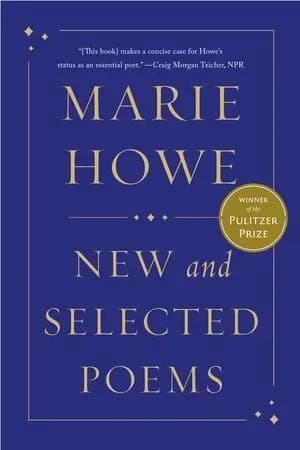
The 2025 prize went to Marie Howe for New and Selected Poems, drawn from decades of work on loneliness, mortality and the holiness of everyday life. Read the two winners back to back and you find two poets asking the same question in different keys. Howe looks back across a lifetime of poems. Spahr looks hard at what poetry is for. Both books treat the art as something you live inside, not something you visit.
What stays with you after the last poem
You finish Ars Poeticas with a stubborn kind of hope. Spahr does not promise that poetry will save the world. She shows you that writing and reading poems is a way of staying awake to it, and of staying close to the people who share it with you. It is a fitting book to close a year of Pulitzer book winners that looked hard at the world as it is.
Read it if you love poetry that engages with the news, you care about climate and community, or you have ever wondered whether art can still matter in difficult times.
Buy the book
Also in this piece
- That Winter the Wolf Came on Waterstones / Barnes & Noble
- I Imagine I Been Science Fiction Always on Waterstones / Barnes & Noble
- The Intentions of Thunder on Waterstones / Barnes & Noble
- New and Selected Poems by Marie Howe on Waterstones / Barnes & Noble

Featured Book
That Winter the Wolf Came
by Juliana Spahr
Juliana Spahr's 2015 poetry collection on the global spread of political struggles at the intersection of ecological and economic catastrophe.
WaterstonesWe may earn a commission from purchases made through this link.

Featured Book
I Imagine I Been Science Fiction Always
by Douglas Kearney
Finalist for the 2026 Pulitzer Prize for Poetry. A collection of poems with vivid, experimental structures built from collage, comics, music, typography, wordplay and fiction.
WaterstonesWe may earn a commission from purchases made through this link.
Featured Book
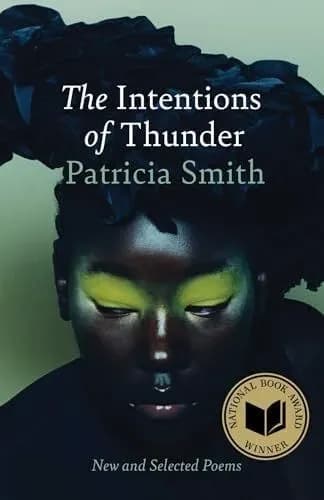
The Intentions of Thunder
New and Selected Poems
by Patricia Smith
Finalist for the 2026 Pulitzer Prize for Poetry. A reimagining of the new and selected collection in which the poet converses with her earlier poems, turning a career retrospective into a dialogue with her past selves.
WaterstonesWe may earn a commission from purchases made through this link.
Featured Book
New and Selected Poems
by Marie Howe
Winner of the 2025 Pulitzer Prize for Poetry. Marie Howe gathers four decades of poems from The Good Thief, What the Living Do, The Kingdom of Ordinary Time and Magdalene, with twenty new poems, finding grief, faith and joy in the ordinary day.
WaterstonesWe may earn a commission from purchases made through this link.
Next in the series: Liberation by Bess Wohl, winner of the 2026 Pulitzer Prize for Drama.
Enjoying this article?
Subscribe to our newsletter and never miss a story. No spam, ever.

Editor-in-Chief
Editor-in-Chief of Rich Woman Magazine, founder of Sovereign Magazine, author of many books, Dr Marina Nani is a social edification scientist coining a new industry, Social Edification. Passionately advocating to celebrate your human potential, she is well known for her trademark "Be Seen- Be Heard- Be You" running red carpet events and advanced courses like Blog Genius®, Book Genius®, Podcast Genius®, the cornerstones of her teaching. The constant practitioner of good news, she founded MAKE THE NEWS ( MTN) with the aim to diagnose and close the achievement gap globally. Founder of many publications, British Brands with global reach Marina believes that there is a genius ( Stardust) in each individual, regardless of past and present circumstances. "Not recognising your talent leaves society at loss. Sharing the good news makes a significant difference in your perception about yourself, your industry and your community."
Related Articles
Things in Nature Merely Grow Won the 2026 Pulitzer for Memoir With Yiyun Li's Account of Losing Her Two Sons

Pride and Pleasure Won the 2026 Pulitzer for Biography by Bringing the Schuyler Sisters Out of Hamilton's Shadow
We the People Won the 2026 Pulitzer for History With the Story of Americans Who Tried to Rewrite the Constitution