
Democrats Win the House and Senate: What the Midterm Result Means for American Mothers
Voters squeezed by grocery bills and health costs handed Democrats both chambers of Congress, putting checks on the White House and family budgets at the centre of the next two years.

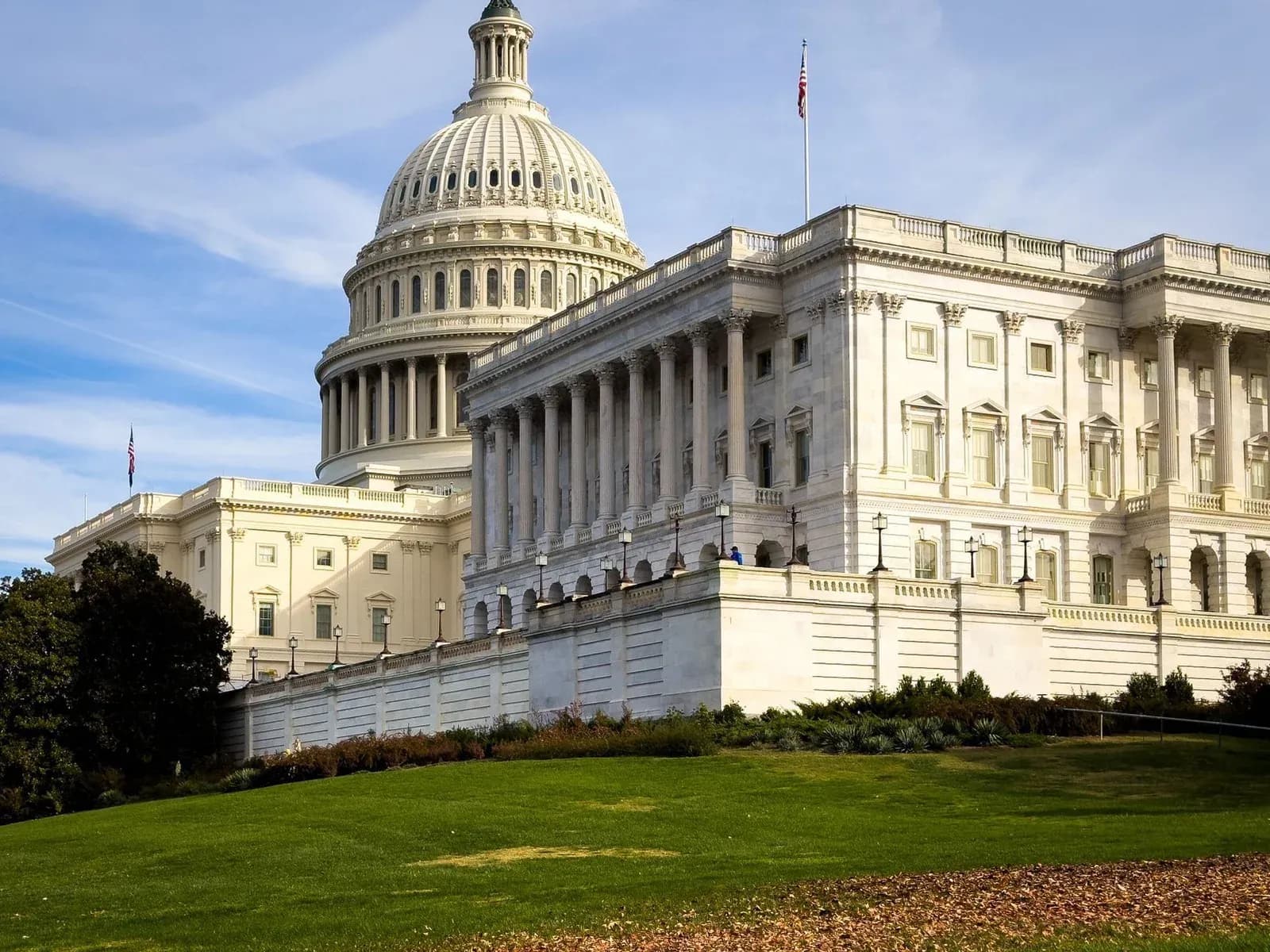
Photo: terry bazemore iii / Pexels
American voters handed Democrats control of both the Senate and the House of Representatives in the midterm elections on 3rd November, the Associated Press has called. The result ends the single-party hold on Washington that began when Donald Trump returned to the White House in January 2025, and it gives Congress the power to act as a check on the presidency for the final two years of his term.
Democrats needed a net gain of four Senate seats and three House seats. By 1.30am Eastern time on Wednesday, AP race calls showed them flipping seven Republican-held Senate seats and 16 House seats, without losing a single seat of their own in either chamber. Dozens of House races were still being counted on Wednesday morning, so the final size of the majority will take days to settle.
For mothers, who carry so much of the weekly arithmetic of a household, both the reasons behind the vote and the shape of the new Congress deserve a closer look.
Grocery bills and health costs sent families to the polls
The AP Voter Poll, a survey of the midterm electorate, found that about eight in ten voters say inflation has caused severe or moderate financial hardship in their households. More than eight in ten said they were concerned about the cost of fuel, groceries, utilities and health care.
About four in ten named the economy as the most important issue facing the country. Around six in ten said higher-than-usual prices were more the result of Mr Trump's policies than of factors outside his control, and AP noted that inflation is now higher than it was when he returned to office. Roughly three quarters of voters told the poll they felt angry or dissatisfied with the direction of the country.
Anyone who has watched the weekly shop creep up, or opened a health insurance renewal letter this year, will recognise where those numbers come from.
Voters asked Congress to put the guardrails back
About 70 per cent of voters told the AP Voter Poll they want Congress to provide more checks and balances on the presidency. Only about two in ten said Congress was already doing about the right amount. About three in ten named the state of democracy as the most important issue facing the nation, second only to the economy.
Checks and balances mean that spending, judges and new laws have to pass through elected representatives who answer to voters. AP reported that Democratic control of the Senate is likely to hamstring the president's agenda, including his hopes of sustaining a conservative shift on the Supreme Court, because the Senate confirms every federal judge.
Democrats won a Senate map that favoured Republicans
The Senate map was widely expected to favour Republicans this year. Instead, AP reported, Democrats won through some of the most conservative states in the country. Josh Turek defeated Ashley Hinson in Iowa, Adam Hamilton ousted Senator Roger Marshall in Kansas, James Talarico beat Ken Paxton in Texas and Sherrod Brown defeated Senator Jon Husted in Ohio. Roy Cooper took an open seat in North Carolina, and in Maine, Troy Jackson unseated Senator Susan Collins.
AP noted that Texas, Kansas and South Carolina elected Democratic senators for the first time in decades. Democrats also held Georgia, where Jon Ossoff won re-election, and New Hampshire, where Chris Pappas won the seat left open by the retirement of Jeanne Shaheen.
The change reached state capitals too. Keisha Lance Bottoms in Georgia, Amy Acton in Ohio, Rod Sand in Iowa and Gina Hinojosa in Texas all won governors' races, flipping offices that Republicans had held, according to AP.
A paediatrician and a historic Illinois win head to the Senate
In South Carolina, Annie Andrews, a paediatrician who practised for years at the Medical University of South Carolina in Charleston, defeated Republican Senator Darline Graham. After her first run for Congress in 2022, Andrews founded a political organisation focused on issues affecting children, including gun violence and climate change, AP has reported. On election night she promised to be a 'brick wall' for South Carolina, even against her own party.
A doctor who has spent her career treating children will now help shape the federal budget that funds children's health insurance, vaccine programmes and maternal care.
In Illinois, Lieutenant Governor Juliana Stratton won the seat held by retiring Senator Dick Durbin. Her victory means three Black women will serve in the US Senate at the same time for the first time in history, alongside Lisa Blunt Rochester of Delaware and Angela Alsobrooks of Maryland.
In the House, one of the first seats to change hands went to Rebecca Bennett, a former Navy helicopter pilot, who defeated Representative Tom Kean in New Jersey.
Abortion rights won in Virginia and Missouri
Voters in four states decided abortion measures alongside the congressional races. Virginians wrote a right to abortion into their state constitution, by about 2.1 million votes to 1.3 million. Missouri voters rejected a Republican-led amendment that would have repealed the abortion rights they approved in 2024 and replaced them with a new ban, according to AP.
In Idaho, voters turned down Proposition 1, which would have blocked bans before foetal viability, so the state's near-total ban remains in place. Nevada's count was still running on Wednesday morning.
What a Democratic Congress can and cannot change
The new Congress will be sworn in on 3rd January 2027. Hakeem Jeffries, the House Democratic leader, is in line to become Speaker.
Control of the House gives Democrats the chair of every committee, with the power to hold hearings, issue subpoenas and examine how federal money is spent. Control of the Senate gives them the confirmation votes on judges and cabinet nominees, and the power to decide which bills reach the floor. Both chambers must agree on federal spending, which covers programmes many families rely on, from health insurance subsidies to childcare grants and school funding.
Congress cannot make new law on its own. The president still signs or vetoes bills, and AP reported that he has promised to use his veto to block the Democratic agenda. Overriding a veto takes a two-thirds vote in both chambers, which Democrats do not have. Mothers hoping for fast relief on childcare costs or paid family leave should expect the real battles to happen over the budget, where Congress holds the purse strings, rather than through sweeping new legislation before 2029.
What the result does secure is a pause. From January, any policy that touches a family's health care, its school or its rights has to pass through a Congress that voters have just instructed, by a wide margin, to ask questions first.
A message that carries across the Atlantic
Watched from Europe, the night carried a lesson that travels well. Voters in Texas, Kansas and South Carolina, states that had not sent a Democrat to the Senate in decades, chose to rebalance power in Washington. The arguments that moved them were about the price of food, the cost of a visit to the doctor and who gets to make decisions about a family's future. Mothers have those conversations at the kitchen table every day, and on 3rd November millions of Americans took them to the ballot box.
Enjoying this article?
Subscribe to our newsletter and never miss a story. No spam, ever.

Editor-in-Chief
Editor-in-Chief of Rich Woman Magazine, founder of Sovereign Magazine, author of many books, Dr Marina Nani is a social edification scientist coining a new industry, Social Edification. Passionately advocating to celebrate your human potential, she is well known for her trademark "Be Seen- Be Heard- Be You" running red carpet events and advanced courses like Blog Genius®, Book Genius®, Podcast Genius®, the cornerstones of her teaching. The constant practitioner of good news, she founded MAKE THE NEWS ( MTN) with the aim to diagnose and close the achievement gap globally. Founder of many publications, British Brands with global reach Marina believes that there is a genius ( Stardust) in each individual, regardless of past and present circumstances. "Not recognising your talent leaves society at loss. Sharing the good news makes a significant difference in your perception about yourself, your industry and your community."
Related Articles

Children Do Not Laugh 300 Times a Day, but Mothers Laugh Almost Twice as Often as Their Toddlers During Play

Christmas Presents for Kids 2026: The Toys Topping Wish Lists by Age, the Best Picks Under £20 and Where to Find Free Gifts

Mothers Are Bringing Back the House Phone as the UK Social Media Ban for Under-16s Starts in March 2027