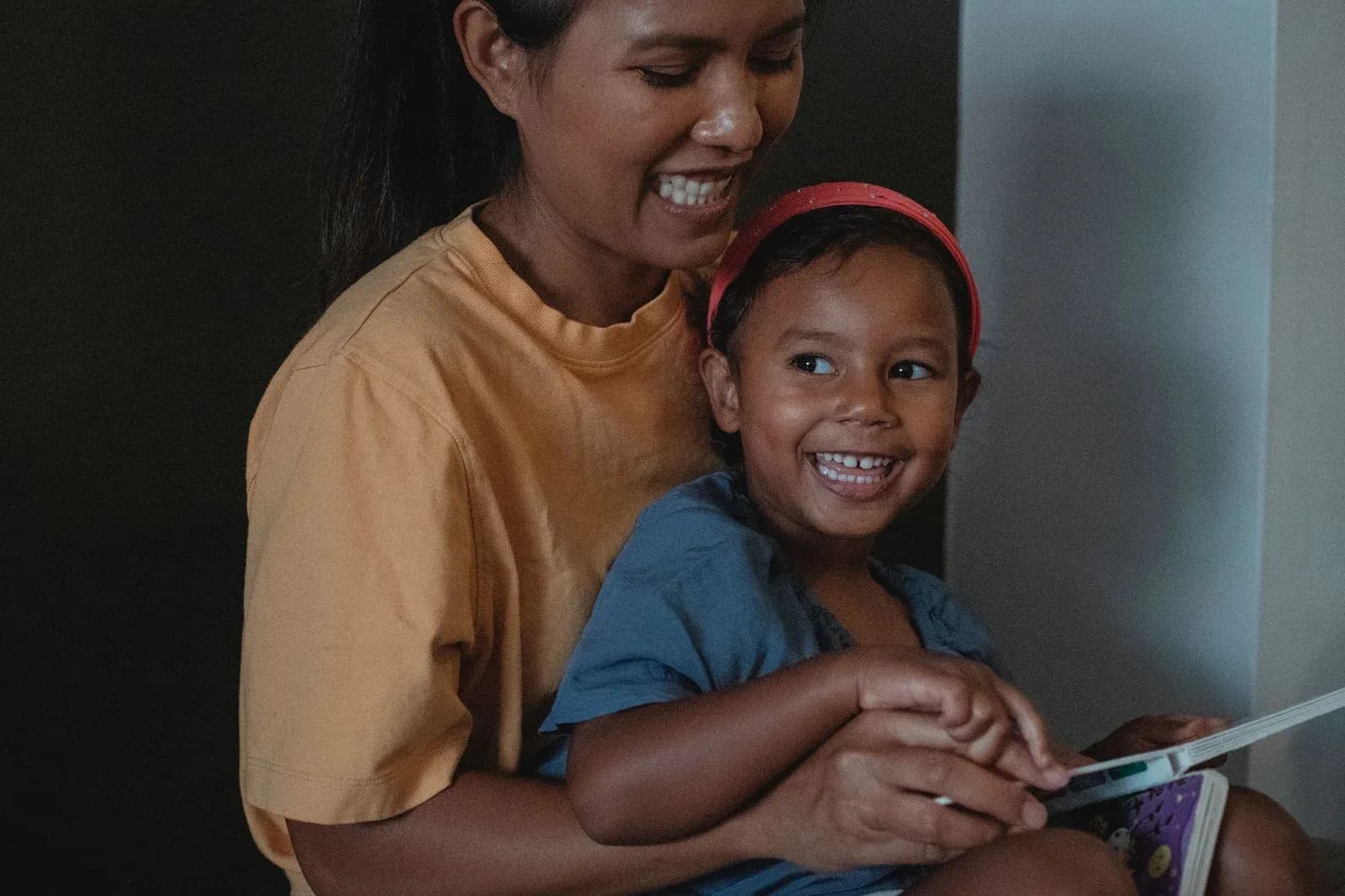
Dog Mums Are Mothers Too: Nine in 10 Owners Treat Their Dog as Family, and Brain Scans Help Explain Why
Most British dog owners count their dog as family, and many put it on a par with their children. Research on mothers' brains and the bonding hormone oxytocin shows the bond is more than a figure of speech.

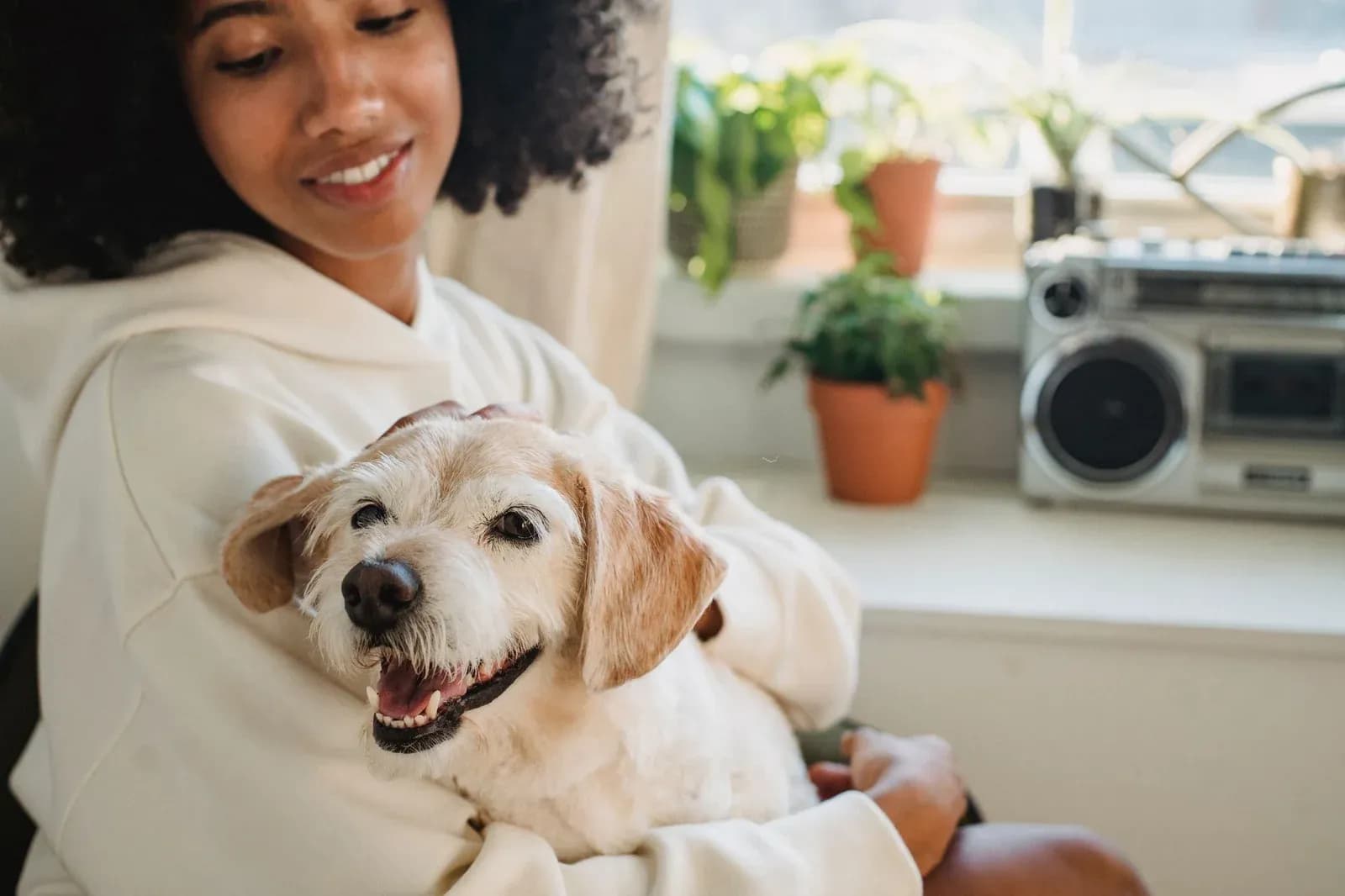
Photo: Samson Katt / Pexels
Rich Mom's November edition, Always Loving You, begins from the idea that a mother's love has no limits or conditions, and that the women whose children have four legs belong in that circle. Most British dog owners would agree. In the first results of its National Dog Survey 2026, which drew around 180,000 dog lovers, the charity Dogs Trust found that 90% of owners treat their dog as part of the family. Nearly a third (32%) describe their dog as a 'fur-baby' or 'fur-child', about as often as they call it a best friend.
One participant explained the commitment in plain terms: 'Her needs are just as important as my family's.'
Half of British pet owners put their pet on a level with their human family
YouGov asked the question more sharply in its Big Survey on Family, published on 9th July 2026. Just over half (52%) of Britons with pets said they consider their pets family members to the same degree as the human members of their family. A further 39% said their pets are family, though not to that degree, and only 7% said their pets are not family at all.
Dog owners led the way, with 59% putting their dog on the same level as their relatives. Women were more likely than men to say so, at 57% against 46%.
A mother's brain responds to her dog and her child in overlapping ways
Researchers at Massachusetts General Hospital set out to test whether the phrase 'dog mum' has any basis in the brain. In a study published in PLOS ONE in October 2014, they recruited mothers who had at least one child aged two to 10 and a dog that had lived with the family for two years or more. Each of the 14 women lay in a brain scanner and looked at photographs of her own child, her own dog, and a child and dog she did not know.
Pictures of both her child and her dog switched on a common network of brain regions involved in emotion, reward, affiliation, visual processing and social thinking. The mothers also rated pictures of their child and their dog as similarly exciting and pleasant.
The two bonds were not identical. A midbrain area linked to reward and bonding responded only to pictures of the woman's own child. The fusiform gyrus, which helps us read faces, responded more strongly to the dog, which the researchers suggested may reflect how much people rely on looks rather than words when they communicate with animals. The study was small, and the authors cautioned that its results may not apply to everyone.
A shared look raises the bonding hormone in dog and owner
Oxytocin is the hormone involved in the bond between a mother and her baby. In April 2015, a team led by Miho Nagasawa at Azabu University in Japan reported in the journal Science that when dogs gazed at their owners, the owners' oxytocin levels rose, the owners became more affectionate, and the dogs' own oxytocin levels then rose in turn. Hand-reared wolves did not produce the same effect.
In a second experiment, female dogs given a nasal spray of oxytocin spent longer gazing at their owners, and those owners' oxytocin levels went up. Not every scientist accepts the team's wider claim that this loop evolved as dogs were domesticated. Psychologists Sylvain Fiset and Vickie Plourde called that conclusion premature in a commentary in Frontiers in Psychology, though they agreed that oxytocin appears to encourage mutual gazing between dogs and people.
Dog mums rearrange their lives around the dog
The Dogs Trust survey shows what the bond costs in time and plans. Nearly 15% of owners have changed jobs or working patterns because of their dog. More than a third (36%) chose a holiday at home over a trip abroad for the dog's sake, and 35% have cancelled social plans to stay in with it. Nearly half (45%) agree that owning a dog is hard work.
Owners say the return is worth it. In the same survey, 96% say having a dog is good for their mental health, and 82% have had more positive encounters with strangers because of their dog. Almost three quarters (74%) celebrate the anniversary of the day their dog came home, its 'gotcha day'.
Christmas includes the dog
With Christmas seven weeks away, the survey has one more figure for families writing their lists: 81% of owners buy their dog a Christmas present. If the dog has a stocking in your house, you are firmly in the majority.
A dog is not a child, and the research does not say otherwise
None of this makes a dog the same as a child, and most owners do not claim it does. Even among YouGov's pet owners, 39% drew a line between their pets and their human family, and the Massachusetts study found clear differences alongside the shared ground in how a mother's brain responds.
What the research supports is narrower and still striking. The care, attention and attachment that owners describe are real, and they draw on some of the same systems that bind parents and children. Rich Mom's view, set out in this month's edition, is that motherhood is defined by that care, whoever receives it. For families raising children and dogs together, our report on how dogs help children's social skills shows the benefits running both ways.
In case you were wondering
Do dogs think we are their mom?
How do you know if your dog sees you as their parent?
Enjoying this article?
Subscribe to our newsletter and never miss a story. No spam, ever.

Editor-in-Chief
Editor-in-Chief of Rich Woman Magazine, founder of Sovereign Magazine, author of many books, Dr Marina Nani is a social edification scientist coining a new industry, Social Edification. Passionately advocating to celebrate your human potential, she is well known for her trademark "Be Seen- Be Heard- Be You" running red carpet events and advanced courses like Blog Genius®, Book Genius®, Podcast Genius®, the cornerstones of her teaching. The constant practitioner of good news, she founded MAKE THE NEWS ( MTN) with the aim to diagnose and close the achievement gap globally. Founder of many publications, British Brands with global reach Marina believes that there is a genius ( Stardust) in each individual, regardless of past and present circumstances. "Not recognising your talent leaves society at loss. Sharing the good news makes a significant difference in your perception about yourself, your industry and your community."
Related Articles
More Than Half of Parents Say Their Child Avoids Creative Activities for Fear of Getting It Wrong
Almost One in Four Mothers Finds Birth Traumatic, and Far More Struggle Than a PTSD Diagnosis Shows
Nearly Half of UK Parents Are Skipping Meals to Pay for Christmas: How to Give Your Children a Happy One Without Going Into Debt