The Foods That Give Your Child Enough Omega 3, and How Much They Actually Need
Oily fish does most of the work, a handful of nuts, seeds and oils helps, and fruit barely features. Here is what UK guidance says children should eat each week.

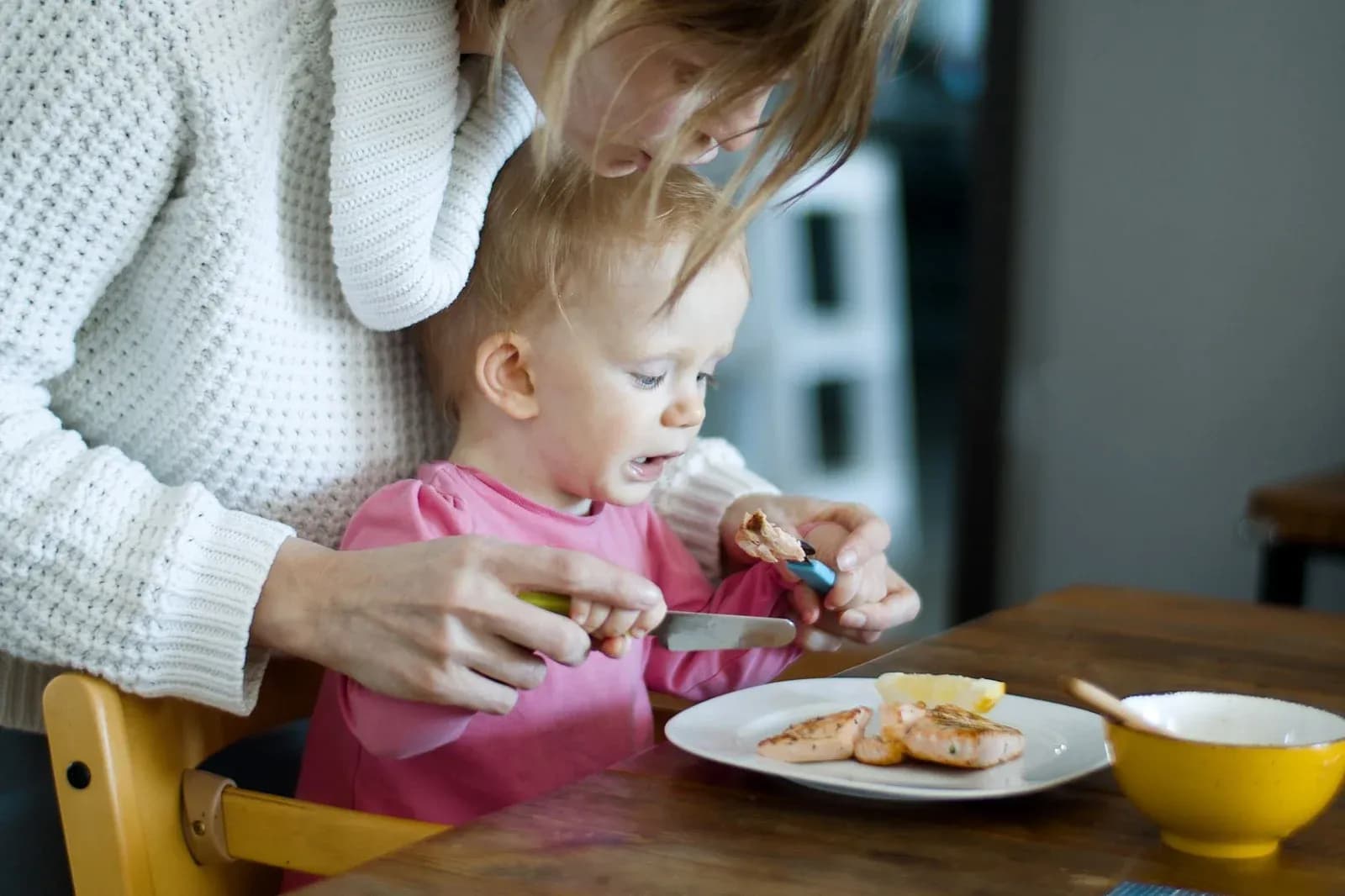
Photo: Kampus Production / Pexels
A study reported on 2nd November has put omega 3 back on the family menu. Researchers in Spain followed 223 pregnant women from the ECLIPSES cohort and tested their children at the age of four. They found that mothers with a higher ratio of omega 6 to omega 3 fats in their blood during the first trimester had children who scored lower on working memory, self-control and planning. The same link did not appear in the third trimester, general intelligence scores were largely unaffected, and the authors, writing in Nutrients, said their observational findings need more research before they become dietary advice.
The study looks at pregnancy, but the question most parents ask comes later, once a child is eating at the family table: which foods give them enough omega 3, and how much is enough?
Three kinds of omega 3, and only one comes mainly from plants
Omega 3 is a family of fats. The British Dietetic Association (BDA) explains that alpha-linolenic acid (ALA) is essential in the diet and is found in nuts, seeds and their oils. The body uses ALA to make two longer fats, EPA and DHA, but it does so slowly and makes only small amounts. Fish, and oily fish in particular, supply EPA and DHA directly. DHA matters for the development of the brain and the retina in babies and young children.
European regulators have set a benchmark for DHA. To carry an approved claim that a food supports normal brain development, foods for children aged two to 18 must provide 250mg of DHA a day, and foods for children under two must provide 100mg, according to a 2014 opinion from the European Food Safety Authority.
Oily fish does most of the work
The NHS recommends at least two portions of fish a week for a healthy diet, one of them oily. Oily fish includes salmon, sardines, mackerel, herring, pilchards, sprats, trout and kippers. Tuna, fresh or tinned, does not count as oily fish in NHS guidance.
A child's portion is smaller than an adult's. The BDA gives these guides:
- 18 months to three years: a quarter to three quarters of a small fillet, or one to three tablespoons
- Four to six years: half to one small fillet, or two to four tablespoons
- Seven to 11 years: one to one and a half small fillets, or four to six tablespoons
- 12 years and over: 140g of fresh fish or one small can of oily fish
There is also an upper limit, because oily fish can carry low levels of pollutants that build up in the body. The NHS says boys can have up to four portions of oily fish a week, while girls should have no more than two, since those pollutants could affect a baby in a future pregnancy. Children under 16 should not eat shark, swordfish or marlin because of their mercury content, and raw shellfish should be kept off children's plates to reduce the risk of food poisoning.
Fish appears to do more than feed the brain. Researchers using data from the Children of the 90s study, which tracked almost 6,000 children in England, reported in March 2025 that seven-year-olds who ate no fish were 35% more likely to show weaker social behaviour, such as kindness and sharing, than children who ate at least 190g a week.
For children who will not eat fish
Plant foods supply ALA. The BDA names walnuts, flaxseed (also sold as linseed), chia and pumpkin seeds, rapeseed and linseed oils, and soya foods such as tofu, beans and soya milk. Because the body converts only a little ALA into DHA, these foods work best alongside fish rather than instead of it. Some brands of eggs, milk, yoghurt, bread and spreads have omega 3 added, and the label will say so.
Whole nuts are a choking risk for children under five, so grind walnuts or use a smooth nut butter, and give flaxseed ground rather than whole.
Fruit does not appear on the BDA's list of omega 3 sources. A bowl of berries brings plenty of other goodness, but it will not cover a child's omega 3.
Supplements
The BDA does not recommend omega 3 supplements for the general UK population, because the evidence of benefit is inconclusive. Parents who still want one should choose an omega 3 supplement rather than fish liver oil, which carries vitamin A, pick a product made for the child's age, check the label for its DHA and EPA content, and ask a dietitian or GP if they are unsure. Vegetarian families can find supplements made from algae, which is where fish get their omega 3 in the first place.
Simple ways to get it onto the plate
- Mash sardines or mackerel with a little lemon and spread them on toast
- Turn tinned salmon into fishcakes with mashed potato
- Bake trout or salmon in foil parcels with vegetables
- Stir ground flaxseed or chia into porridge, yoghurt or pancake batter
- Blend walnuts into a pesto for pasta
- Cook with rapeseed oil
Our guide to tinned fish and nine ways to eat it has more ideas, and oily fish is also one of the few foods that supplies vitamin D, which matters through a UK winter, as our vitamin D guide explains.
Enjoying this article?
Subscribe to our newsletter and never miss a story. No spam, ever.

Editor-in-Chief
Editor-in-Chief of Rich Woman Magazine, founder of Sovereign Magazine, author of many books, Dr Marina Nani is a social edification scientist coining a new industry, Social Edification. Passionately advocating to celebrate your human potential, she is well known for her trademark "Be Seen- Be Heard- Be You" running red carpet events and advanced courses like Blog Genius®, Book Genius®, Podcast Genius®, the cornerstones of her teaching. The constant practitioner of good news, she founded MAKE THE NEWS ( MTN) with the aim to diagnose and close the achievement gap globally. Founder of many publications, British Brands with global reach Marina believes that there is a genius ( Stardust) in each individual, regardless of past and present circumstances. "Not recognising your talent leaves society at loss. Sharing the good news makes a significant difference in your perception about yourself, your industry and your community."
Related Articles

Alcohol-Free Drinks Have Gone Mainstream: 3 Grown-Up Aperitifs to Make at Home

A Five-Course Anti-Inflammatory Dinner Inspired by the Victorian Age

Children Who Cook With You Eat More Vegetables and Grow in Confidence: 8 Ways to Start Tonight