
Why Your Child Will Not Eat Broccoli: Genes, Mouth Bacteria and What Helps
Some children taste broccoli as far more bitter and sulphurous than their parents do. Science explains why, and the research on what changes their minds is encouraging.

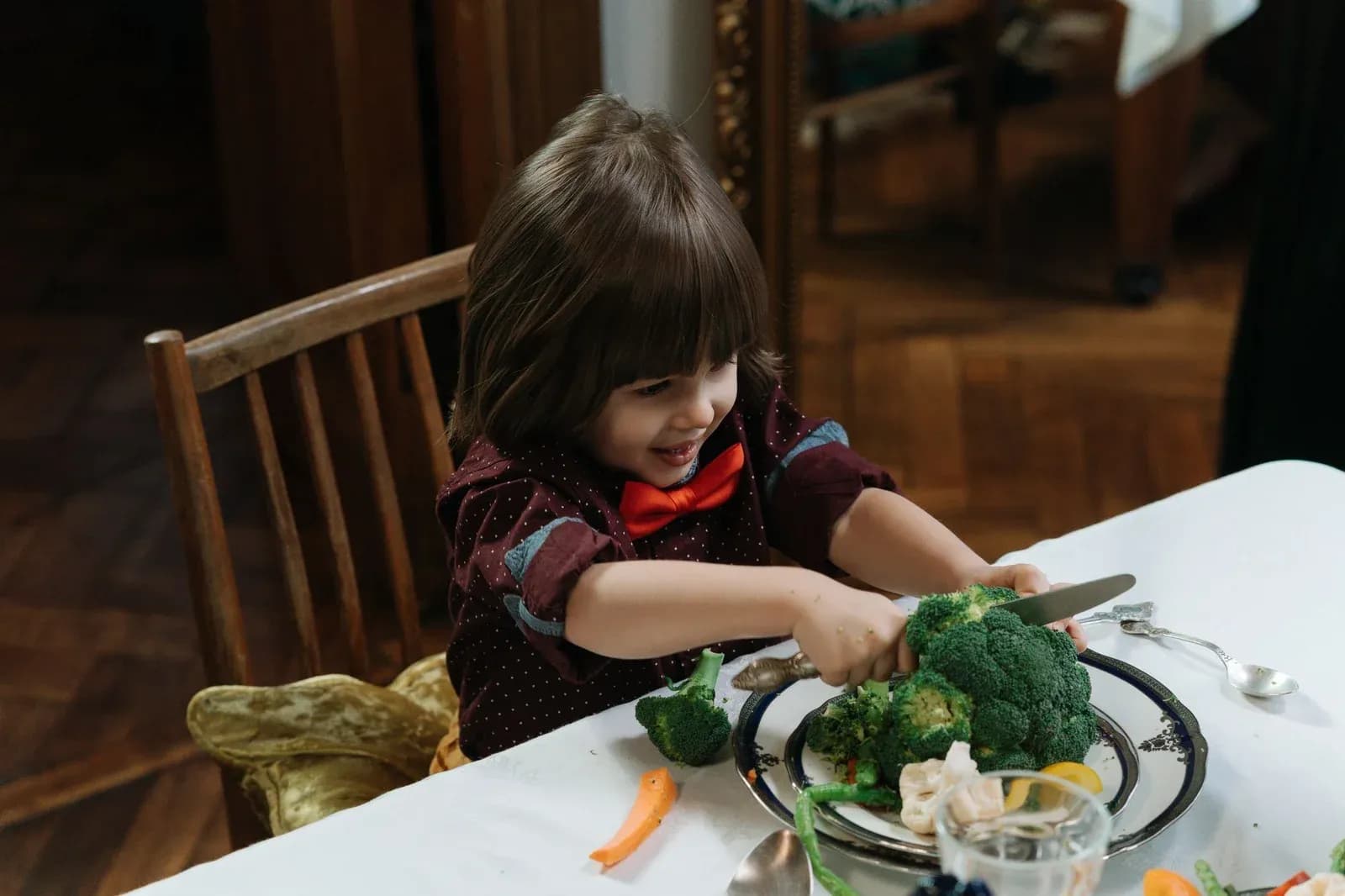
Photo: cottonbro studio / Pexels
The child pushing broccoli to the edge of the plate may be tasting something different from the parent who served it. Two lines of research, one on genes and one on the bacteria living in the mouth, show that broccoli, cauliflower, cabbage and Brussels sprouts can taste far harsher to some children than to the adults around them.
Some children are born more sensitive to bitterness
Every person carries two copies of a bitter taste gene called TAS2R38. Depending on which versions they inherit, some people barely notice certain bitter compounds, while others find them intensely unpleasant. Broccoli and its relatives contain bitter compounds that this receptor picks up.
Beverly Tepper, a food scientist at Rutgers University, tested 65 preschool children and offered them a free choice of vegetables. The children who were sensitive to bitterness ate roughly half as many servings of bitter vegetables, such as raw broccoli, olives and cucumber, as the children who were not, according to her study in the American Journal of Clinical Nutrition. Almost a third of the sensitive children ate no vegetables at all during the test, compared with 8% of the others.
Children also appear to feel bitterness more strongly than adults. A study of families in southern Italy, published in the Journal of Pediatric Gastroenterology and Nutrition, found more highly sensitive tasters among children than among adults, even in mothers and children who shared the same versions of the gene.
The bacteria in a child's mouth change the smell
The second explanation is more recent. Brassica vegetables contain a compound called S-methyl-L-cysteine sulfoxide. When an enzyme acts on it, the compound releases strong sulphur smells. The plant carries that enzyme, and so do bacteria that live in some people's mouths.
Damian Frank and colleagues at CSIRO, Australia's national science agency, mixed saliva from 98 pairs of parents and children, aged six to eight, with raw cauliflower and measured the gases it gave off. Children and adults alike rated dimethyl trisulfide, which smells rotten and sulphurous, as the least pleasant of the odours. Children whose saliva produced the most sulphur compounds disliked raw brassicas the most. Adults showed no such link, which the researchers suggest means grown-ups learn to tolerate the smell over time. Children's levels tended to match their parents', pointing to a shared mouth microbiome within families. The study was published in the Journal of Agricultural and Food Chemistry in September 2021.
Tepper made the same point in her work: parents should not assume their child tastes a vegetable the way they do. A parent who loves broccoli may have a child for whom it tastes unpleasantly bitter.
Taste can be taught
Genes and bacteria explain the first reaction, and they do not settle the matter for life. Tepper herself noted that food preferences change as children grow and learn.
The strongest evidence is for repeated tasting. Studies suggest that young children may need 8 to 15 tastes of a vegetable before they accept and like it. In a study led by the late Jane Wardle at University College London, parents offered children aged two to six a taste of a disliked vegetable every day for two weeks, and afterwards the children ate 64% more of it than at the start. A later randomised trial by Wardle's team found that parents could achieve the same effect at home by following written instructions sent through the post, with no professional involved.
Pressure works the other way. In a Penn State experiment called 'Finish your soup', preschoolers ate more when they were not pressed to finish, and made far fewer negative comments about the food. The effect can last: in a study of college students who remembered being made to eat a food as children, most still disliked it years later.
What to try at the table
- Offer a small taste, a single floret is enough, and let your child decide whether to eat it
- Serve broccoli often, alongside foods they already like, and count each taste as progress
- Cook it rather than serving it raw, since Tepper notes that cooking takes some of the bite out
- Roast it with a little olive oil, or add cheese or a sauce your child enjoys
- Eat it yourself, with obvious enjoyment, in front of them
- Leave out bribes, threats and the clean plate rule
- Let them help wash, tear and cook it, because children who cook with their parents eat more vegetables, as our guide to cooking with children explains
A child who rejects broccoli at four will not necessarily reject it at fourteen, and the studies above show how much a parent can do to help that change along.
Enjoying this article?
Subscribe to our newsletter and never miss a story. No spam, ever.

Editor-in-Chief
Editor-in-Chief of Rich Woman Magazine, founder of Sovereign Magazine, author of many books, Dr Marina Nani is a social edification scientist coining a new industry, Social Edification. Passionately advocating to celebrate your human potential, she is well known for her trademark "Be Seen- Be Heard- Be You" running red carpet events and advanced courses like Blog Genius®, Book Genius®, Podcast Genius®, the cornerstones of her teaching. The constant practitioner of good news, she founded MAKE THE NEWS ( MTN) with the aim to diagnose and close the achievement gap globally. Founder of many publications, British Brands with global reach Marina believes that there is a genius ( Stardust) in each individual, regardless of past and present circumstances. "Not recognising your talent leaves society at loss. Sharing the good news makes a significant difference in your perception about yourself, your industry and your community."
Related Articles
The Foods That Give Your Child Enough Omega 3, and How Much They Actually Need

Alcohol-Free Drinks Have Gone Mainstream: 3 Grown-Up Aperitifs to Make at Home

A Five-Course Anti-Inflammatory Dinner Inspired by the Victorian Age