What Makes Younger Generations Choose a Childfree Life
You picture a house full of laughter. Then social media shows you the price tag, and you start to ask whether a child is a luxury you cannot afford.


Photo: Andrew Mead / Unsplash
Every child is a miracle. Each one could grow into the engineer who builds safer bridges, the doctor who saves lives, the teacher who changes the course of a young life, the innovator who solves a problem nobody else could, the poet who puts words to what you feel and, above all, a friend. When fewer children are born, the world loses more than a statistic. It loses the people who would have shaped its future.
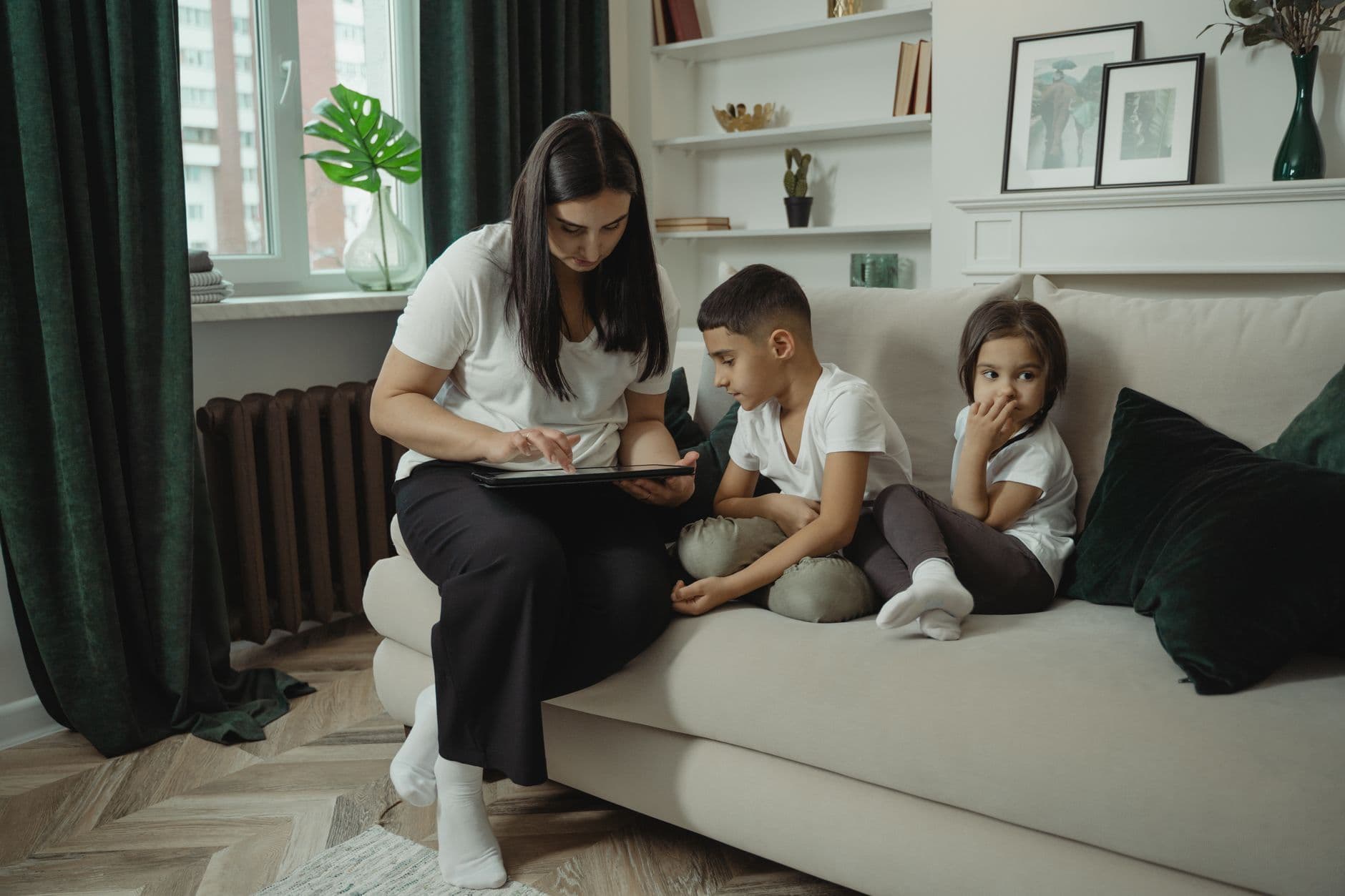
You picture a house filled with laughter, noise at the dinner table and a new adventure every day. You know in your heart that every child brings you joy: the first word, the first wobbly steps, the first day of school and, years later, the conversations that turn a child into a friend. Grandparents often say grandchildren bring all of that joy a second time.
A great deal has changed since my children left the nest. The biggest change, for everyone from teenagers to grandparents, is social media. It has altered how you see yourself and how you build a lasting relationship. It absorbs your time, ten minutes here and an hour there, until whole evenings disappear into a screen. It also does little to help you understand your own emotional needs. When you spend your days comparing your face, your home, your holidays and your relationship with other people's best moments, it becomes harder to hear what you really want.
If you are thinking about starting a family, your feed shows you, over and over, how expensive raising a child has become: nursery fees, birthday parties, school uniforms, family holidays and the house with a spare bedroom. Sooner or later you stop asking whether you want a child and start asking a different question. Is a child a luxury you cannot afford?
Social media has also made it easier to walk away from family. In Britain, an estimated one in five families is touched by estrangement, and millions of videos under #goingnocontact present walking away from a mother or father as an act of self-care. Watch enough of them and a hard question follows: if the child you sacrifice everything for may one day walk away, what exactly are you raising them for?
The financial sacrifice starts early. Five years after the birth of a first child, mothers in England earn on average 42% less a month than they did the year before, and they lose £65,618 in earnings over those five years. A second child costs a further £26,317 and a third £32,456. Economists call it the motherhood penalty. You could just as fairly call it a tax on parenthood, paid mostly by women.
Beyond the money, raising a child means years of broken nights, weekends organised around someone else's needs and ambitions put on hold. Many parents say they only feel they get their own lives back when the children leave home. By then you may be in your fifties, and the business you never started, the city you never moved to or the book you never wrote can feel less like postponed plans and more like regrets.
Fertility is highest in the world's poorest countries, where women in Niger, Chad and Somalia have around six children on average and grown children are often the only pension their parents will ever have. In Britain, Europe and the wealthy economies of Asia, the deal runs the other way. Your security comes from your own career, most households need two incomes to cover rent or a mortgage, and parenting becomes a second full-time job stacked on top of the first.
Even if you give everything, you control less of the outcome than any parent would like. The Netflix drama Adolescence, in which a 13-year-old boy from an ordinary, loving family is arrested for the murder of a girl at his school, struck a nerve with parents across Britain for exactly that reason. His parents did nothing obviously wrong. His phone, and the world it opened up to him, shaped him in ways they never saw.
For many younger people, the childfree life looks less like selfishness than a rational response to these numbers. Across the world, that response is already reshaping daily life. In Japan, elderly couples can hire actors to play their grandchildren on special occasions. In South Korea, one of the country's largest online retailers has sold more strollers for dogs than for babies since 2023. In France, 651,000 people died in 2025 and 645,000 were born, the first year since the end of the Second World War in which deaths outnumbered births.
Social media sells you both parenthood and freedom as luxury products
Open any feed and you will find two competing advertisements for adult life. Family accounts show designer nurseries, four-figure prams, elaborate gender reveals and children dressed for brand partnerships. Childfree couples, often filed under DINK for 'dual income, no kids', film lie-ins, last-minute flights and restaurant bills.
Nobody keeps a reliable count of how many influencers have children. What is clear is that both kinds of feed are businesses, and both make money from your attention. On family accounts, the children themselves are often the product.
Comparison makes ordinary parenthood look like a failure to keep up, and it makes the childfree life look like a permanent holiday. Neither picture includes the night feeds, the school-gate friendships, the empty Sunday afternoons at 70 or the pride of watching a teenager become an adult. When you are making the biggest decision of your life, your feed is the worst adviser you could choose.
Consumerism has raised the price of a 'proper' childhood
A mother in Mumbai told the BBC that when she was growing up, children simply went to school, while parents now feel they must pay for swimming, drawing and anything else that might give their child an edge. The same pressure exists in London, Seoul and Paris. In many families, each generation buys more for its children than the last, and each new purchase becomes the minimum the next parents feel they must match.
The dog strollers of South Korea belong to the same story. A dog offers companionship, routine and something to care for, at a fraction of the cost and without an 18-year commitment. The rental grandchildren of Japan sit at the far end of it. When family life has become hard to build, companionship becomes a service you can book by the hour.
Raising a child in Britain costs £251,018 to age 18
The most widely used UK estimate puts the full cost of raising a child to 18 at £251,018 for a couple and £287,219 for a lone parent. That figure covers rent, childcare and council tax as well as everyday spending, and it prices a minimum socially acceptable standard of living rather than private school or designer clothes. Strip out housing, childcare and council tax and the basic cost is £167,679 for a couple and £189,053 for a lone parent.
For a couple, the full figure works out at about £13,950 a year, or £268 a week, averaged across childhood. The early years cost the most, with childcare the heaviest single item. In England, working parents became entitled to 30 funded hours of childcare a week from the age of nine months in September 2025, which has reduced nursery bills for eligible families.
The estimate leaves out the motherhood penalty, which for many families is the largest cost of all. It also leaves out everything above the minimum, such as holidays, music lessons and help with university. A realistic assessment takes an evening, a spreadsheet and your partner:
- Price your first two years in detail, including childcare beyond any funded hours and the drop in income while one of you is on leave.
- Decide which of you, if either, will cut hours, and put a figure on that loss over five years.
- Separate what a child needs from what your feed suggests a child needs.
- Build a buffer of three to six months of the new household costs before the baby arrives.
Birth rates are falling across Europe and Asia at the same time
France spent decades as Europe's demographic exception. Its fertility rate fell to 1.56 children per woman in 2025, the lowest since the First World War and well below the 1.8 that its pension forecasts assume. Across the European Union, deaths have outnumbered births every year since 2012. In England and Wales, the rate dropped to a record low of 1.39 in 2025, with 585,396 live births, the fewest in almost half a century. A population holds steady without migration only when the rate sits around 2.1.
South Korea, which has the lowest rate in the world, offers a rare glimmer. Its fertility rate rose to 0.80 in 2025 from 0.75 the year before, and births climbed 6.8% to 254,457, the biggest rise since 2007. Even so, deaths outnumbered births for the sixth year running.
Most people still want children, and missing out leaves a lasting ache
In a United Nations survey of 14,000 people across 14 countries, most said they wanted two or more children. One in five said they had not had, or did not expect to have, the family size they wanted. Among those over 50, 31% said they had ended up with fewer children than they had hoped for. The barriers they named were the cost of parenthood, insecure work, housing, fear about the state of the world and the lack of a suitable partner. Lack of time ranked as an even bigger obstacle than money.
If you are in your thirties and still unsure, that last figure deserves your attention. A childfree life chosen with open eyes can be rich and full. A childfree life that arrives by default, after years of waiting for the right moment, is far more likely to end in the kind of regret those over-50s describe.
Fewer babies begin with fewer couples
Finding a reliable partner to settle down with has become one of the hardest steps of all. South Korea's birth rebound followed a wedding rebound: marriages, which usually lead births by one to two years, jumped a record 14.8% in 2024 and a further 8.1% in 2025. Babies follow couples, and couples have become harder to form.
Your phone is part of this story too. Births to young people fell earliest and fastest in the areas where fast mobile internet arrived first, in Britain as well as the United States. The mechanism appears to be social. Evenings once spent in pubs, clubs and at friends' houses moved onto screens, so fewer chance meetings turned into relationships. Many people also find that dating apps, built to keep you swiping, make it easier to keep looking than to commit.
Expectations inside relationships have shifted as well. One South Korean woman in her thirties told the BBC that the hardest part was finding a man who would share chores and childcare equally. Where men's habits lag behind women's expectations, fewer couples make it to marriage, let alone parenthood.
Finding a reliable partner starts with your relationship with yourself. You need to know what you want, children or none, one or three, before you start looking, and you need to say it early. Reliability shows in small, unglamorous things long before it shows in a crisis. Look for a partner who:
- Does an equal share of the dull work now, without being asked.
- Talks about money plainly, including debts, spending and what each of you expects to pay for.
- Has a clear view on children and states it in the first months of the relationship.
- Keeps small promises, which is the clearest early sign of how the big ones will be kept.
A good life without children needs planning too
The fairest response to all of this respects people who are happily childfree and gives real support to people who long for children. Both halves matter to you, whichever side you are on.
If you choose not to have children, plan for later life with the seriousness parents bring to school fees. The rented grandchildren of Japan are a warning about loneliness in old age. Build friendships across generations, take godchildren and mentoring seriously, stay rooted in a community and put money aside for care, when there may be no adult child to manage it.
If you want children and have not found the right partner, give that search the same priority you give your career. If you have a partner and keep waiting for the perfect moment, the figures above make clear that the moment rarely arrives on its own. Raising a child remains one of the few experiences that asks you to look beyond yourself for decades. Whether you take it on or choose a different life, make the choice with the real costs and the real rewards in front of you.
Governments must make marriage and parenthood affordable again
Personal planning only goes so far when the numbers are stacked against families. Governments must offer real incentives at both stages that matter. The first is marriage, or any committed partnership that builds a home: help with a first deposit, tax allowances that reward couples who share their finances and housing policies that let young people move out of rented rooms and settle down. South Korea shows why this stage counts, as its birth rebound arrived one to two years after a rise in weddings.
The second is parenthood itself. Childcare that costs less than a salary, parental leave that fathers take as routinely as mothers, child benefit that keeps pace with the real cost of raising a child and protection from the earnings penalty mothers now absorb would ease the financial pressure that pushes so many people towards a childfree life. Incentives of this kind give couples the confidence to plan a child-rich future rather than postpone it.
Children are not a luxury. They are the engineers, doctors, teachers, innovators and poets of tomorrow, and a country that plans for its future has to make room for them today.
Enjoying this article?
Subscribe to our newsletter and never miss a story. No spam, ever.

Editor-in-Chief
Editor-in-Chief of Rich Woman Magazine, founder of Sovereign Magazine, author of many books, Dr Marina Nani is a social edification scientist coining a new industry, Social Edification. Passionately advocating to celebrate your human potential, she is well known for her trademark "Be Seen- Be Heard- Be You" running red carpet events and advanced courses like Blog Genius®, Book Genius®, Podcast Genius®, the cornerstones of her teaching. The constant practitioner of good news, she founded MAKE THE NEWS ( MTN) with the aim to diagnose and close the achievement gap globally. Founder of many publications, British Brands with global reach Marina believes that there is a genius ( Stardust) in each individual, regardless of past and present circumstances. "Not recognising your talent leaves society at loss. Sharing the good news makes a significant difference in your perception about yourself, your industry and your community."
Related Articles

Q4 Burnout Parenting: Why Year-End Work and School Pressure Drain Working Parents, and Nine Ways to Recover

International Day of the Girl: End child marriage and invest in girls' rights

Hong Kong Music Educator Lydia Wong on Why Her Students Learn Music by Travelling Abroad