Diwali Falls on Sunday 8th November: 8 Ways to Celebrate at Home With Your Children
Make clay lamps, draw rangoli on the doorstep and roll coconut sweets together. Here is how to share the Festival of Lights with your children, whether your family has celebrated for generations or is joining in for the first time.

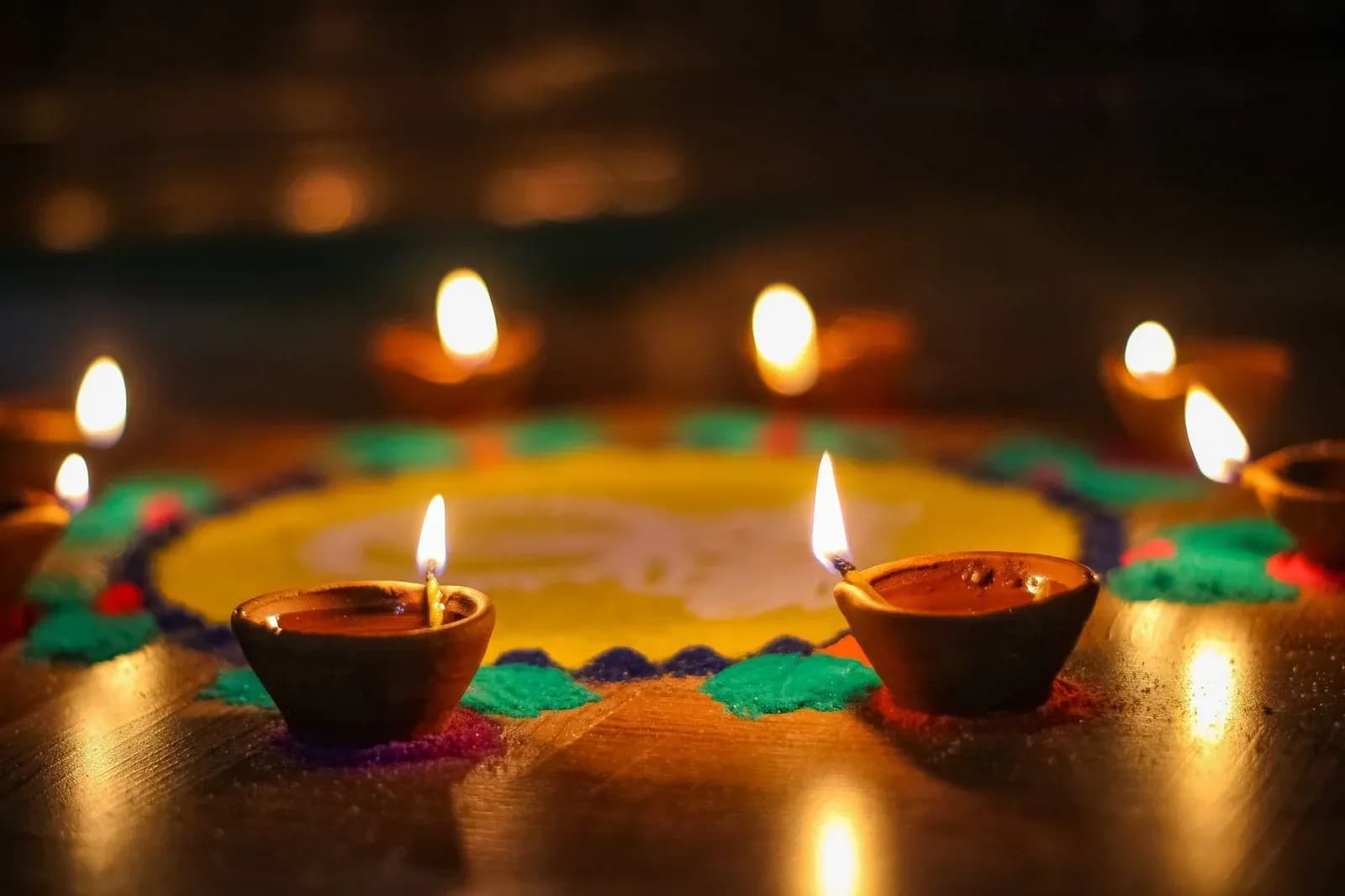
Photo: Sandeep Singh / Pexels
Diwali, the Festival of Lights, falls on Sunday 8th November this year for Hindu, Sikh and Jain families across Britain. The five days begin with Dhanteras on Friday 6th November, and the main night of Lakshmi Puja falls on the Sunday. With storms cancelling the Trafalgar Square celebration this year, London celebrates at home, and home is where children remember Diwali best: the lamps they lit, the patterns they drew and the sweets they made.
Tell the stories behind the lights
For many Hindu families, Diwali celebrates the return of Lord Rama and Sita to Ayodhya after fourteen years in exile, when people lit rows of lamps to guide them home. Children love the full story, with the demon king Ravana, the monkey god Hanuman and the bridge built across the sea to Lanka. Diwali also honours Lakshmi, the goddess of wealth and good fortune. Sikh families celebrate the same night as Bandi Chhor Divas, marking the release of Guru Hargobind from Gwalior Fort in 1619, and Jains remember the final liberation of Mahavira. Telling more than one story shows children that one festival can hold several meanings.
Clean and decorate the house together
Families traditionally clean their homes before Diwali to welcome Lakshmi into a bright, tidy house. Give each child a job they can finish, such as sorting a toy shelf or polishing the door handles, and then let them hang fairy lights, paper lanterns or marigold garlands. The cleaning stops feeling like a chore when it becomes part of the festival.
Make your own clay diyas
A diya is a small clay lamp, and rows of them in windows and on doorsteps give Diwali its glow. Children can shape their own from air-drying clay: roll a ball the size of a satsuma, press a thumb into the middle and pinch the sides into a shallow bowl with a small spout. Leave the diyas to dry for a day or two, then paint them in bright colours. For younger children, place a battery tealight inside rather than a real flame.
Draw a rangoli at the front door
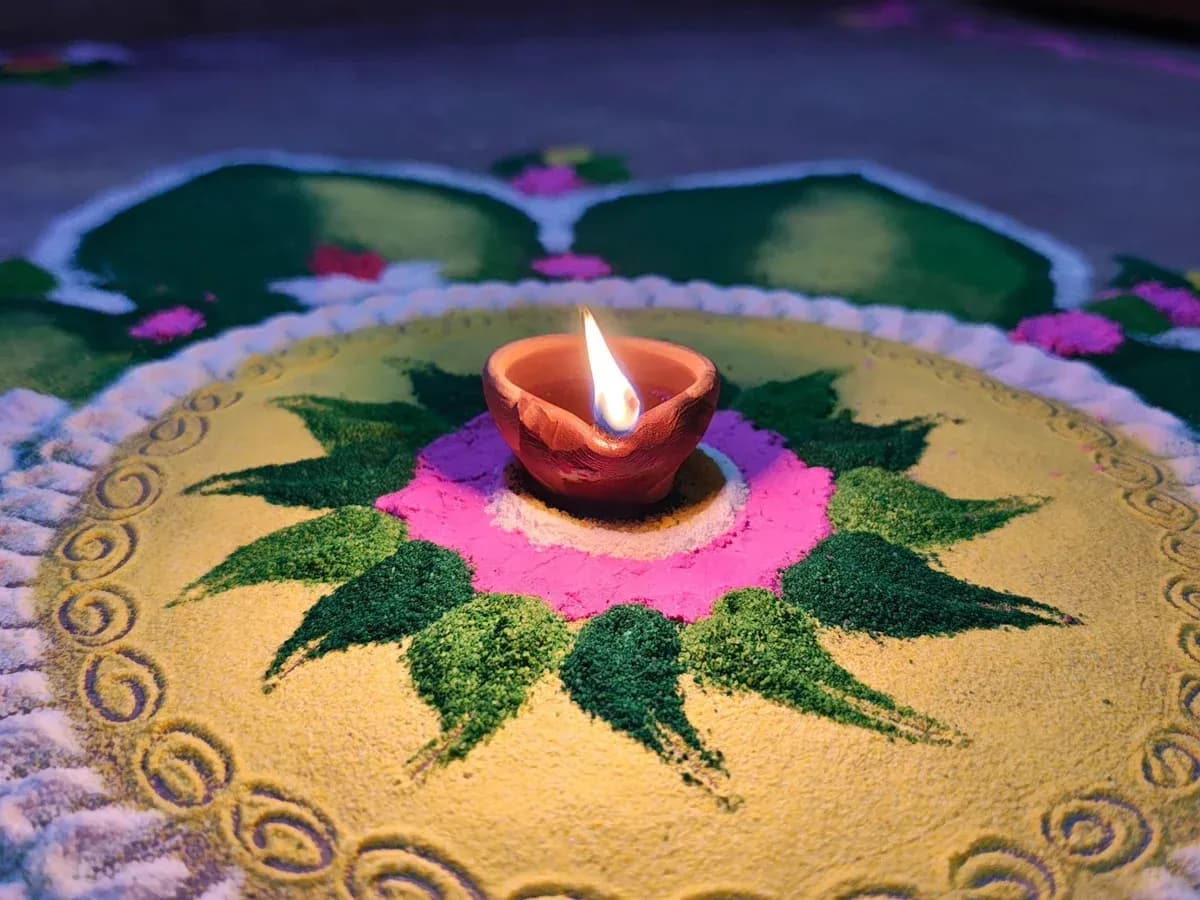
Rangoli are colourful patterns made at the entrance of a home to welcome guests and good fortune. Traditional rangoli uses coloured powder, but children can use chalk on the doorstep, or coloured rice, lentils and flower petals on a tray indoors. Start with a simple symmetrical shape, such as a lotus flower or a circle of petals, and build outwards. Take a photograph before the rain or the cat gets to it.
Roll a batch of coconut ladoos
Ladoos are round sweets shared at Diwali, and the coconut version needs no oven. Warm a 397g tin of condensed milk with about 200g of desiccated coconut and a pinch of ground cardamom in a pan, stirring until the mixture thickens and comes away from the sides. Once it has cooled enough to handle, children can roll it into small balls and coat them in more coconut. An adult should do the stirring at the hob, because the mixture gets very hot.
Fill a box of sweets for the neighbours
Sharing sweets with friends and neighbours is one of the warmest Diwali customs. Let your children pack a small box with homemade ladoos and a card they have drawn, and deliver it together. If your own family does not celebrate but you have Hindu, Sikh or Jain neighbours, a card wishing them a happy Diwali, or a happy Bandi Chhor Divas for Sikh friends, means a great deal.
Dress up and share a family meal
New clothes are part of the celebration, and many children look forward to theirs all year. A large family meal, often vegetarian, follows the evening prayers. Invite grandparents, cousins or friends, and give each child a part to play, from laying the table to lighting the lamps with you.
Keep flames and fireworks safe
Real diyas and candles need an adult close by, on a heatproof surface away from curtains, decorations and loose clothing. Long scarves and wide sleeves catch a flame easily, so keep children in festive outfits well back from lamps. Fireworks often follow after dark, and the law in England allows them until 1am on Diwali night. Pets need the same care as on Bonfire Night, and our guide to fireworks with children and pets covers ear defenders, sparklers and burns first aid.
Enjoying this article?
Subscribe to our newsletter and never miss a story. No spam, ever.

Editor-in-Chief
Editor-in-Chief of Rich Woman Magazine, founder of Sovereign Magazine, author of many books, Dr Marina Nani is a social edification scientist coining a new industry, Social Edification. Passionately advocating to celebrate your human potential, she is well known for her trademark "Be Seen- Be Heard- Be You" running red carpet events and advanced courses like Blog Genius®, Book Genius®, Podcast Genius®, the cornerstones of her teaching. The constant practitioner of good news, she founded MAKE THE NEWS ( MTN) with the aim to diagnose and close the achievement gap globally. Founder of many publications, British Brands with global reach Marina believes that there is a genius ( Stardust) in each individual, regardless of past and present circumstances. "Not recognising your talent leaves society at loss. Sharing the good news makes a significant difference in your perception about yourself, your industry and your community."
Related Articles
Remembrance Sunday Falls on 8th November: How to Explain the Poppy and the Two-Minute Silence to Your Child
Many Children and Pets Dread Bonfire Night: 9 Ways to Make Thursday Easier for the Whole Family
Phones in the Bedroom Cost Your Children Sleep: 8 Rules for Screen-Free Family Evenings