
You are wiping down the kitchen table when your eight-year-old wanders in, puts his empty glass on the counter right beside the open dishwasher, and drifts back to the sofa. It would take him four seconds to put it inside. You finish the table, load the glass yourself and say nothing, as you have a thousand times before. Asking feels like more effort than doing.
Most mothers know that moment well. Doing the job yourself is faster this evening, but over a year it becomes the slowest way to run a home. It leaves you carrying work that could be shared, and it leaves your children with the idea that clean cups and folded towels arrive on their own.
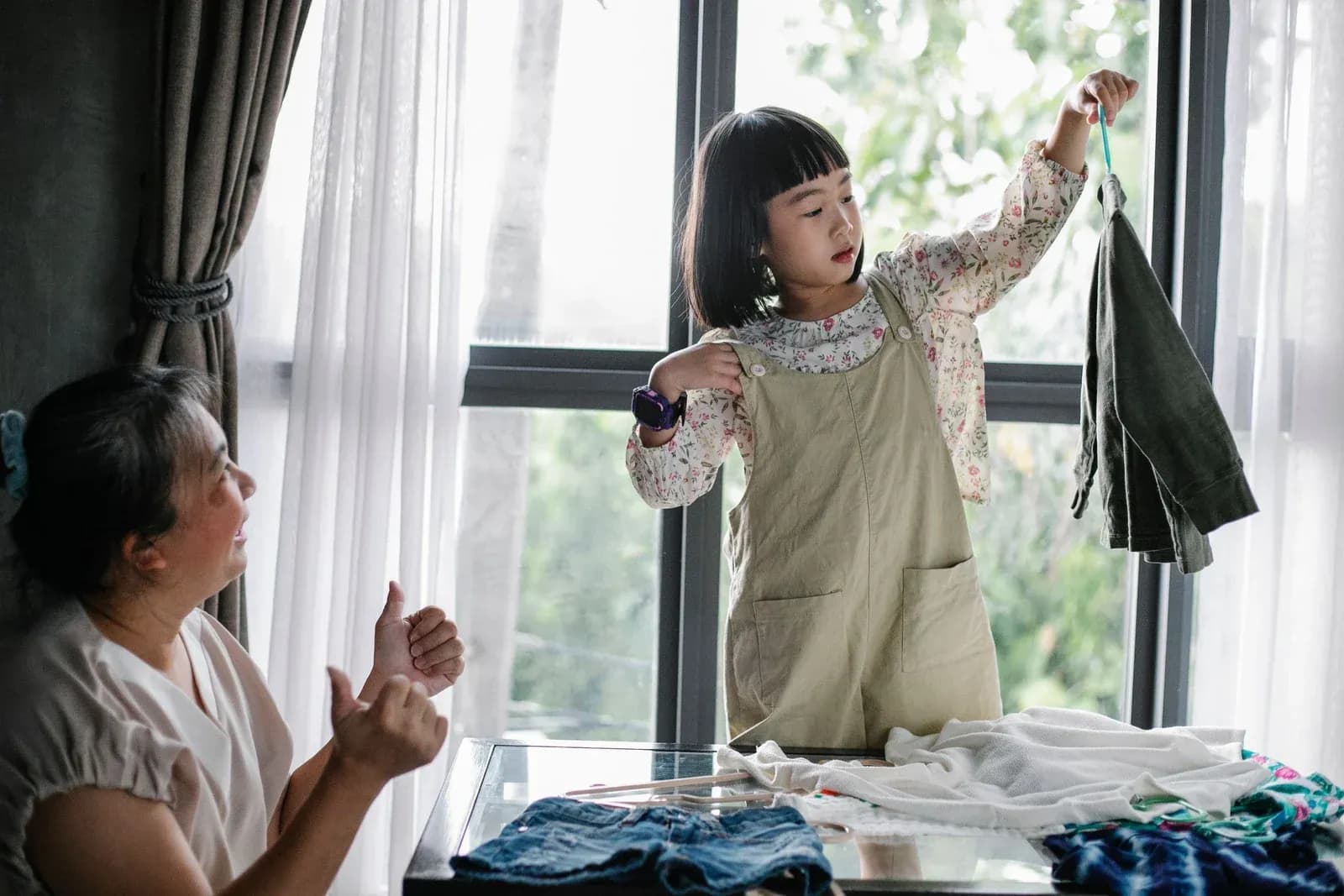
Handing over household jobs gives children far more than a tidier house. A large study in the United States followed nearly 10,000 children from their first year at school. Those who helped at home more often at five and six reported stronger social skills, more confidence in their schoolwork and greater satisfaction with life by the age of eight or nine. A smaller Australian study of children aged 5 to 13 linked regular chores with better working memory and self-control, although it could not show that the chores caused the difference. Children who contribute learn that they belong to the household and that the household depends on them.
The skill lies in matching the job to the child. A task that is too hard ends in tears, and one that is too easy feels babyish. Every child develops at a different pace, so treat the ages below as a guide rather than a rule.
Toddlers and Preschoolers
Children of two and three love to copy you, and that instinct is your best tool. At this age they can put toys back in a basket, carry their own cup to the kitchen, drop dirty clothes into the laundry basket and fill the pet's bowl with a scoop you have measured out. Give one instruction at a time and do the job beside them.
By four and five, most children can make their own bed, lay cutlery on the table, water the plants, pair socks from the clean washing and wipe up their own spills with a cloth. The bed will be rumpled and the napkins may end up on the floor. That is the price of learning, and it is worth paying. Small hands are also useful in the kitchen, where children who cook with you can stir, pour, wash vegetables and tear salad leaves with real pride.
Primary School Years
Between six and eight, children can take on jobs they finish alone. They can empty the cutlery basket from the dishwasher, fold towels, sweep the kitchen floor, sort the recycling and feed the pet without a reminder. Packing their own school bag the night before is one of the most useful jobs of all, and it fits neatly with planning the school morning together. This is often the age when the eager helper of the toddler years starts to grumble. Keep going. A simple chart on the fridge, with each child's name and jobs, takes the nagging out of your voice and puts it on paper.
From nine to eleven, children can load the dishwasher properly, vacuum a room, change their own sheets, hang out washing, peel vegetables and make a simple breakfast or packed lunch. This is a good time to start checking the quality of a finished job together, without redoing it in front of them. Show them once more where the crumbs gather, then let them try again.
Tweens and Teenagers
From twelve onwards, your children can run whole parts of the home. They can cook a complete meal once a week, shop for groceries with a list, clean the bathroom and kitchen, wash the car, manage their own laundry from the basket to the wardrobe and look after younger brothers and sisters for short spells. Each of these is a skill they will need the week they leave home.
Teenagers carry heavy timetables of school, clubs and friendships, so agree their jobs with them rather than handing down a list. A teenager who chooses to cook on a given night, with a recipe they picked, is far more likely to turn up at the stove than one who was ordered there. If exam weeks are tight, swap jobs for that week instead of dropping them, so the habit survives.
Making It Stick
Teach each new job in four steps. Do it while your child watches, do it together, watch while they do it, and then walk away and let them own it. Most of the frustration mothers feel comes from skipping straight to the last step.
Then hold back on perfection. The bathroom mirror will have streaks and the sweeping will miss a corner. If you redo the job, your child learns that their effort does not count. This is a good place to lower one standard at home and accept done over perfect.
Praise the effort and the follow-through, not the result. Use the language of belonging: 'In this family, we all clear our plates' lands very differently from 'Clear your plate.' Many families keep pocket money separate from everyday jobs, so that laying the table stays part of being in the family rather than a transaction. Let your children see that the grown-ups share the work too, which lightens the mental load mothers carry as well as the physical one.
The forks will sit on the wrong side of the plate for a while, and the towels in the airing cupboard will not look like yours. Leave them there. Each lumpy bed and wonky towel is your child learning that a home is something people make together, and every job you hand over gives a few minutes of your evening back to you. One day your son will cook supper for people he loves, or your daughter will show a flatmate how to clean an oven, and the lesson will have started in a kitchen like yours, on an ordinary evening, when you passed over the tea towel and let them take it.
Enjoying this article?
Subscribe to our newsletter and never miss a story. No spam, ever.