Rich Travel, November 2026: Magical Destinations

About This Issue

Three words on the back of a postcard are the oldest invitation in travel. This November, Rich Travel Magazine sends them to you, with winter escapes from the Alps to Iona.

Editor's Letter

Editor's Letter: Wish You Were Here, and This Winter You Can Be

By Dr Marina Nani

When did you last send a postcard?

Mine went in the post years ago, from a beach in August, with three words on the back that everyone understood: wish you were here. This month IOLLA has put those same words on the campaign for its Alpine Edit, and the Icy Blue and Dusty Pink frames from that campaign are on our cover. I smiled the moment I read the line. It is the oldest invitation in travel, and it works just as well in winter as it does in summer.

Most of us treat November as a month to stay at home. The evenings close in, the summer colour has faded from your skin and the next holiday feels a long way off. Yet winter gives you things that summer cannot. Christmas markets open in cathedral squares across Europe, the first snow settles on the Alps, and museums with queues round the block in July let you walk straight in.

We have called this edition Magical Destinations, and it is built around those winter escapes. You will find eight magical places to visit before Christmas, from the underground market at Valkenburg to the lights of Madeira, and eight luxury escapes that run from the Advent markets of Vienna to the Icehotel in Swedish Lapland. If you would rather stay closer to home, we have the opening dates for ten UK Christmas markets, from Manchester and York to Edinburgh and Bath, and a guide to eight underrated Christmas markets in Europe that most visitors walk past.

Travel is changing this winter, and a little knowledge saves you money. Ryanair has warned that European fares could rise by 20% next year as airlines cut winter flights. The European Union has published its first tourism strategy, which aims to spread visitors across more places and more months. If the Amalfi Coast is on your list, Naples airport is closed for all of November, and Salerno puts you closer to the coast anyway.

More of you are also choosing to swap weekend breaks for longer stays, and I understand why. A week in one place lets you learn the name of the woman at the bakery and find the bench where the light falls best at four o'clock. For the same reason I hope you will read our ten destinations for the soul, from Iona to Lake Ohrid, where the point of the journey is to stop.

One story in this edition stayed with me. Michael Palin, now 83, is unsure whether he will travel abroad again after 37 years of exploring the world for television. The trips you postpone are the ones you remember wanting. If there is a place you have promised yourself for years, this is the winter to book it.

When you go, pack your sunglasses. Fresh snow reflects about 80 per cent of the sun's ultraviolet light, and our cover story on IOLLA's Alpine Edit shows you how to choose a winter pair that protects your eyes and still looks like you.

Then send me a postcard. Tell me where you went and what you found there. I would love to read it, and I would love to wish I were there.

Marina Nani Editor-in-Chief

IOLLA's Alpine Edit Brings Icy Blue and Dusty Pink Sunglasses to Winter, at £85 a Pair

By Dr Marina Nani

Most sunglasses go into a drawer in September and stay there until the first warm weekend of spring. IOLLA, the eyewear brand founded in Glasgow in 2015, would like you to take yours back out. Its Alpine Edit, which launches today, the 6th November, adds seven winter colourways to frames already in its collection, in two shades taken from the ski season: Icy Blue and Dusty Pink.

The brand describes the collection as a response to the return of après-ski dressing and what the fashion pages have started calling Chalet Chic. The campaign behind it places the frames in a surreal snowscape under the lines 'Wish You Were Here' and 'See You in the Snow'. One of those images is on our cover this month.

Snow Sends the Sun Back Into Your Eyes

The case for winter sunglasses is stronger than most people assume. According to the World Health Organization, fresh snow reflects about 80 per cent of the sun's ultraviolet rays, against less than 10 per cent for grass, soil or water and about 20 per cent for sand. On a bright day on the slopes, UV reaches the eyes from above and again from below.

Too much of it causes photokeratitis, better known as snow blindness, a painful burn on the surface of the eye that leaves it red, gritty and blurred for a day or two. Over a lifetime, UV exposure is also linked to cataracts. The low winter sun adds glare at eye level, which anyone who has driven home on a clear December afternoon will recognise.

Habits have not caught up. A survey by the American Optometric Association found that more than 80 per cent of Americans wear sunglasses in summer, but fewer than a third put them on in winter.

Icy Blue for Dunbar, Cooper and Ness

Icy Blue is the cooler of the two shades. IOLLA has applied it to three existing silhouettes, Dunbar, Cooper and Ness, and pairs it with lenses such as the pale Glacier tint or a classic grey. The colour first appeared this summer in IOLLA's limited edition collaboration with the Scottish wool brand CLÒIMH, where it was the statement shade among neutrals. It returns here as a winter colour in its own right.

A translucent blue frame does something a black one cannot. It picks up the colour of a pale sky and the shadows in the snow, so it reads as part of the landscape rather than a dark bar across the face.

Dusty Pink for Muir, Jura, Healy and Bonnie

Dusty Pink is the warmer shade, and IOLLA says it was inspired by rosy cheeks and the glow of an alpine sunset. It runs across four designs: Muir, Jura, Healy and Bonnie. Jura comes with brown lenses, which suit the soft, warm cast of the colour, while Bonnie is offered with a Blush tint that keeps the whole pair in the same family.

A smiling woman with curly hair in pink IOLLA sunglasses, a pink knit, a striped scarf and white fur mittens, sitting in front of a snowy forest backdrop.
IOLLA's Alpine Edit in Dusty Pink. Photo: Courtesy of IOLLA

Both shades are meant as an alternative to the camel, grey and black that dominate winter wardrobes. A pink frame with a cream knit, or a blue one with a navy coat, gives an outfit a single bright point without asking anything else in it to change.

One Price, Prescription Lenses Included

The name IOLLA comes from the Scottish Gaelic word for sight, and the business was built on a simple pricing idea. Its core prescription collection costs £85, with lenses and lens thinning included, and a stronger prescription does not cost more. In 2025 the brand added custom tints across its frames and kept its regular sunglasses at the same £85, which makes prescription sunglasses a realistic second pair rather than a luxury.

Founder and chief executive Stefan Hunter, who grew up in Inverness, has expanded the brand well beyond Glasgow. IOLLA now has eight showrooms across six UK cities, including its first permanent London showroom on Hill Street in Richmond and a new showroom on George Street in Aberdeen, which opened this year.

'IOLLA was built around the idea that great design and exceptional service shouldn't come at an inflated price,' Hunter said when the Aberdeen opening was announced.

The Alpine Edit follows Back in Focus, IOLLA's autumn campaign shot in Stockport and across Greater Manchester, which introduced two new shapes. Lachlan, a square aviator with a strong browline, is also available as sunglasses for anyone who would rather keep winter eyewear in tortoiseshell than in pastel.

Choosing a Winter Pair That Still Feels Like You

Protection comes first, and it does not depend on price. The American Optometric Association advises lenses that block 99 to 100 per cent of UVA and UVB rays and screen out 75 to 90 per cent of visible light. For the slopes, polarised lenses cut the glare that bounces off snow, and IOLLA now offers them across its collection. Cancer Council guidance for alpine trips adds that wraparound shapes or close-fitting goggles stop reflected light from reaching the eyes from the sides.

Style is the easier part. The best frame is the one you forget you are wearing, the one that already feels like yours. If your coat, scarf and hat are all neutral, a coloured frame is the simplest way to change the mood of a winter outfit. If you would rather your eyewear blended in, the same shapes come in tortoiseshell and darker acetates.

Pack a pair whether you are heading for the Alps or a city break. Our guide to eight magical places to visit before Christmas and our luxury escapes from Vienna to the Arctic Icehotel both involve a good deal of bright winter light, and a few of the destinations for the soul from Iona to Lake Ohrid are best seen on a cold, clear morning.

The Alpine Edit is available from today online and in IOLLA showrooms.

Frequently Asked Questions

Why should you wear sunglasses in winter?
Ultraviolet light reaches the eyes all year, and on overcast days most of it still passes through the clouds. In winter the sun sits lower in the sky, so it shines at eye level for longer and causes more glare, particularly when driving. Snow makes it worse because it reflects about 80 per cent of UV rays. Over time, UV exposure is linked to cataracts, so a pair with full UVA and UVB protection is worth wearing in every season.
Do you need sunglasses in the snow?
Yes. Fresh snow reflects about 80 per cent of the sun's UV rays, so the eyes receive light from above and from the ground at the same time. Without protection this can cause photokeratitis, or snow blindness, a painful burn on the surface of the eye that brings redness, a gritty feeling and blurred vision. The risk rises at altitude. Choose lenses that block 99 to 100 per cent of UVA and UVB, and consider polarised lenses and a wraparound shape for skiing.
How do I choose sunglasses for my face shape?
A common rule is to choose a frame that contrasts with the shape of your face. Round faces tend to suit square or angular frames, while square faces are softened by round or oval frames. Oval faces suit most shapes, and heart-shaped faces often suit frames that are wider at the bottom, such as aviators. Fit matters as much as shape: the frame should sit level, not press on the temples, and cover the eyes fully from the front.

Eight Magical Places to Visit Before Christmas, From Valkenburg's Underground Market to Madeira's Lights

By Dr Marina Nani

Some Christmas trips are about the market. These eight are about the moment that makes you stop: stalls glowing in caves under a Dutch hill, a sleigh crossing the sky above Lake Geneva at dusk, a hillside city in the Atlantic switching on its lights at once. None of them appeared in our first guide to luxury escapes before Christmas, which took you to Vienna, Salzburg, Venice, Zermatt and Swedish Lapland. Here they are, listed in the order their season begins.

Valkenburg's Christmas Caves in the Netherlands

In the far south of the Netherlands, a short train ride from Maastricht, the town of Valkenburg aan de Geul holds its Christmas markets inside the hill. From 13th November to 30th December 2026, stalls fill the marl galleries of two caves. The Gemeentegrot, under the Cauberg, is billed as the largest underground Christmas market in Europe. The Fluweelengrot, the Velvet Cave beneath the castle ruin, takes a North Pole theme this year. Both caves close on 25th December.

Each cave needs its own timed ticket, bought online. At the Gemeentegrot, an adult ticket costs €9.30 from Monday to Thursday and €11.30 from Friday to Sunday, and weekend slots sell out first. The galleries stay cool all year, so bring a warm layer. Above ground, Christmas Town Valkenburg keeps its parade and lights going until 3rd January 2027.

Where to stay: the Kruisherenhotel in Maastricht occupies a 15th-century Gothic monastery and church.

Tallinn's Medieval Town Hall Square in Estonia

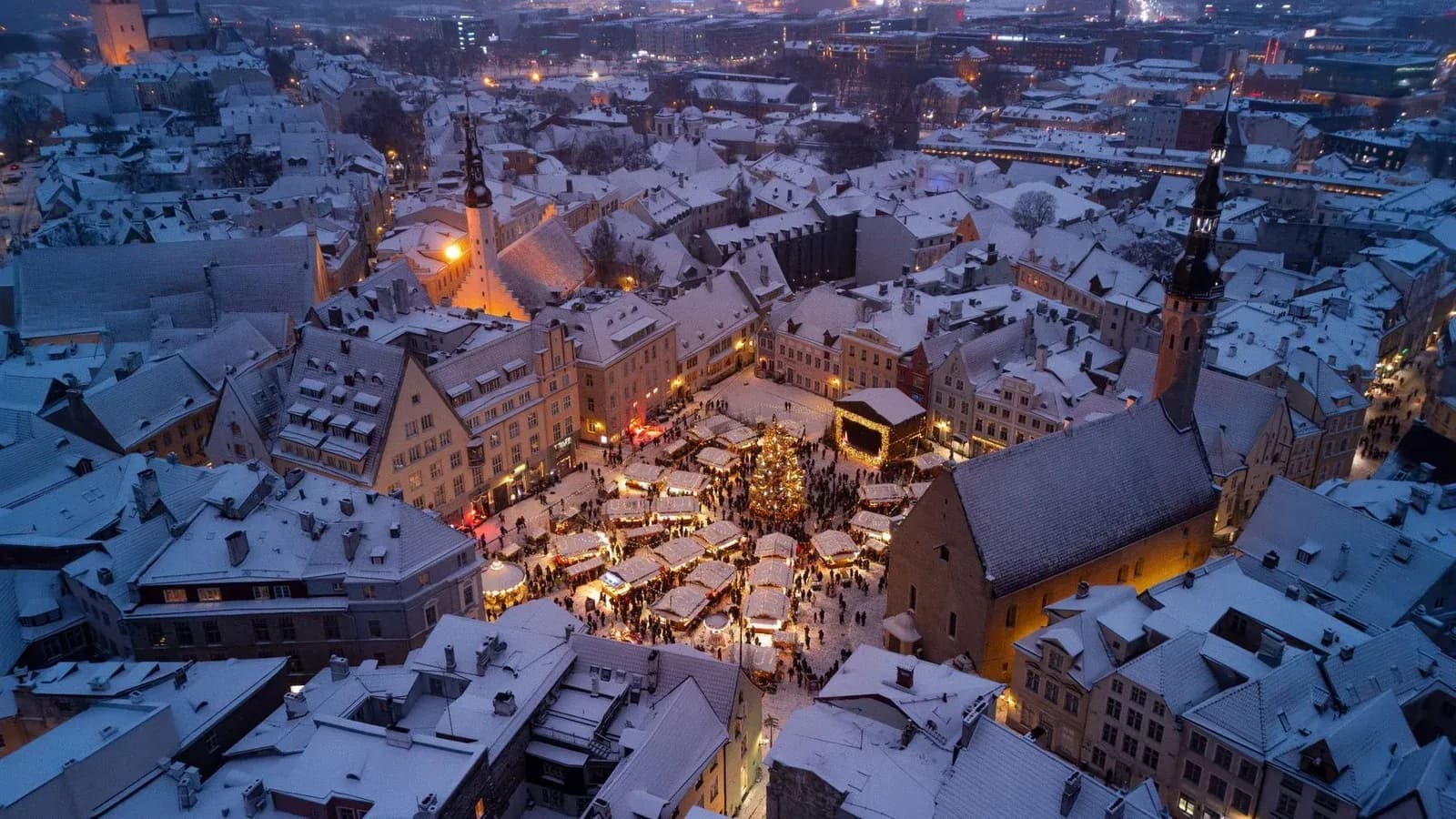
Tallinn has raised a Christmas tree on its Town Hall Square since 1441, one of the oldest public Christmas tree traditions in Europe. From 20th November 2026 to 6th January 2027, wooden huts ring the square around the tree, with the Gothic Town Hall on one side and the merchant houses of the UNESCO-listed Old Town on the others. Stalls usually open from about 10am to 8pm, with drinks served later into the evening.

Between stalls, step into the Town Hall Pharmacy on the same square. It has traded since 1422, which makes it one of the oldest pharmacies in Europe still in business. In December the light fades by mid-afternoon, so the market glows at its brightest from about 4pm.

Where to stay: Hotel Telegraaf, in a former telegraph station a few minutes' walk from the square.

Montreux and the Flying Father Christmas on Lake Geneva

Montreux Noël runs from 20th November to 24th December 2026, with more than 170 lit chalets along the Lake Geneva promenade, through the Grand-Rue and into the covered market. The market has been held since 1995, and every evening Father Christmas flies over it in his sleigh.

To see the flight from the water, book the Flying Father Christmas cruise on the Belle Époque ship Vevey, a 45-minute sail to Villeneuve and back that costs CHF 49 for adults. To visit Father Christmas at home, ride the cog railway up to his house on the Rochers-de-Naye, at 2,042 metres above the lake. Down on the shore, the Château de Chillon holds its own medieval Christmas fair.

Where to stay: the Fairmont Le Montreux Palace has faced the lake since 1906.

Dresden's Striezelmarkt in Germany

Dresden's Striezelmarkt was first recorded in 1434, which makes it the oldest documented Christmas market in Germany. Its 592nd edition opens on the Altmarkt on 25th November 2026, when the mayor cuts the first stollen, the buttery fruit loaf Dresden has baked for Christmas for centuries, and the market runs until 24th December.

More than 200 stalls sell wooden toys, candle arches and nutcrackers carved in the villages of the Ore Mountains, and above them stands the largest walkable stepped Christmas pyramid of its kind in the world, 14.61 metres tall. On the second Saturday of Advent, 5th December, the stollen festival parades a giant loaf through the old town before it is cut on the market square.

Where to stay: the Hotel Taschenbergpalais Kempinski, a baroque palace facing the Zwinger.

Nuremberg's Christkindlesmarkt in Germany

At 5.30pm on 27th November 2026, the Nuremberg Christkind, a young woman in a golden crown elected to play the Christ Child, steps onto the balcony of the Frauenkirche and opens the Christkindlesmarkt with a prologue to the crowd below. The market, first recorded in 1628, then fills the Hauptmarkt with around 180 stalls until 24th December, open daily from 10am to 9pm and until 2pm on Christmas Eve.

Nuremberg keeps strict rules on what its stallholders sell, so you find handmade decorations, wooden figures and the city's spiced gingerbread rather than mass-produced gifts. Try the small grilled sausages, served three to a bread roll, and drink your mulled wine from a collectible mug, returned for a deposit.

Where to stay: Le Méridien Grand Hotel Nuremberg, across the square from the main station.

Prague's Old Town Square in the Czech Republic

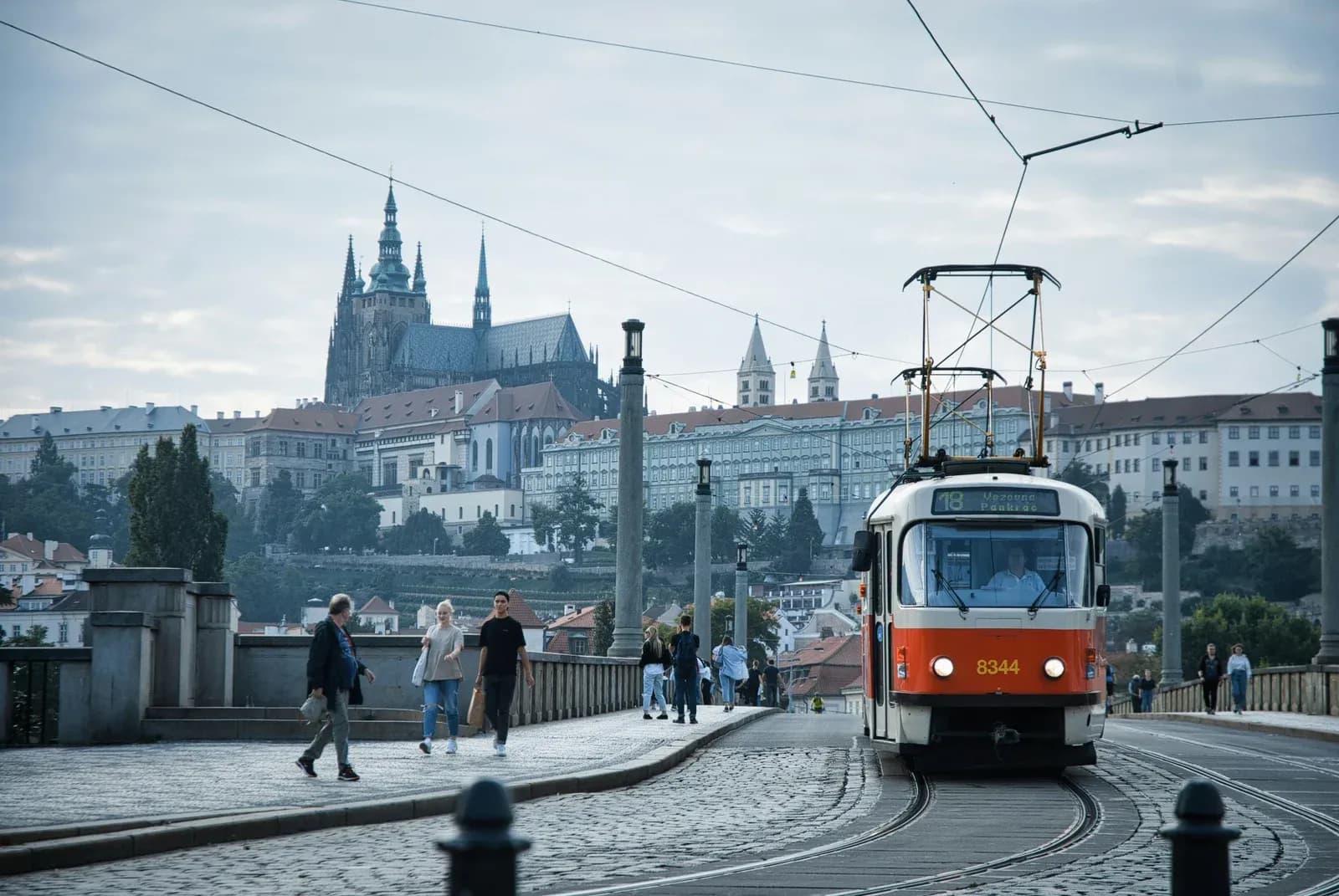
Prague's main Christmas markets on the Old Town Square and Wenceslas Square run from 28th November 2026 to 6th January 2027, daily from 10am to 10pm. On the Old Town Square, the great tree stands between the Old Town Hall and the twin towers of the Týn Church, and its lights are switched on with music several times each evening.

For the finest view, climb the Old Town Hall Tower and look down over the stalls and rooftops. If the main squares feel crowded, walk to the smaller markets on Republic Square, open from 25th November to 24th December, and Peace Square, where you pay less for the same mulled wine and grilled ham.

Where to stay: the Four Seasons Hotel Prague, on the Vltava beside Charles Bridge.

Advent in Zagreb, Croatia

Advent in Zagreb is a festival across the whole city centre rather than one market. It officially opens on 28th November 2026 and runs until 7th January 2027, with stalls trading from 25th November. You move from Ban Jelačić Square, the main square, to Europski trg, through the lit avenues of Zrinjevac park and up to the Upper Town, with music, skating and food along the way.

Entry is free everywhere, and last season a cup of mulled wine cost about €4, so Zagreb gives you six weeks of Advent at a fraction of the price of the big Alpine markets. Go in the late afternoon on a weekday, when the crowds are thinner.

Where to stay: the Esplanade Zagreb Hotel, opened in 1925 for passengers of the Orient Express.

Madeira's Christmas Lights in Funchal, Portugal

On 1st December 2026, as night falls, Funchal switches on the Christmas lights that cover its city centre and the hillside amphitheatre above the harbour, and they stay lit until 10th January 2027, according to the official calendar. December days in Madeira reach around 19°C to 20°C, so you can walk the lit streets in a light jacket.

On 23rd December, the night before Christmas Eve, the Mercado dos Lavradores farmers' market stays open through the night for Market Night, one of the island's best-loved traditions. If you stay on, the New Year's Eve fireworks rise over the bay from 59 launch sites across the land and sea.

Where to stay: Belmond Reid's Palace, on its clifftop above the Atlantic since 1891.

How to Choose

For the most unusual setting, go to Valkenburg's caves. For snow and medieval streets, choose Tallinn or Prague. Montreux and Dresden give you the strongest Christmas traditions, Nuremberg the finest handmade gifts and Zagreb the best value. If you would rather spend December in sunshine, Madeira gives you Christmas lights without a winter coat. Check each opening date against your free week and book soon, as the best rooms go first.

Eight Luxury Escapes to Take Before Christmas, From Vienna's Advent Markets to the Arctic Icehotel

By Dr Marina Nani

Every November, artists from around the world travel to Jukkasjärvi, a village in Swedish Lapland, to carve a hotel out of ice taken from the Torne River. They have about four weeks to finish the rooms. On 11th December the doors open, and by spring the whole building has melted back into the river it came from.

The Icehotel is the most extreme version of something that happens all over Europe in the weeks before Christmas. Lifts start turning on the glaciers above Zermatt. Wooden stalls go up on cathedral squares in Salzburg and Strasbourg. A bridge of pontoons appears across the Grand Canal in Venice for a few days. Each of these places has an opening night, and if you arrive close to it, you see the place at its freshest, before the school holidays fill the hotels.

Here are eight, listed in the order their season begins.

1. Zermatt, Switzerland: glacier skiing under the Matterhorn from 1st November

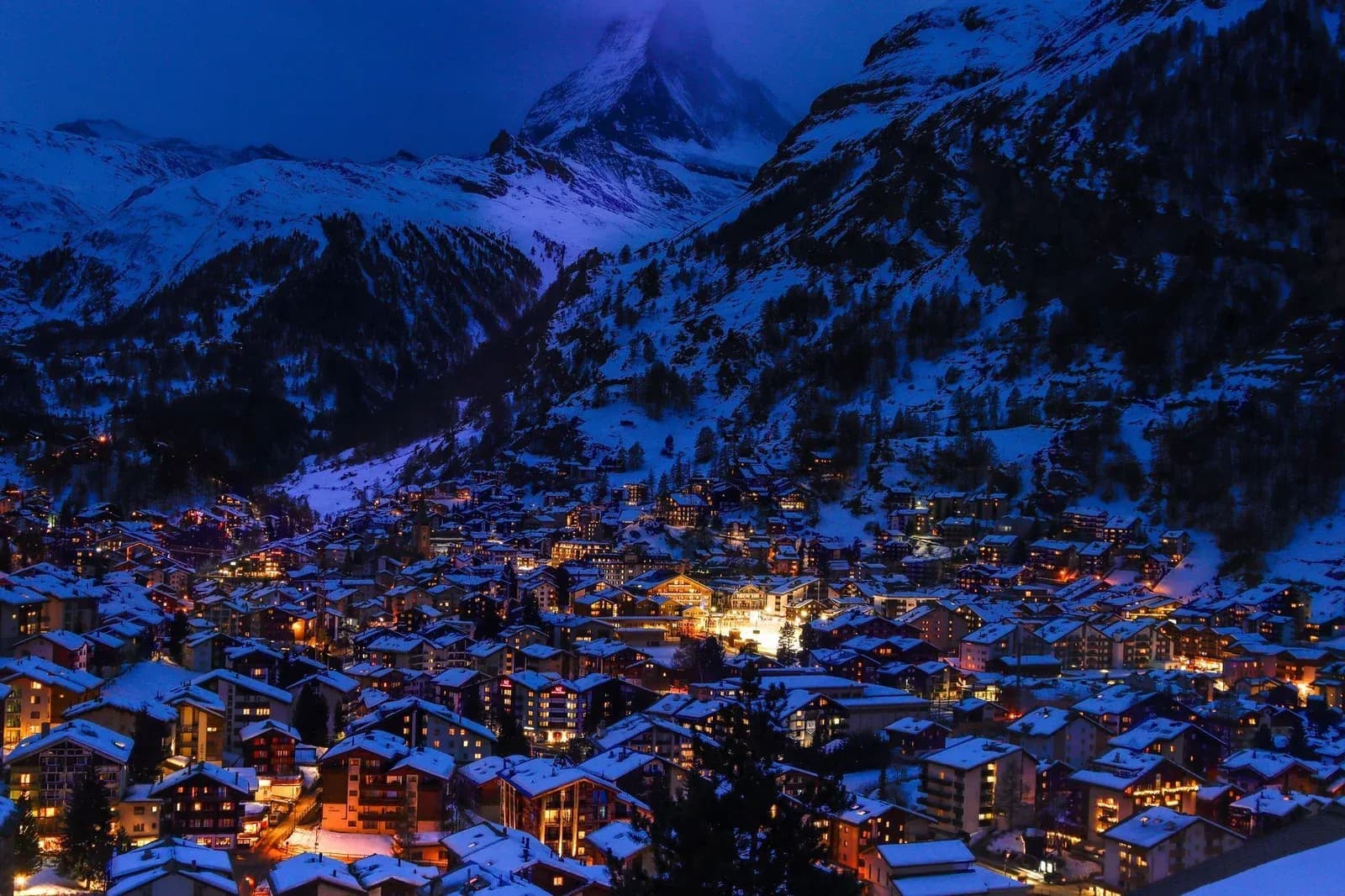
Zermatt starts its winter at the top of the mountain. From 1st November, skiers ride up to the Matterhorn Glacier Paradise, which at 3,883 metres is the highest cable car station in Europe, and ski the glacier long before the lower slopes have snow. From 14th November, the Matterhorn Express gondola links the village to the glacier via Schwarzsee. The resort's Winter Opening Weeks run until 6th December, and the lower ski areas open in stages as the snow arrives.

Zermatt is closed to ordinary cars, so you leave yours at Täsch and finish the journey on a shuttle train. The Matterhorn, at 4,478 metres, fills the view from much of the village.

Where to stay: The Mont Cervin Palace sits on the main street, a short walk from the station, with a large spa and rooms that face the mountain.

2. Vienna, Austria: the City Hall market opens on 13th November

Vienna's main Christmas market fills the square in front of the neo-Gothic City Hall from 13th November to 26th December. Beside it, the Eistraum ice rink lays around 3,000 square metres of ice along paths that wind through the Rathauspark, and it stays open until 6th January. Inside the City Hall, choirs from Austria and abroad sing Advent concerts in the great ceremonial hall on Friday, Saturday and Sunday afternoons until 20th December.

If you have visited before, note one change: the market outside the Belvedere palace will not take place in 2026, as construction work is under way in front of the building.

Where to stay: Hotel Sacher faces the State Opera and has received guests since 1876. The chocolate cake that carries its name is older still. Franz Sacher created it in 1832, at the age of 16, for Prince Metternich, and the hotel café serves it with unsweetened whipped cream.

3. Copenhagen, Denmark: Tivoli Gardens lights up on 13th November

Tivoli Gardens opened in 1843, and at Christmas it turns into a winter village in the middle of the city. The season runs from 13th November to 3rd January, with the gardens closed on 24th December. Inside, you will find wooden stalls among the rides, mulled wine served with raisins and almonds, and small round pancakes dusted with sugar and dipped in jam. The Tivoli Concert Hall stages The Nutcracker each Advent in sets and costumes designed by Queen Margrethe II.

Outside the gardens, the market map has changed this year. The popular market on Højbro Plads will not run in 2026, and a new market takes its place on City Hall Square from 11th to 20th December.

Where to stay: Hotel d'Angleterre overlooks Kongens Nytorv, the city's grandest square, and traces its history to 1755.

4. Sibiu, Romania: the Great Square market opens on 13th November

Saxon settlers founded Sibiu in the 12th century, and its old town still shows it: pastel merchant houses, defensive towers and steep roofs set with small dormer windows shaped like half-closed eyes, which locals say keep watch over the streets. From 13th November 2026 to 3rd January 2027, the Christmas market fills the Great Square, Piața Mare, with more than 120 stalls, a Ferris wheel and an ice rink. Try the smoked sausages, cabbage rolls stuffed with pork and rice, and chimney cakes, sweet dough wrapped around a spit and baked over coals until the outside caramelises.

The town was European Capital of Culture in 2007, and the Brukenthal Museum, in a baroque palace on the same square, opened to the public in 1817, which makes it the oldest museum in Romania. After the market, walk down to the Small Square and across the cast-iron Bridge of Lies.

Where to stay: Hotel Împăratul Romanilor stands a short walk from the Great Square. Rebuilt in 1895, it counts Franz Liszt and Johann Strauss among its past guests.

5. Salzburg, Austria: the cathedral square market opens on 19th November

Salzburg's Christkindlmarkt spreads across Domplatz and Residenzplatz in the UNESCO-listed old town from 19th November to 1st January 2027. The stalls sell handmade decorations, carvings and regional food in front of the cathedral, and the programme follows Alpine tradition. On 5th December at 6.30pm, the Krampus run fills the square with horned, fur-clad figures who, in local folklore, travel with Saint Nicholas to frighten children who misbehave. A Perchten run follows on 21st December.

About 20 kilometres north, in the village of Oberndorf, Silent Night was sung for the first time on 24th December 1818, with words by the priest Joseph Mohr and music by the schoolteacher Franz Xaver Gruber. The Silent Night Chapel now stands on the site of the original church, an easy half-day trip from Salzburg.

Where to stay: Hotel Sacher Salzburg stands on the bank of the Salzach, with views across the river to the old town and the fortress above it.

6. Venice, Italy: a bridge across the Grand Canal on 21st November

In 1630, plague killed a large part of Venice's population, and the Republic made a vow to the Virgin Mary: if the city survived, it would build her a church. The result is the domed basilica of Santa Maria della Salute, designed by Baldassare Longhena and consecrated in 1687 at the mouth of the Grand Canal. Every 21st November since, Venetians have walked to it to give thanks.

For the Festa della Salute, which falls on a Saturday this year, the city builds a temporary bridge of pontoons across the Grand Canal from Santa Maria del Giglio. Thousands of people cross it to light a candle inside the basilica, stalls sell fritters and sweets, and many Venetian families still eat a stew of smoked mutton and cabbage that belongs to this day alone. The city confirms the dates of the bridge by ordinance in early November.

The timing suits you in two other ways. The Art Biennale stays open until 22nd November, and the day-tripper access fee applies only on selected days between April and July, so late November carries no charge.

Where to stay: The Gritti Palace, once the home of Doge Andrea Gritti, stands on Campo Santa Maria del Giglio, exactly where the votive bridge begins.

7. Strasbourg, France: the oldest Christmas market in France opens on 27th November

Strasbourg's Christkindelsmärik is first recorded in 1570, which makes it the oldest Christmas market in France, and the city has called itself the Capital of Christmas for decades. The 2026 edition opens on 27th November. The city has not yet published the closing date, although last year's market ran until 24th December.

The stalls spread across the old town island, from Place Broglie, where the market began, to the square below the cathedral. Built from pink sandstone, the cathedral was the tallest building in the world from 1647 to 1874, and after dark it becomes the backdrop for the whole market. Place Kléber holds the city's great Christmas tree. Try the spiced gingerbread, the small Alsatian Christmas biscuits sold by weight and mulled white wine, an Alsatian speciality.

The TGV from Paris takes about 1 hour 45 minutes, so you can reach Strasbourg from London in a day by rail.

Where to stay: The Régent Petite France sits on the river Ill in Petite France, the old tanners' quarter of half-timbered houses and canals.

8. Swedish Lapland: the Icehotel opens its 37th edition on 11th December

The 37th Icehotel opens on Friday 11th December 2026. Each winter, artists design the art suites and halls from scratch using ice from the Torne River, so no two seasons look the same. When the thaw comes, the building returns to the river.

The rooms stay below freezing, and guests sleep on reindeer hides inside thermal sleeping bags. Most people spend one night on the ice and the rest of the trip in the heated rooms on the same site. If you arrive before opening, ICEHOTEL 365, open all year since 2016, offers art suites made of ice and snow. Kiruna Airport is about 15 kilometres away, and the long Arctic nights of December give you the best odds of seeing the northern lights.

The opening package for 10th to 12th December is already fully booked, so look at the week that follows.

Where to stay: Book one night in an art suite for the experience, then move to a warm room or cabin on the Icehotel site for the rest of your stay.

How to choose

If you want snow and sport, go to Zermatt or Swedish Lapland. If you want music, pastry and candlelit squares, Vienna and Salzburg sit about two and a half hours apart by train and can share one trip. Venice and Strasbourg give you the deepest history, and Sibiu gives you the finest medieval square in Transylvania at its most festive. Whichever you choose, check the opening date on this list against your free week and book now, as the best rooms in all eight go first.


UK Christmas Markets 2026: Opening Dates for Manchester, York, Edinburgh, Bath and Six More

By Dr Marina Nani

Manchester Christmas Markets open today, Friday 6th November, one day after Birmingham switched on its Frankfurt market. Over the next three weeks the rest of Britain follows, from York and Cardiff on Thursday 12th November to Bath on Thursday 26th November. Some dates have changed this year: York now closes every Tuesday, Manchester has a new site at Lincoln Square and Bath runs for just 18 days.

Every date below comes from the organisers or the official city tourism boards. Use it to pick your market, book your train and plan the day you go.

UK Christmas Market Dates at a Glance

  • Birmingham Frankfurt Christmas Market: 5th November to 24th December
  • Manchester Christmas Markets: 6th November to 22nd December, with Albert Square and Cathedral Gardens open until 3rd January 2027
  • Chatsworth Christmas Market: 7th November to 13th December
  • York Christmas Market: 12th November to 21st December, closed on Tuesdays
  • Cardiff Christmas Market: 12th November to 23rd December
  • Edinburgh's Christmas Market: 14th November 2026 to 3rd January 2027
  • Belfast Christmas Market: 14th November to 22nd December
  • Hyde Park Winter Wonderland: 19th November 2026 to 3rd January 2027
  • Winchester Cathedral Christmas Market: 20th November to 22nd December
  • Bath Christmas Market: 26th November to 13th December

Birmingham Frankfurt Christmas Market

Birmingham opened first, on Thursday 5th November, and runs until Christmas Eve. The chalets line Victoria Square and New Street, and the market is billed as the largest authentic German Christmas market outside Germany and Austria. It came from Birmingham's partner city, Frankfurt, in 1997, and many of the traders still travel over from Frankfurt each year.

Monday to Thursday, you can browse from 11am to 9pm. On Remembrance Sunday, 8th November, the market opens at 1pm. Entry is free.

Manchester Christmas Markets

Manchester spreads more than 210 stalls across ten city centre sites. Most of them trade from today until Tuesday 22nd December, from 10am to 9pm. Albert Square and Cathedral Gardens stay open through the Christmas break until Sunday 3rd January 2027.

Lincoln Square, next to Brazennose Street, is new for 2026 and smaller than the main sites. St Ann's Square has a new layout. Albert Square has a 50-metre Ferris wheel and a helter-skelter, and Skate Manchester returns to Cathedral Gardens. The Manchester Christmas Parade is on Sunday 6th December.

Chatsworth Christmas Market

The Derbyshire estate holds more than 100 stalls on the avenue below Chatsworth House from 7th November to 13th December. Entry to the market is free, but parking is not: if you drive without a Christmas at Chatsworth ticket, you must book a market car park ticket in advance, from £25 for the full day or £15 after 3pm. Arrive by public bus and you pay nothing.

Christmas at Chatsworth, with the house decorated around The 12 Days of Christmas and a light trail in the garden, runs on until 3rd January 2027. A ticket for that includes the market on any visit up to 13th December.

York Christmas Market

York's market, long known as the St Nicholas Fair, fills Parliament Street and St Sampson's Square from Thursday 12th November to Monday 21st December. More than 80% of the traders come from Yorkshire.

The big change for 2026 is a weekly rest day. The market now closes every Tuesday and opens from 10.30am to 7pm, Wednesday to Monday. On the final day, 21st December, it closes at 5pm. If you plan a day trip, check your train is not on a Tuesday, and expect Wednesday mornings to be busier than in past years.

Cardiff Christmas Market

Cardiff opens on Thursday 12th November and runs until Wednesday 23rd December, with more than 200 stalls along St John Street, Working Street, Trinity Street and Hills Street. Trading hours are 10am to 6pm from Monday to Saturday and 10am to 5pm on Sundays, with late opening until 7pm on Thursdays in December.

New this year, Queen Street becomes a Victorian Christmas Market. Not every maker trades for the whole season, so if you are going for one stall, check its trading dates on the market website first.
Edinburgh's Christmas Market

Edinburgh's Christmas runs for 51 days, from Saturday 14th November to Sunday 3rd January 2027. The main market fills East Princes Street Gardens below the Scott Monument with around 70 wooden chalets. Entry is free and the market opens from 10am to 10pm, with shorter hours on some holiday dates and a full closure on Christmas Day.

The Big Wheel and the Star Flyer sit in the same gardens, and the family funfair takes over West Princes Street Gardens. Rides, skating and Santa's Stories need separate tickets. The weekend of 19th and 20th December is expected to be the busiest of the season.

Belfast Christmas Market

Belfast's market returns to the grounds of City Hall from Saturday 14th November to Tuesday 22nd December, with around 100 chalets of international food and local crafts. The city's Christmas lights switch-on at City Hall is on the opening night, 14th November, from 6.30pm to 7.30pm. Belfast City Council is also looking at taking the market beyond the City Hall grounds for the first time, so check the layout before you go.

Hyde Park Winter Wonderland

London's festive fair in Hyde Park opens on Thursday 19th November and runs until Sunday 3rd January 2027, closing only on Christmas Day. It is open from 10am to 10pm, but opens at 12pm on 19th and 20th November.

Unlike the other markets on this list, Winter Wonderland needs an entry ticket for every visitor, whatever their age, booked for a set arrival time. Off-peak entry starts at £1. Peak sessions, mostly later in the day and at weekends, are the most popular slots.

Winchester Cathedral Christmas Market

Winchester's market runs for 33 days, from Friday 20th November to Tuesday 22nd December, with 128 wooden chalets in the cathedral grounds. It opens from 10am to 8pm on Fridays and Saturdays and from 10am to 6pm from Sunday to Thursday. Entry is free and you do not need to book. The chalets sit in the Inner Close, so you will not see them until you walk past the cathedral.

Bath Christmas Market

Bath has the shortest season of the major markets: 18 days, from Thursday 26th November to Sunday 13th December. Around 245 traders set up in the streets around Bath Abbey and the Roman Baths. The 2024 market drew an estimated 444,000 visitors, so book your train and your table early. Coaches drop off and pick up on Royal Avenue.

How to Plan Your Christmas Market Visit

  • Go on a weekday morning. Saturday afternoons in Birmingham and Manchester are the most crowded times of the season.
  • Book parking or tickets before you travel. Chatsworth parking and Winter Wonderland entry must be booked in advance.
  • Check the closing day. Bath and Chatsworth both close their markets on 13th December, well before Christmas.
  • Check the day of the week. York closes every Tuesday, Cardiff closes at 5pm on Sundays and Winchester stays open late only on Fridays and Saturdays.

If you would rather cross the Channel, our guide to 8 Underrated Christmas Markets in Europe has dates for smaller markets with shorter queues, and Eight Magical Places to Visit Before Christmas goes from Valkenburg's underground market to Madeira's lights.

8 Underrated Christmas Markets in Europe

By Dr Marina Nani

In October, more than 800,000 travellers voted in the European Best Destinations ranking of Christmas markets, and first place went to a city many of them had probably never visited: Craiova, in southern Romania. The result says something about how Christmas travel is changing. Vienna, Prague and Strasbourg still draw the biggest crowds, and Vienna's Advent markets remain a classic for good reason, but some of the most rewarding markets this year sit in smaller cities, in caves and in medieval squares that rarely make the headlines.

Here are eight worth the journey, in the order they open.

1. Craiova, Romania: 13th November to 3rd January

Craiova took first place in this year's European Best Destinations vote with more than 142,000 votes, moving up from second place last year. The market fills the city centre and is said to cover more than 280,000 square metres, with giant ornaments, light installations, an ice rink, a panoramic wheel and hand-painted wooden cottages. The food reaches well beyond Romania, with dishes from Armenia, Georgia, Greece, Bulgaria and Serbia alongside local specialities.

Why go: few European markets offer this scale at Romanian prices, and the crowds are still mostly local.

2. Sibiu, Romania: 13th November to 3rd January

Sibiu started its market in 2007, the year it was a European Capital of Culture, and this winter brings its 19th edition to Piața Mare, the Grand Square of its walled old town. More than 120 exhibitors from across Romania and abroad sell crafts and traditional products, and the square adds a 22-metre panoramic wheel, a 600-square-metre ice rink and a Santa's Workshop. Entry is free. This year the market was named one of only 12 "Excellent European Christmas Markets" by the European Excellent Christmas Market Association, which assessed more than 600.

Why go: Transylvanian architecture under snow, and two of Europe's best-rated markets in one country if you add Craiova.

3. Valkenburg, the Netherlands: 13th November to 3rd January

Valkenburg, in the hills of South Limburg near Maastricht, turns into a Christmas town every winter, but its real draw lies underground. Two of its markets are held in centuries-old marl caves, the Fluweelengrot and the Gemeentegrot, which the Dutch motoring association ANWB describes as the oldest and largest underground Christmas markets in Europe. The Fluweelengrot market, now in its 26th year, has around 50 stalls and a food square.

Why go: a market that stays dry and sheltered whatever the weather. The cave markets need tickets, run from 13th November to 30th December and close on Christmas Day.

4. Tallinn, Estonia: 20th November to 6th January

Tallinn's market fills Town Hall Square in the medieval Old Town, among cobbled lanes, church spires and small shops. The city claims to have raised the first public Christmas tree in this square in 1441, a claim Riga disputes. Estonia's own historians say it is not known whether that first tree was decorated, only that it was brought out and later burned in a ceremony. This year's tree will be lit on the first Sunday of Advent, 29th November.

Why go: one of the best-preserved medieval centres in Northern Europe, with a market that runs well into January.

5. Esslingen, Germany: 24th November to 22nd December

A short ride from Stuttgart, Esslingen am Neckar stages two markets at once among the half-timbered houses of its old town: a traditional Christmas market and a medieval market. Around 180 stalls spread across the Marktplatz, Rathausplatz and Hafenmarkt. On the medieval side, artisans demonstrate old crafts, cooks serve period-style food and fire performers take over the lanes after dark. On Advent weekends, more than 30 craftspeople join a separate market on Ritterstraße.

Why go: Germany's Christmas traditions without the crowds of Nuremberg or Cologne, plus a medieval twist found almost nowhere else.

6. Ljubljana, Slovenia: 27th November to 3rd January

Slovenia's capital switches on its Christmas lights on 27th November at 17:00 on Prešeren Square, and the markets open the same day. The stalls spread along the Breg and Cankarjevo nabrežje embankments, across Congress Square and Pogačar Square, and up to Ljubljana Castle. The city's tourist board describes its lights as one of the most imaginative displays in this part of Europe, and the squares host free concerts throughout the season. The wider Festive December programme continues until 14th January.

Why go: a compact, walkable capital where the whole centre becomes the market. Readers who loved Slovenia in autumn colours will find it just as beautiful in December.

7. Kraków, Poland: from 27th November

Kraków's market opens on 27th November on the Main Market Square, one of the largest medieval squares in Europe. Its signature is the szopka, an ornate nativity scene made from coloured foil in the shape of Kraków's churches and towers. The tradition is on UNESCO's list of intangible cultural heritage, and the annual szopka contest, held since 1937, brings the entries to the square on the first Thursday of December, which this year falls on 3rd December. At the stalls, look for grilled oscypek, a smoked sheep's cheese served with cranberry, as well as pierogi and grzaniec, Poland's mulled wine.

Why go: some of the best-value food of any market on this list. The closing date is expected in early January but has not yet been confirmed by the organisers.

8. Vilnius, Lithuania: 28th November to 27th December

The Lithuanian capital lights its Christmas tree on Cathedral Square on 28th November, and the market of wooden huts opens around it the same day. The city keeps the tree's design secret until the lighting; past trees have taken the form of fairy tales, clocks and even a birthday cake, and the city says its tree has been named Europe's most beautiful four years running. A Christmas train runs through the Old Town until 6th January, and from 15th to 20th December the Design Square market gathers local designers.

Why go: the tree reveal alone is worth timing a weekend around.

Planning your trip

Most of these markets open in the second half of November and close at different dates, so it pays to check the official calendar before booking flights or trains. The Romanian markets, Tallinn and Valkenburg run into the new year, which makes them a good choice for a trip between Christmas and New Year, when Germany's markets have already closed. Entry to the outdoor markets is free, but Valkenburg's cave markets need tickets booked in advance.

10 Destinations for the Soul: Europe's Places of Stillness, From Iona to Lake Ohrid

By Dr Marina Nani

Some places ask nothing of you. You arrive, the light changes, a bell rings somewhere across the water, and for a while the long list in your head goes silent. Europe is full of them, many shaped by monks, hermits and pilgrims who chose a spot precisely because it was hard to reach and easy to be still in.

These ten are not the obvious pilgrim roads, which we mapped in our guide to Europe's sacred routes. They are places to stay in rather than walk through, and most of them are at their most beautiful in the low season, when the crowds have gone home.

Iona, Scotland

Iona is a small island off the western tip of Mull, and the ferry from Fionnphort takes about five minutes. Columba arrived here from Ireland in 563 and founded the monastery that carried Christianity across Scotland and northern England. The restored abbey still stands above the shore, home to the ecumenical Iona Community, and the island's white sand and green water look more like the Caribbean than the Hebrides on a bright day.

Historic Environment Scotland opens the abbey and nunnery from Monday to Saturday, 10am to 4pm, between October and March. Ferries can be cancelled in rough weather, and the abbey may close at short notice when they are, so build a spare day into any winter trip.

Lindisfarne, England

The Holy Island of Lindisfarne, off the Northumberland coast, is cut off by the tide twice a day. St Aidan founded a monastery here in 635 at the invitation of King Oswald, and it was here that the Lindisfarne Gospels, one of the great illuminated books of the early medieval world, were made in honour of St Cuthbert. The ruined priory, the small village and the castle on its rock all sit inside a national nature reserve full of wading birds.

Crossing is part of the experience. Northumberland County Council publishes safe crossing times for the road causeway months in advance, and it asks visitors to allow about 30 minutes extra in high wind. The older Pilgrims' Way across the open sands is a different matter: walk it only in daylight with someone who knows the route, and never on a rising tide.

Glendalough, Ireland

St Kevin came to this glaciated valley in the Wicklow Mountains in the sixth century, looking for solitude between two dark lakes. The monastic city that grew around him survives as a round tower, a cluster of stone churches and a graveyard of leaning crosses, with the mountains closing in on every side. Walking trails run from the monastic site along the shore of the Upper Lake, and the valley is less than two hours' drive from Dublin.

Between 15th October and mid-March, the Glendalough visitor centre opens daily from 9.30am to 5pm, with last admission at 4.15pm. Arrive early on a winter morning and you may have the round tower to yourself.

Taizé, France

In 1940 a young Swiss Protestant, Brother Roger, settled in the Burgundian village of Taizé and founded a community of brothers drawn from different churches. Today tens of thousands of visitors come each year, most of them young, to share three daily prayers built around short sung chants that are repeated until the words become a kind of breathing. There is no hurry and no sermon to sit through, only song, silence and long meals at shared tables.

Weeks are organised by age, for young people aged 18 to 35, teenagers, adults over 35 and families, and the community also offers a week of silent retreat. Bookings are taken by phone. The brothers also travel: the next European Meeting of Young Adults, their great winter gathering, takes place in Łódź, Poland, from 28th December 2026 to 1st January 2027, with participants staying in local homes.

Montserrat, Spain

The serrated pink mountain of Montserrat rises about an hour from Barcelona, and the Benedictine abbey wedged into its cliffs celebrated its thousandth year in 2025, having been founded in 1025. Pilgrims come to see La Moreneta, the Black Madonna, who has drawn kings, popes and ordinary travellers for centuries. In 1522, Ignatius of Loyola kept a night's vigil before her, a moment that set him on the road to founding the Jesuits.

The Escolania, one of the oldest boys' choirs in Europe, sings for the Virgin each day, and it is the sound most visitors carry home. Above the abbey, hiking trails climb to old hermitages and viewpoints among the rock towers, where the only noise is the wind.

Rila Monastery, Bulgaria

Rila sits at about 1,147 metres in a forested valley of the Rila Mountains, 117 kilometres south of Sofia. It was established in 927 and is traditionally linked to the hermit St Ivan of Rila, whose followers built the community around his cave. A fire destroyed much of it in 1833, and the monastery you see today, with its striped arcades and painted galleries, was rebuilt between 1834 and 1862.

The frescoes, finished in 1846, were painted by masters from Bansko, Samokov and Razlog, among them Zahari Zograf. The stone Hrelyo's Tower, built in 1334 and 1335, is the oldest building on the site. UNESCO added the monastery to its World Heritage list in 1983, and in winter the snow on the surrounding peaks makes its colours even brighter.

Lake Ohrid, North Macedonia

Lake Ohrid is thought to be about 1.3 million years old, one of the oldest and deepest lakes in Europe at around 288 metres, and home to more than 200 species found nowhere else. The town on its shore was called the Jerusalem of the Balkans; legend says it once had 365 churches, and more than 50 can still be visited. St Clement founded the first Slavonic university in the Balkans here, one of the reasons the Ohrid region, shared with Albania, is on UNESCO's World Heritage list for both its culture and its nature.

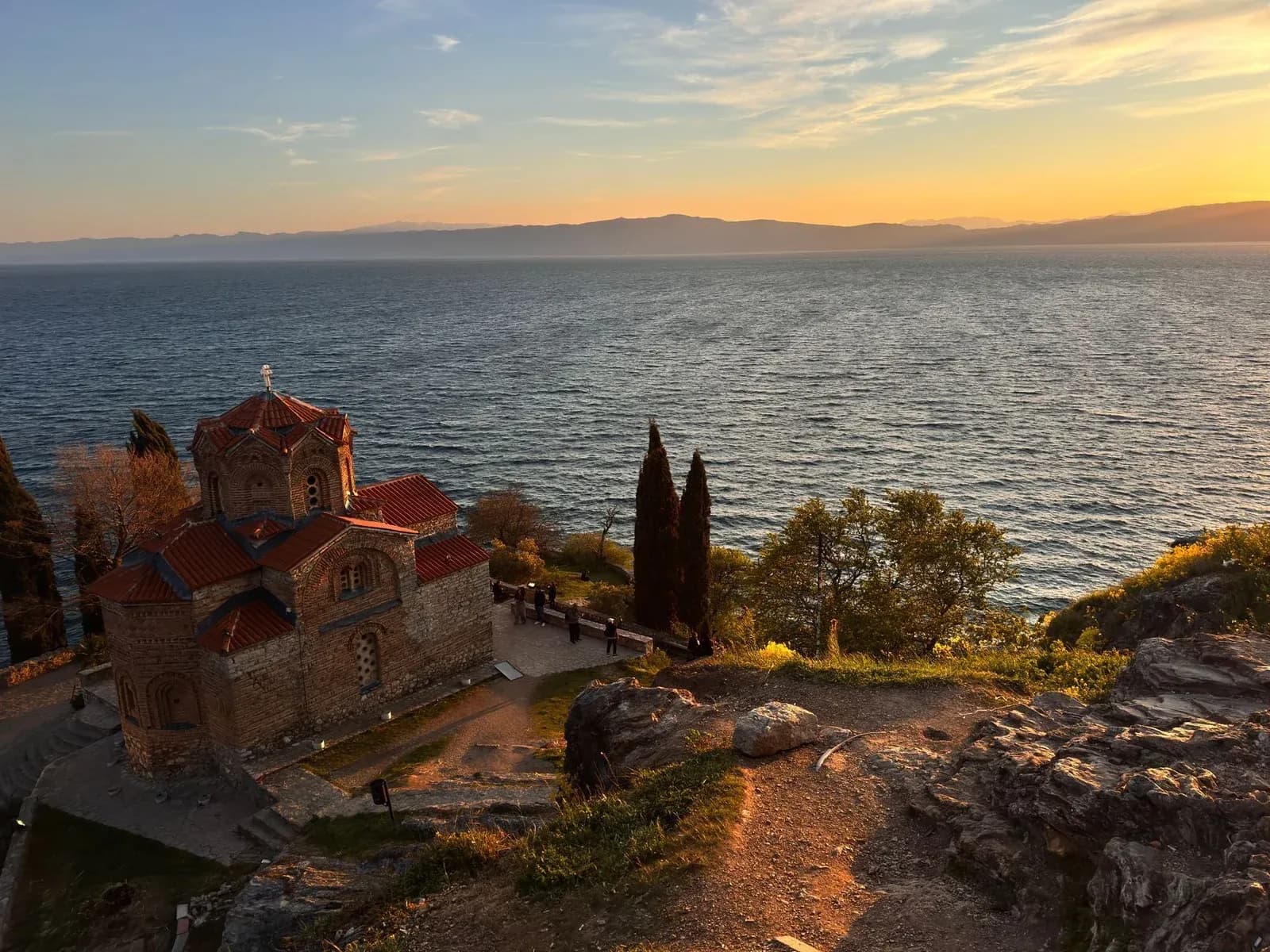
Walk at sunset to the Church of St John at Kaneo, which stands alone on a cliff above the water. Then travel 29 kilometres south to the Monastery of St Naum, near the Albanian border, where springs feed the lake and peacocks wander the courtyard.

Delphi, Greece

The ancient Greeks believed Delphi was the centre of the world, the spot where two eagles released by Zeus met, and they marked it with a stone called the omphalos, the navel. The Sanctuary of Apollo spills down the slopes of Mount Parnassus above a sea of olive trees, and pilgrims came for centuries to put their questions to the oracle. The words carved at the temple, 'know thyself', still feel like the right instruction for any traveller.

The site museum holds the bronze Charioteer of Delphi, one of the finest surviving sculptures of the classical age. In winter, staffing shortages have reduced access on some days, so check the Greek Ministry of Culture's current hours before you make the drive of around three hours from Athens.

Matera, Italy

Matera, in Basilicata, is a city carved out of a ravine. Its Sassi, the old cave districts, were inhabited for thousands of years, emptied in the 1950s and slowly brought back to life; UNESCO listed them in 1993, and the city was European Capital of Culture in 2019. Among the honey-coloured houses are more than a hundred rock churches, many painted with Byzantine frescoes.

The most striking is Santa Maria de Idris, on the Monterrone crag in the middle of the Sasso Caveoso. A tunnel links it to the crypt of San Giovanni in Monterrone, where frescoes from the 12th to the 17th centuries show Christ Pantocrator, St John the Baptist, St Nicholas and the Archangel Michael. Stay overnight in one of the cave hotels and walk the Sassi after dark, when the lamps come on across the ravine.

Assisi, Italy

Assisi has had an extraordinary year. Pope Leo XIV proclaimed a Franciscan Jubilee Year to mark the 800th anniversary of the death of St Francis, running from 10th January 2026 to 10th January 2027, and earlier this year his remains were displayed for the public in a historic viewing that drew thousands of pilgrims. From this year, 4th October, the feast of St Francis, is once again a national holiday in Italy, for the first time since 1977.

The Basilica of San Francesco, with Giotto's frescoes of the saint's life in the upper church and his tomb below, is the centre of any visit. Down on the plain, the vast Basilica of Santa Maria degli Angeli shelters the Porziuncola, the tiny chapel where Francis began his community. Come in the weeks before the Jubilee closes and the town is still filled with pilgrims; come in a still January week afterwards and you may hear only the bells.

Travellers Are Swapping Weekend Breaks for Longer Stays: 6 Ways to Travel Slower and Rest Better

By Dr Marina Nani

The 48-hour city break defined travel for a generation: a cheap flight on Friday, two days of sightseeing and a dash to the airport on Sunday night. In 2026 the trend has turned towards duration, with fewer trips, longer stays and a revival of slower ways to travel, including the train and even the coach.

Your body has good reasons to prefer it. Recovering from work stress takes time, and the first days of any holiday go largely on winding down. In some studies, holiday wellbeing peaks around the eighth day. The boost tends to fade within a few weeks of coming home whatever the length of the trip, so a longer stay gives you more days at your rested best before you return. A weekend with an airport at each end can leave you more tired than when you left.

Swap three short breaks for one long stay

Michael Palin, 83, Is Unsure He Will Travel Abroad Again After 37 Years Exploring the World

By Dr Marina Nani

Michael Palin has been travelling for television since 1989, when he set off to follow Phileas Fogg around the world in 80 days. At 83, he is no longer sure he will go abroad again. In an interview with Mishal Husain for Bloomberg in October, he said he did not know whether he would travel again, and suggested that Michael Palin in the Philippines, his latest series, could be his last journey overseas.

The series aired on Channel 5 in three episodes from 28th September to 12th October 2026, alongside a book of the same name. Weeks later, a slip in his bathroom left him with three fractured ribs and a minor pelvic fracture. He cancelled his UK book tour and every other event for the next few months, called the accident a 'comedy fall with no audience there to see it' and thanked the NHS for his care. His official website has closed its shop while he recovers.

Palin has not ruled out travel in Britain, which he said could still be part of his work. The doubt covers long trips abroad, and above all the destinations his team calls 'countries on the edge'.

Michael Palin's Journeys From the North Pole to North Korea

The BBC first broadcast Around the World in 80 Days over seven episodes in 1989, and in all Palin has made 13 serialised travel documentaries. He crossed the planet from pole to pole, circled the Pacific Rim in Full Circle, which covered 50,000 miles through 17 countries over ten months, and followed it with Sahara, Himalaya, New Europe and Brazil.

After 2012 he moved his films from the BBC to Channel 5 and turned towards countries few presenters visit. Michael Palin in North Korea aired in 2018, Into Iraq in 2022, Nigeria in 2024 and Venezuela in 2025. The Philippines series followed this autumn, and the book follows him across the archipelago, from its beauty to the hardship of families living in extreme poverty.

If you are in your 70s or 80s and weighing the same question about your own trips, a few changes to how you plan can keep you travelling abroad with less strain.

How to Keep Travelling Abroad in Later Life

Buy travel insurance before you book, and declare every condition. The UK has no legal upper age limit on travel insurance, and several specialist insurers set none. The ratings firm Defaqto finds that 67% of single-trip policies cover adults aged 80 or over. If you leave a medical condition off the form, the insurer can refuse your claim, so list everything, including conditions that are well controlled.

Carry your GHIC. The UK Global Health Insurance Card is free from the NHS and gives you state healthcare in EU countries at the same cost as local residents. It does not replace travel insurance, as it will not cover private treatment or a flight home.

Book free assistance at the airport. UK and EU airports must provide help for passengers with reduced mobility at no charge, from the check-in desk to your seat. Ask your airline at least 48 hours before you fly.

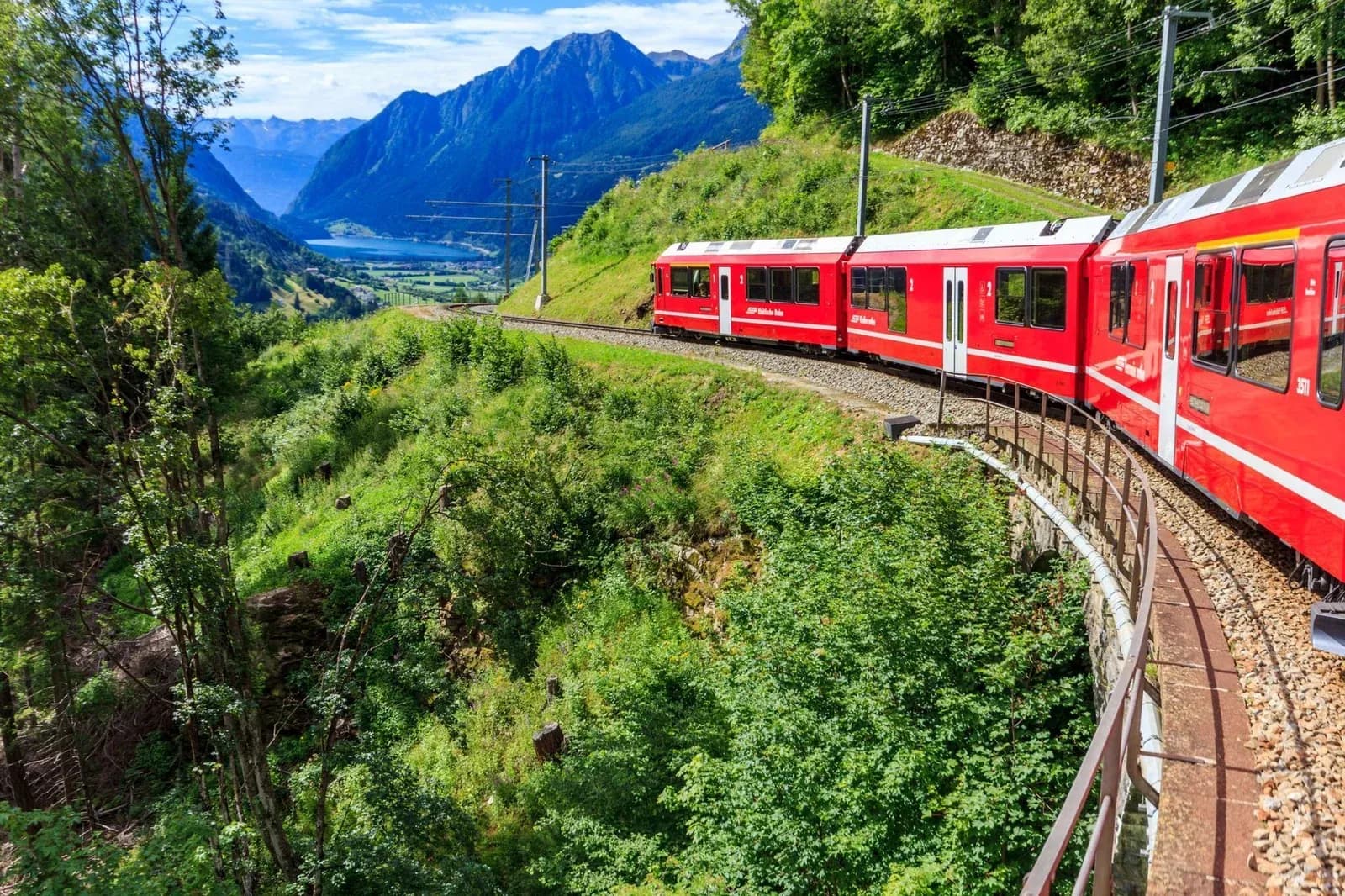
Take the train for journeys under six hours. A rail journey lets you stand up, walk and arrive in the centre of a city. France's new TGV M makes its first run from Paris to Marseille on 6th November, and our Back on Track series covers the best rail routes across Europe each week.

Build rest days into your itinerary. Two nights in each place, rather than one, gives you a full day without packing. Choose hotels near the station or the old town so that most of what you came to see is within a short walk.

Keep your medicines in your hand luggage. Pack enough for the whole trip plus a few extra days, in their original boxes, with a copy of your prescription.

What Michael Palin Has Given Travellers

On a UK tour in his seventies, Palin's message to audiences was to enjoy travel while you can. His Philippines book is in shops now, and whether or not he crosses another border, his journeys from the North Pole to the Philippines remain on screen and on the page for you to follow.

Ryanair Warns European Fares Could Rise by 20% Next Year as Airlines Cut Winter Flights Over Fuel Costs

By Dr Marina Nani

Ryanair chief executive Michael O'Leary said on Monday 2nd November that European airfares could rise by 10% and possibly 20% next year, as the airline's cheap fuel contracts run out. He made the forecast on the day Ryanair reported a 15% fall in half-year profit, and it lands as airlines across Europe cut flights from their winter schedules to limit the cost of expensive jet fuel.

Why European Airfares Are Expected to Rise in 2027

Jet fuel prices have roughly doubled since the war in Iran began. IATA figures put European jet fuel at $196 a barrel in mid-October, against less than $100 at the start of 2026, and O'Leary put the price at about $170 a barrel on Monday.

Ryanair has fixed the price of 80% of the fuel it needs until March 2027 at $67 a barrel, which has protected its fares so far. For the following twelve months it has fixed only 25%, at $95 a barrel. The airline expects its fuel bill to rise by about €2 billion in that year, and it said that higher fares and reduced capacity at rival airlines are unlikely to cover all of it.

Fares have not risen yet. Ryanair's average fare between April and September fell by 4% to €55.70, while its passenger numbers grew by 6% to 125.8 million and profit after tax fell to €2.15 billion from €2.54 billion a year earlier. Fares for October to December are running slightly above last year, and Ryanair said more travellers are booking close to departure.

Which Airlines Have Cut Winter Flights

The winter season runs from the end of October to the end of March, when demand is lowest and the gap between fares and fuel costs is hardest to close.

  • Ryanair made what it called a one-off winter cut in September, removing about two million seats and lowering its passenger target for the year from 216 million to 214 million.
  • easyJet has removed a further 600,000 to 700,000 seats, taking its total winter reduction to about 1.3 million to 1.4 million seats out of the roughly 50 million it usually offers.
  • Eurowings, part of the Lufthansa Group, is cutting its winter schedule by about 5% and is examining reduced working hours for its German flight operations, according to a staff letter seen by Reuters.
  • Volotea, the Spanish low-cost airline, has cut about 10% of its winter flights, including services at French airports such as Bordeaux.
  • Lufthansa, Wizz Air and airBaltic have also reduced their winter flying, either by dropping routes or by grounding aircraft.

Ryanair is still growing where demand is strongest. It plans 126 new routes and a new base in Rimini for summer 2027, which shows how airlines are moving aircraft from weak winter routes to busy summer ones rather than leaving the market.

Your Rights if Your Winter Flight Is Cancelled

If an airline cancels your flight from the UK or the EU, you can choose a full refund or a seat on an alternative flight. That right holds however much notice the airline gives you.

Cash compensation is a different matter. Under UK and EU rules, an airline that notifies you of a cancellation at least 14 days before departure does not owe you compensation on top of the refund or rebooking. Most winter schedule cuts are announced weeks in advance, so compensation will rarely apply to them.

How to Protect Your Winter and 2027 Travel Plans

  1. Check your booking now. Airlines contact passengers when a flight is cancelled, but a changed email address or a booking made through an agent can mean you miss the message.
  2. Take the alternative flight if it suits you. A rebooking on the same airline often costs you less than a refund followed by a new fare bought close to departure.
  3. Book separate legs with care. If your connecting flight is on a different ticket, a cancellation on one leg leaves you without protection on the other.
  4. Look at summer 2027 early. If Ryanair's forecast proves right, fares booked before the cheap fuel contracts expire in March could cost you less than fares booked later.
  5. Consider the train for short European trips. Rail fares do not track jet fuel prices in the same way, and new services such as Eurostar's direct London to Antwerp route from 14th December give you more choice.

For a fuller picture of what next year will cost you, our guide to what your next city break will cost in 2027 sets out the numbers, and 8 European destinations for 2027 shows how to reach each one from London.

The EU's First Tourism Strategy Aims to Spread Visitors Across More Places and More Months

By Dr Marina Nani

On Wednesday 4th November the European Commission presented the EU Sustainable Tourism Strategy, the first comprehensive EU strategy dedicated to tourism. Its central aim is simple to state: spread visitors across more places and more months of the year, so that crowded hotspots get relief and lesser-known towns get a share of the money.

Tourism accounts for 10% of the EU's gross value added, supports more than 20 million jobs and includes 5 million businesses, 99% of them small and medium-sized. Europe receives around 40% of the world's international tourist arrivals, and demand is holding up: according to the Commission, 76% of Europeans plan a trip in the next six months.

Spreading Visitors Across Seasons and Destinations

On average, 42% of the nights spent in a European destination fall in its three busiest months. The strategy sets out three tools to change that: an EU Model for Tourism Management, a proposed Council Recommendation on Balanced Tourism and an EU Toolbox for Balanced Tourism. The Toolbox gathers practical solutions from across the Union, from promoting year-round travel to shared approaches on short-term rentals. The Commission will discuss these with national governments so they are ready for the next summer season.

Cruise ports get their own forum, a Cruise Cooperation Dialogue, to deal with the pressure of thousands of passengers arriving in a port city at the same time.

The shift is already under way. Figures from the European Travel Commission for the third quarter of 2026 show arrivals up 3%, with smaller destinations leading the growth. Nights spent in Northern Europe rose 7.2%, and Central and Eastern Europe kept drawing travellers looking for value for money.

Easier Rail, Flights and Car Hire Across Borders

The strategy names the problems you meet when you cross a border: fragmented ticketing and patchy cross-border car rental. Both push visitors into a few well-connected hotspots and make travel harder for people with reduced mobility.

The Commission promises measures on rail connections, a revision of the Air Services Regulation to improve flight links, action on cross-border car rental and better ticketing. Islands, coastal regions and remote areas get particular attention, with investment in ports, marinas and train stations. Walking and cycling holidays are on the list too.

Do not expect a single ticket for every city's buses and trams soon. On local transport, the Commission only commits to exploring interoperable ticketing by 2028.

Help When a Crisis Hits Your Trip

Wildfires, extreme heat, conflicts and cyber attacks have all disrupted European travel in recent years. A new EU Tourism Crisis Coordination Network will link national tourism authorities so they respond together when something goes wrong. The strategy also commits to telling tourists more clearly about their rights and to making more of Europe accessible to travellers with disabilities.

New European Capitals of Tourism Awards

The Commission is relaunching its European Capitals of Tourism Award, almost ten years after Helsinki and Lyon became the first winners in 2019. The aim is to put Europe's hidden gems in front of more travellers. It sits alongside Destination Europe, a shared branding framework to promote the continent as a whole to international travellers, while each country keeps its own tourism brand. New tourism dialogues with Japan, India and Central Asia will back it up.

Training, Data and Simpler Rules for Tourism Businesses

Most of the strategy works behind the scenes. An EU Tourism Academy will train staff in a sector short of skilled workers. An EU Tourism Observatory and a Common European Tourism Data Space will track trends across borders. The Commission also plans to simplify rules for small tourism businesses and to modernise the VAT rules for the travel sector. A new EU Tourism Alliance will bring governments, regions, cities and businesses together to put the plan into practice.

What the Strategy Leaves Out

The strategy brings no new money and sets no numerical targets. The Commission expects at least €18 billion of existing EU support to have reached tourism between 2021 and 2027, around €13 billion of it from the Recovery and Resilience Facility and around €4 billion from cohesion funds. Future funding depends on the EU's 2028 to 2034 budget, which is still under negotiation.

The tools for managing crowds are voluntary, and the strategy does not harmonise national laws. Tourism rules in each country, from holiday rentals to visitor charges, stay with national, regional and local governments. The Commission also flags a new risk: trip-planning tools powered by artificial intelligence could keep sending everyone to the same famous places.

What It Means for Your Next Trip in Europe

Nothing changes at the border or on your booking this winter. The strategy points in a direction your own travel can follow now: visit in the shoulder months, choose the smaller city next to the famous one and take the train where you can. Those are the trips the strategy aims to make easier over the next few years.

For the border rules that do affect you, read our guide to why Europe's ETIAS travel permit will not start this year. For places worth visiting outside the crowds, start with 10 Destinations for the Soul or 8 European Destinations for 2027 and How to Reach Each From London.

Naples Airport Is Closed for All of November, and Salerno Puts You Closer to the Amalfi Coast

By Dr Marina Nani

Naples Capodichino, which handled more than 13.2 million passengers in 2025, closed to all flights on 1st November and will stay shut until the end of the month. Its operator, GESAC, is rebuilding the runway and taxiways and replacing the runway lighting in a project worth around €30 million, with crews working 24 hours a day, seven days a week. The airport is expected to reopen on 1st December, ahead of the Immaculate Conception holiday weekend from 5th to 8th December.

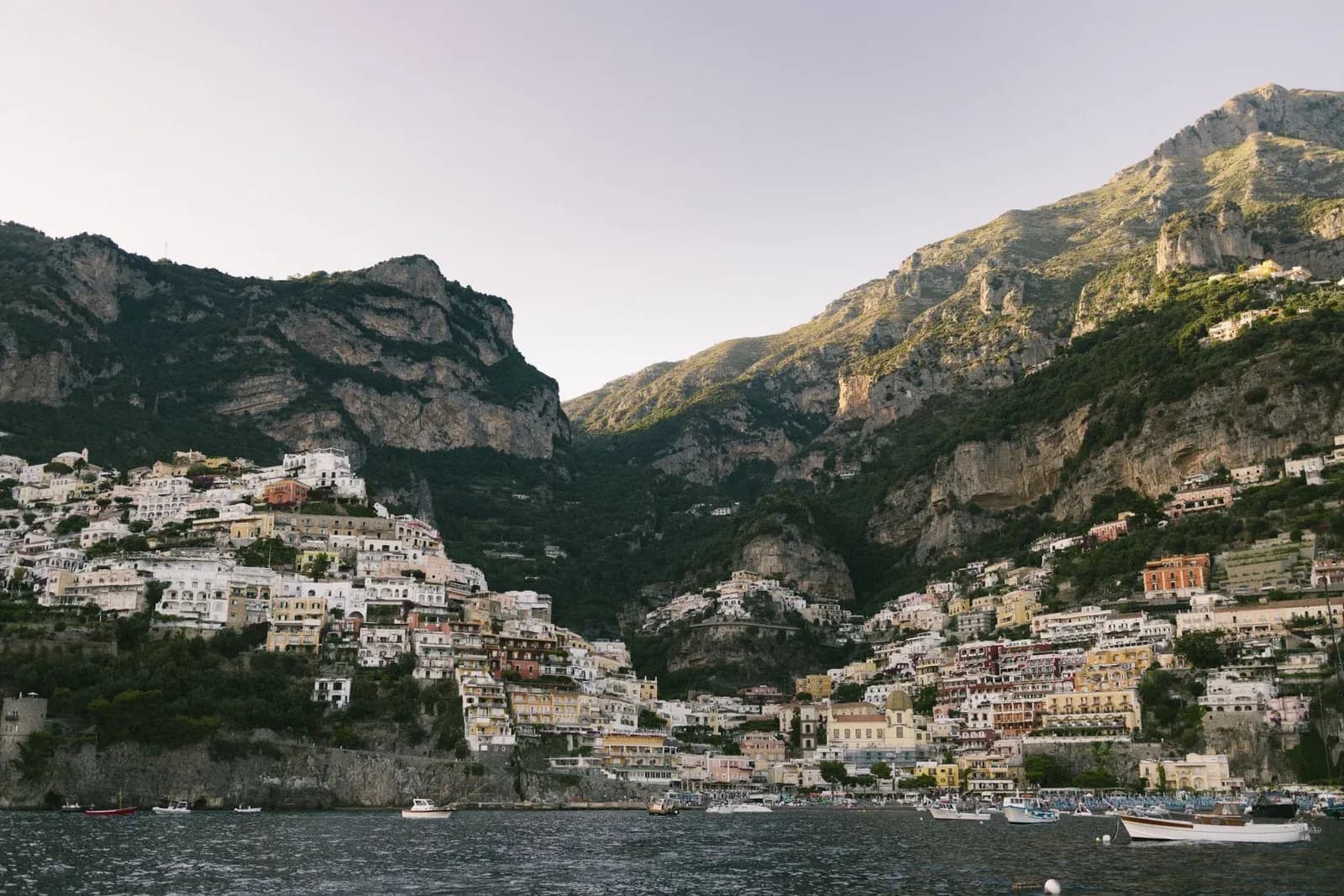
The works were first planned for February 2026 and were moved to November, traditionally the airport's least busy month. If you have a trip booked, the closure changes how you arrive rather than whether you can go. For many travellers the alternative works better: Salerno Costa d'Amalfi airport sits closer to Amalfi, Positano and Ravello than Capodichino does.

Which Flights Use Salerno Airport in November

Salerno Costa d'Amalfi airport, code QSR, is handling 15 routes while Naples is closed:

  • Italy: Milan Malpensa (easyJet), Milan Linate (ITA Airways and Aeroitalia), Bergamo (Ryanair), and Genoa, Turin and Trieste (Aeroitalia)
  • Europe: Amsterdam and Paris (Transavia), Barcelona (Vueling), Madrid (Iberia), and Düsseldorf and Stuttgart (Eurowings)
  • Further afield: Dubai (flydubai), Casablanca (Air Arabia Maroc) and Sharm el-Sheikh (Air Cairo and Neos)

The Lufthansa group has suspended its Naples flights for the whole of November and, where it can, rebooks passengers through Rome Fiumicino. ITA Airways has replaced its Rome to Naples flight with a coach.

Look at the airport code on your ticket or in your airline's app. QSR means your flight now uses Salerno. NAP means Naples, and a November flight still showing NAP needs a call to your airline.

Flying From the UK to Naples This Month

In a normal month you can fly to Naples with easyJet from Gatwick, with Ryanair from Stansted, Manchester and Edinburgh, and with British Airways, TUI and Jet2. The Salerno list for November includes no UK route. If you hold a November booking from a UK airport, open your airline's app to see whether the flight has been cancelled or moved.

Rome gives you the simplest way in. From Fiumicino, the Leonardo Express reaches Roma Termini in 32 minutes for €14, with trains every 15 to 30 minutes. From Termini, the Frecciarossa and Italo high-speed trains reach Napoli Centrale in about 1 hour 10 minutes, with dozens of departures a day. Before you book, check the dates of this month's train and flight strikes in Italy.

You can also reach Salerno on one ticket with a change in Amsterdam, Paris, Milan, Barcelona or Madrid, which puts you at the gateway to the Amalfi Coast without a train journey from Rome.

Getting From Salerno Airport to Naples, Sorrento and the Islands

To Naples: a Busitalia shuttle runs between Salerno airport and Piazza Garibaldi, outside Napoli Centrale station, with eight journeys a day in each direction timed to the flights. A one-way ticket costs €12, and you pay on board by card or phone, not cash. Allow 90 minutes to two hours by road, depending on traffic.

To the Amalfi Coast: the Salerno Airlink coach reaches Salerno railway station in about 40 minutes without stopping. From the station, SITA buses run along the coast to Amalfi and Positano.

By shared taxi: a trial service with fixed fares runs from the airport to Napoli Centrale and to Salerno station.

To Capri, Ischia and Procida: take the shuttle to Naples, then a hydrofoil or ferry from Molo Beverello or Calata Porta di Massa.

To Sorrento: take the shuttle to Naples, then the Circumvesuviana train or a ferry across the bay.

If you booked a private transfer from Capodichino, move it to your new arrival airport and your real landing time.

Your Rights if Your Naples Flight Was Cancelled

For flights covered by EU Regulation 261/2004, and its UK equivalent for flights from British airports, your airline must offer you a refund or an alternative flight when it cancels. If you accept a flight to a different airport, such as Salerno or Rome, the airline must pay for your transfer to the airport you originally booked, so keep every receipt.

Cash compensation is unlikely. Airlines owe it only when they tell you about a cancellation less than 14 days before departure, and this closure was announced months ahead.

Why Salerno Can Be the Better Way In

Salerno airport reopened to scheduled passenger flights in July 2024, with its runway extended to 2,000 metres to take larger aircraft. For a stay in Amalfi, Positano or Ravello, it spares you the longer road journey from Naples.

The works at Capodichino are part of a wider plan that includes a second terminal for flights from outside the Schengen area, among them flights to and from the UK. When Naples reopens in December, you will have two airports serving the bay, and a choice of the one that puts you nearest your hotel.

Back on Track: France's New TGV M Makes Its First Run From Paris to Marseille on 6th November

By Dr Marina Nani

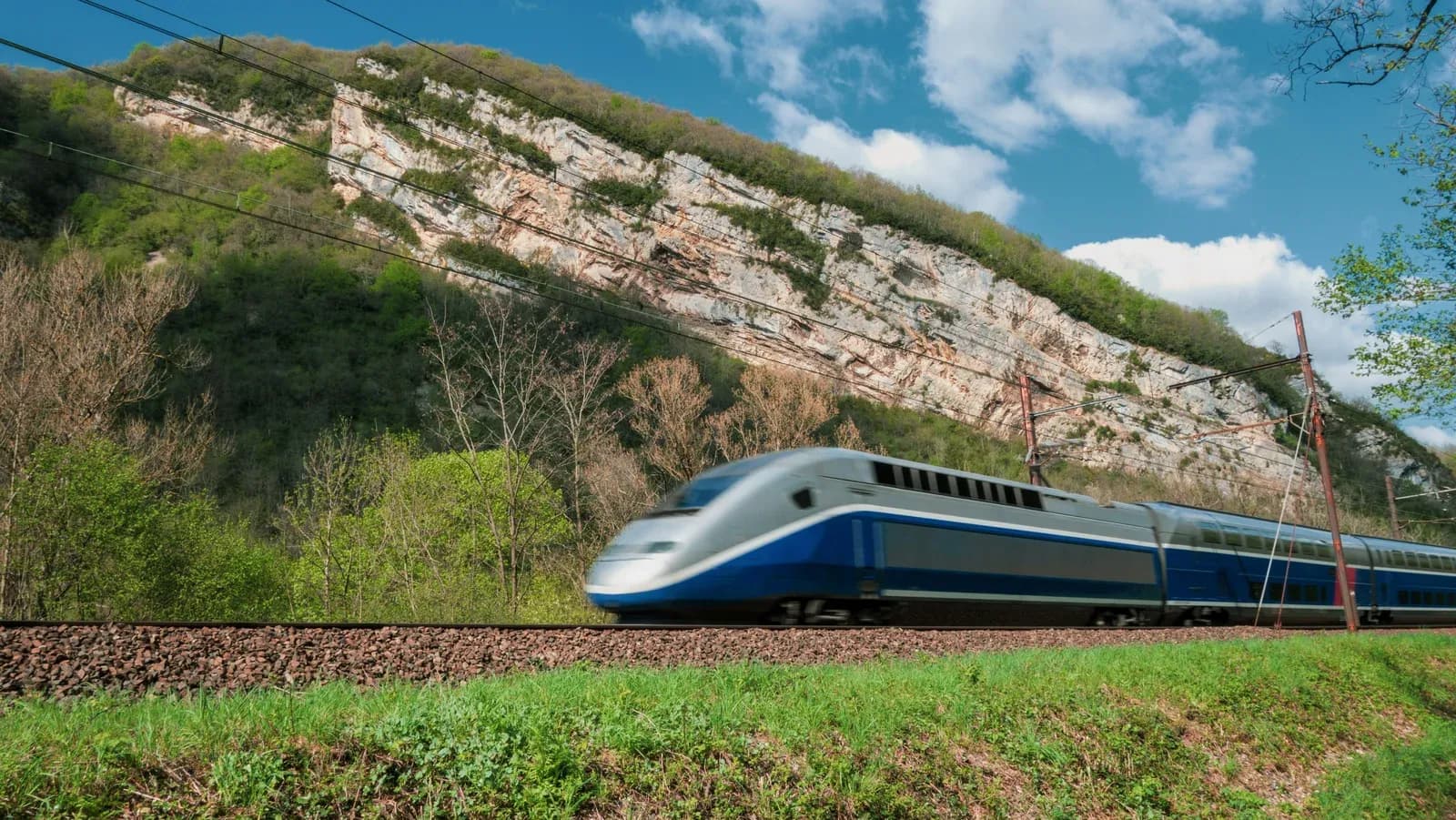
On Friday 6th November a double-decker train with a longer, sharper nose will leave Paris Gare de Lyon for Marseille Saint-Charles, and the TGV will enter its fifth generation. The TGV M, built by Alstom and sold to passengers under SNCF's TGV INOUI brand, arrives more than two years late. It was meant to carry spectators to the Paris 2024 Olympics, then slipped to 2025, to early 2026, to 1st July and to early September, before SNCF and Alstom put it back to the autumn on 11th September.

When will the TGV M begin service?

Its maiden voyage takes place on Friday 6th November 2026, according to an announcement SNCF made on the evening of Wednesday 14th October, when it invited the press on board the inaugural journey. Regular passenger services are expected to follow from Monday 9th November, according to The Connexion and the French travel trade title TourMaG, although SNCF has not confirmed that date in the material we checked. Six trains are due to enter service at first, and the rest of the fleet will follow into the early 2030s.

The launch comes the day after a national rail strike. All four main SNCF rail unions have called a stoppage for Thursday 5th November, so anyone heading to Paris for the first run should check their train close to departure. Our date-by-date guide to this month's strikes in France, Spain and Italy has the details and your refund rights.

On which line?

Paris Gare de Lyon to Marseille, the first route served by the TGV M. It is the busiest high-speed line in France and the one where Trenitalia already competes with SNCF. Paris to Lyon follows in the first phase, and SNCF plans to extend the new trains to Nice, the Alps and Languedoc-Roussillon later, although it has given no timetable for those routes.

SNCF has published no separate fares for the TGV M. The trains are sold as ordinary TGV INOUI services with the usual changing prices, so a seat on the new train should cost the same as a seat on an older TGV running that day.

From London, Eurostar arrives at Paris Gare du Nord, and the Marseille trains leave from Gare de Lyon on the other side of the city. The route south follows the Rhône valley through Valence and Avignon to Aix-en-Provence and the port of Marseille, a journey we described when the TGV turned 45 in September.

What is changing on board?

Two floors, a two-level bistro, bike parking, 20 per cent less energy consumption, and it is the first TGV that wheelchair users can board fully on their own, without assistance.

The bar car has been renamed Le Bistro and now fills a whole carriage on both decks, a first in the history of the TGV. The lower deck works like a small grocery: passengers take sandwiches and drinks from open fridges, warm dishes in microwaves, make coffee at the machines and pay at self-service terminals, with a barista on hand to help. A staircase leads to the upper deck, where 28 seats look out over the countryside. The interior was designed by AREP, an SNCF subsidiary, with the Japanese design studio Nendo.

Each nine-car train has eight spaces for bicycles, six in second class and two in first. First-class seats are wider, second class has more legroom, every seat has a power socket and a USB port, and the WiFi has been upgraded. The carriages can also be reconfigured, so SNCF can swap seats for luggage or bike space, or turn first class into second, as demand changes through the seasons.

The train carries up to 740 people in its densest layout and around 600 with the bistro, about 20 per cent more than the previous generation, and two trains coupled together carry more than 1,400. SNCF says the TGV M uses 20 per cent less energy, thanks to its more aerodynamic nose and to braking that feeds power back into the overhead line. It also produces 32 per cent less CO2, and 97 per cent of its materials can be recycled. Batteries on board let it keep moving at reduced speed if the power supply fails, so a train can reach a powered stretch of line rather than stall between stations.

For wheelchair users, a lifting platform at the door raises them into the train without help from staff. SNCF and Alstom say the TGV M is the first TGV to offer this, and the design grew out of work with wheelchair users' associations that began in 2017. When SNCF unveiled the interior in March 2025, it showed a lower deck with room for up to five wheelchairs. Visually impaired passengers can use Bluetooth navigation to find their way through the train.

Around 160 trains on order, including 30 for Eurostar

SNCF has ordered around 160 of the new trains from Alstom since 2018, worth about €4.6 billion. The first 100 were ordered in 2018, 15 more followed in 2022 for services to Italy, 30 were added in 2025 for Eurostar and its cross-Channel routes, and a further 15, worth €600 million, were ordered in January 2026, mainly for routes between France and Belgium. The TGV M runs at 320 km/h, the same top service speed as the TGV Duplex it will gradually replace.

If you want to travel on one of the first trains, look for TGV INOUI services between Paris and Marseille from 9th November, bearing in mind that older Duplex trains will keep running on the line alongside the six new ones for some time, and SNCF has not yet said which departures the new trains will work. For the rest of the season's new routes, see eight destinations to discover by train this autumn.

Back on Track: Strikes Will Hit Trains and Flights in France, Spain and Italy This November, Date by Date

By Dr Marina Nani

If you are travelling through France, Spain or Italy this month, three stretches of the calendar need your attention: Thursday 5th November in France, 10th to 12th November in Spain, and the weekend of 20th to 22nd November in Italy. All three bring rail strikes, and Spain and Italy add disruption around airports. Some dates are confirmed, some still depend on talks, and several have no official minimum-service plan yet, so treat each one as a warning to check your booking close to departure.

France Rail Strike on 5th November

All four main SNCF rail unions, CGT-Cheminots, UNSA-Ferroviaire, SUD-Rail and CFDT-Cheminots, have called a national strike for Thursday 5th November. It falls on a national day of action over wages and the 2027 budget. TGV INOUI, Intercités, regional TER trains, the RER and Transilien could all run reduced services.

Union representatives meet SNCF management in Saint-Denis on Tuesday 3rd November, and that meeting could change the picture. Rail staff must declare their intention to strike at least 48 hours ahead, so SNCF plans to publish its strike-day transport plan around 17:00 on Wednesday 4th November. For a sense of scale, the last large SNCF strike on 10th June cancelled one in three TGVs and one in two Intercités trains.

Air travel carries a separate risk. The FO union has filed a strike notice covering the French civil aviation authority, the DGAC, and UNSA Aviation Civile renewed its call to join the action on 2nd November. So far the DGAC has published no order telling airlines to cancel a share of their flights.

Eurostar is not among the striking companies, but onward SNCF connections from Paris and Lille are exposed. The strike also lands the day before the new TGV M enters service between Paris and Marseille on 6th November, a train we covered when the TGV turned 45.

Spain General Strike on 11th November and the Renfe Strikes Around It

Spain's two largest union confederations, UGT and CCOO, have called a 24-hour general strike from midnight to midnight on Wednesday 11th November over housing costs and wages, joined by CGT, CNT and several smaller unions. It is the first general strike backed by both confederations since 14th November 2012. Workers on the Barcelona Metro, FGC and Rodalies commuter trains have also joined the call.

The days either side carry their own risk. The train drivers' union Semaf has called a full-day stoppage at Renfe on Tuesday 10th November and partial action on Thursday 12th November, which gives Spain three consecutive days of possible rail disruption. Ouigo, the low-cost high-speed operator, cancelled every train on 2nd November after its drivers walked out, and further partial stoppages are planned on Friday 6th November, from 06:00 to 12:00 and from 18:00 to 23:59.

Spanish airports do not close during a general strike. The services most exposed are ground handling and baggage, Renfe trains, metros and city buses, which could make getting to and from the airport harder than the flight itself. Spain's Ministry of Transport sets the minimum services, and none had been published for flights as of 2nd November. If you are planning rail travel in Spain later in the season, our guide to Spain scrapping seat reservations on regional trains explains what else has changed.

Italy Strikes on 9th November and 20th to 22nd November

Italy has the longest list, and its calendar has moved more than once.

  • Friday 6th November: air traffic controllers at the ENAV Bari control centre strike from 13:00 to 17:00, affecting flights at Bari only.
  • Monday 9th November: Italo high-speed rail staff strike nationwide from 09:01 to 16:59, with on-board crews out from 02:00 to 23:59.
  • Friday 13th November: local transport strikes hit Milan's ATM network and Venice's ATVO buses, which link the city to its airports.
  • Monday 16th November: ANM public transport in Naples stops from 11:00 to 15:00.
  • Friday 20th November: the CGIL union holds a general strike across public and private sectors, and a national rail strike called by CUB Trasporti and SGB Ferrovie begins at 21:00.
  • Saturday 21st November: the rail strike runs until 20:00, local transport strikes affect cities including Turin and Naples, and air traffic controllers strike nationwide from 13:00 to 17:00.
  • Sunday 22nd November: air traffic controllers at Milan Malpensa strike for 24 hours, and security staff at Venice Marco Polo airport strike for 24 hours.

Italian law protects some flights during strikes. Services scheduled between 07:00 and 10:00 and between 18:00 and 21:00 must operate, and the aviation authority ENAC publishes a list of guaranteed flights. As the air traffic control strike on 21st November is nationwide, it affects every airline, not one carrier.

Belgian unions have also talked about a national strike in the week of 23rd November, but no airport has confirmed any disruption so far.

Your Refund Rights When a Strike Cancels Your Train or Flight

  • A train cancelled by a strike in Italy: you can choose an equivalent service or a full refund. Trenitalia and Italo both publish lists of guaranteed trains.
  • A train cancelled in France or Spain: you can exchange or refund your ticket under each operator's rules, through SNCF Connect, Renfe or Ouigo.
  • A flight cancelled by an air traffic control or airport strike: you are entitled to rerouting or a refund, and to care such as meals while you wait. Cash compensation is usually unlikely when the strike is outside your airline's control.
  • A missed connection between a train and a flight: this is only covered when both are on a single booking. On separate tickets, the risk is yours.
  • Travel insurance: many policies exclude strikes that were announced before you bought the cover, so read the terms before you rely on it.

How to Plan Around the Strikes in France, Spain and Italy

  1. Check your train number, not your route. A strike rarely cancels every train on a line, and operators publish cancellations service by service.
  2. Leave at least four hours between a train and a flight on 5th, 11th and 20th to 22nd November.
  3. Travel early or late in Italy. The guaranteed bands of 07:00 to 10:00 and 18:00 to 21:00 give you the best chance of a flight that runs.
  4. Fly rather than take the train between Spanish cities on 11th November, and allow extra time for baggage and ground handling at the airport.
  5. Arrive early at Venice Marco Polo on 22nd November, when the security staff strike could lengthen the queues.
  6. Book flexible or refundable fares if you have to travel on a strike date.
  7. Keep screenshots of every cancellation notice and receipt for your refund or insurance claim.

This calendar will be updated as SNCF publishes its plan on 4th November, as Spain sets its minimum services and as Italy confirms or moves its dates.

Every Passenger Flying to the US Must Sign a CDC Ebola Declaration From 3rd November

By Dr Marina Nani

From 23:59 Eastern time on Tuesday 3rd November, which is 04:59 on Wednesday 4th November in London, every person boarding a flight to the United States must sign a statement confirming they have not been in the Democratic Republic of the Congo in the 21 days before boarding. Your airline collects the statement, and without it you will not be allowed on the plane.

The rule applies to flights leaving a foreign country at or after that moment, so a London to New York flight that departs on the morning of 4th November is covered, even if you have not left Europe all year.

Who Must Sign the CDC Attestation

The order covers everyone on a US-bound international flight, whatever their nationality. That includes US citizens, US nationals and green card holders, as well as visitors travelling on an ESTA or a visa. You must also sign it if you are only connecting through an American airport on the way to another country, whether or not you leave the plane.

An amended order issued on 28th October extended the rule to crew, including pilots and cabin crew travelling as passengers. It applies to commercial, private and cargo flights alike, and to flights from airports with US preclearance, such as Dublin and Shannon. Land border crossings and seaports are not included.

If you are travelling with children under 18, a parent, guardian or other authorised adult signs on their behalf. One adult can complete the declaration for every member of a travelling party, although the airline must keep a record for each person.

What You Are Declaring on the Form

You confirm that you have not been physically present in the DR Congo at any point in the previous 21 days. Changing planes at a Congolese airport counts as being present, even if you never left the terminal.

The CDC counts the days from the date you leave the country, which is day 0. You can board a flight to the US from day 22. The 21-day window matches the longest known incubation period for Ebola.

The declaration is a legal statement. Knowingly giving false information can lead to criminal fines and imprisonment under US federal law.

How to Complete the Form Before Your Flight

You do not need to print anything in advance. US law requires airlines to provide the declaration and collect it before boarding, so the method depends on who you fly with. Depending on the airline, it may be a checkbox during online check-in, a digital signature, a paper form at the counter or a spoken confirmation recorded by a check-in agent.

The CDC has published a fillable version of the form so you can read it before you travel, and Spanish and French versions are due to follow. Airlines must keep each completed declaration for at least 42 days. You can take a photo of yours for your own records, but you are not required to keep a copy.

The declaration does not replace your ESTA or visa. You still need your usual travel authorisation to enter the US.

Why the US Introduced the Ebola Declaration

The measure follows an Ebola outbreak centred on the DR Congo, involving the Bundibugyo strain, which was declared in May 2026. The Africa CDC puts confirmed deaths across Africa at about 4,700, and our sister title Rich Health has followed the race to make the first Bundibugyo Ebola vaccine.

Since May, the CDC has barred airline passengers who have been in the DR Congo in the previous three weeks, and in July it extended that ban to US citizens. Foreign nationals who have been in Uganda or South Sudan in the previous three weeks are also barred. The new declaration changes how the existing ban is enforced: every traveller now confirms it in writing. No Ebola cases linked to this outbreak have been reported in the US, and the CDC describes the overall risk to American travellers as low.

Airlines Pushed Back on the 3rd November Deadline

The airline industry has opposed the timetable. In separate letters reviewed by Reuters, the International Air Transport Association, which represents more than 370 airlines, and Airlines for America, whose members include United, American, Southwest and Delta, urged the CDC to reconsider. IATA said check-in systems, digital signatures and staff training could not be changed in under two weeks. Airlines for America pointed out that of about 130 million air passengers screened by US border officials in 2025, fewer than 25,000 had any connection to the DR Congo.

The CDC has not moved the start date. The order is scheduled to run until 18th December unless it is extended or withdrawn earlier.

What the New Rule Means for Your Trip

  1. Look for the declaration during online check-in and complete it there if your airline offers it, which saves time at the airport.
  2. Arrive early in the first days of the rule. Paper forms at check-in desks could slow queues on US-bound flights.
  3. Sign once for the whole family. One adult can complete the declaration for everyone travelling with you.
  4. Remember connecting flights. A journey through Miami, Dallas or Chicago to Mexico or the Caribbean still needs the declaration.
  5. Check your recent travel. If you have been in the DR Congo, or changed planes there, in the past 21 days, you cannot board until day 22.

Follow the King Through the Caribbean: Nassau, Georgetown and St John's in Nine Days

By Dr Marina Nani

On Tuesday 27th October, King Charles III stepped off his aircraft at Lynden Pindling International Airport in Nassau in a light grey suit and sunglasses, and walked past a guard of honour in white tunics and pith helmets. Nine days later, on Wednesday 4th November, he leaves Antigua. In between he crossed three countries that most travellers would never think to combine: the low, luminous islands of the Bahamas, the rainforest republic of Guyana on the shoulder of South America, and the twin-island nation of Antigua and Barbuda.

His route works as an itinerary in its own right. Each stop pairs a capital with a landscape, a festival with a shaded garden, and almost everything he saw can be visited by anyone with a ticket and a free week.

Nassau, where the tour began

The King's first evening took him to Clifford Park, the open ground where the Bahamas declared its independence in July 1973. He had stood there before, as a 24-year-old Prince of Wales delivering his mother's message to the new nation, and this time he spoke to a youth rally, opening with a few words of Bahamian dialect. For visitors the park is a reminder that Nassau is a city of public spaces as much as cruise piers, and that its history is best read on foot.

The Bahamas is a country of water more than land. The King noted in his speech that 90 per cent of its territory sits less than two metres above the sea, which explains the colours that first-time visitors struggle to describe: the turquoise of the shallows, the deep navy of the channels and the pale gold of the sandbanks between them.

Bonefish Pond and the mangroves of New Providence

On his second morning the King drove to Bonefish Pond National Park on the south coast of New Providence, one of 33 parks managed by the Bahamas National Trust, of which he is royal patron. The park covers 1,235 acres of mangrove forest, tidal creeks and seagrass, and it began life as a cleared rubbish dump before the Trust restored it. A boardwalk now runs out over the water, and the shallows shelter juvenile grouper, snapper and the bonefish that give the place its name. The Trust says more than 2,000 schoolchildren have learned about the coast here.

The King watched pupils search the water for spiny lobster and shrimp, and remembered his own early visits to the island of Eleuthera in the 1970s: 'I remember years ago when I used to go to Eleuthera, the creeks there were full of them.' Before leaving he planted a silver buttonwood, a mangrove native to the Bahamian shore. Travellers who want to follow him further can take a fast ferry from Nassau to Eleuthera, a long, thin island of pink-sand beaches and small settlements that feels a world away from the capital.

Junkanoo in downtown Nassau

The afternoon belonged to music. A Junkanoo parade filled Parliament Square and Rawson Square, the heart of old Nassau, with its pink colonial government buildings and the statue of Queen Victoria, and the King shook a pair of traditional cowbells alongside the dancers. He lingered at the fruit and vegetable stands and stopped at a street food stall to admire the traditional dishes.

Junkanoo has its roots in the 17th and 18th centuries, when enslaved Africans in the Bahamas were allowed time off at Christmas to gather, drum, dance and wear handmade masks. It is now the country's great festival. The two main parades in Nassau begin at 2am on Boxing Day, 26th December, and on New Year's Day, 1st January, and run along Bay Street until sunrise, with groups competing in costumes that take months to build. Outside the season, the Educulture Junkanoo Museum in Nassau shows the history and past costumes, and summer Junkanoo festivals are held on several islands each July.

Georgetown's gardens, seawall and thatched benab

On Thursday 29th October the King flew south to Guyana, landing at Cheddi Jagan International Airport for a two-day state visit marking 60 years since the country's independence in 1966. It was his first visit since February 2000. Guyana is the only English-speaking country in South America, and most of its land lies under rainforest, threaded by vast brown rivers.

Georgetown, the capital, is a city of white wooden buildings, canals and broad avenues laid out by Dutch and British engineers. That first evening the King attended a reception in the gardens of State House, the president's official residence, where he was handed a premium rum distilled in his honour. He took a sip and pronounced it 'very good'. Guyana's Demerara rums, named after the river that runs through the capital, have a long reputation well beyond the Caribbean, and a glass is a fitting first taste of the country.

The next day he walked through the Promenade Gardens, a shaded green space in the city centre, and stood on the edge of neighbouring Independence Park, where a plaque remembers the men executed after the Demerara Rebellion of 1823, one of the largest uprisings of the colonial era. Schoolchildren were playing sport on the old parade ground as he listened to the story, and the park is worth a few minutes of any visitor's time.

He then visited the Umana Yana on High Street in Kingston, a vast traditional benab, the thatched meeting house of Guyana's Indigenous peoples, now used for cultural and national events. There he met leaders of the National Toshaos Council, who represent Indigenous villages, and received a necklace, maracas and an archer's bow and arrow. He told a biodiversity conference that 'nature has the best solutions to everything today'.

His last stop in Guyana was the Kingston Seawall. Much of Georgetown lies below the level of the high tide, and the long sea defence that protects it doubles as a promenade along the Atlantic. The King walked a stretch of it and studied the coast through binoculars, which is as good a way as any to end a day in the city.

St John's and the end of the journey

The King reached Antigua on the evening of Friday 30th October, landing at V. C. Bird International Airport in time for the 45th anniversary of independence on Sunday 1st November. Antigua and Barbuda is the smallest country ever to host the Commonwealth Heads of Government Meeting, which brought leaders of 56 nations to St John's this week.

The Queen joined him that Sunday for her first official visit to the islands, and they attended a church service in St John's with Sir Viv Richards, the West Indies batting great and the summit's envoy. Later, at the independence celebrations, a sudden tropical downpour sent the royal party running for cover, a reminder that Caribbean showers arrive fast and leave just as quickly.

On Monday 2nd November the couple toured Government House in St John's, whose restoration began in 2017 and was completed this year; they unveiled a plaque to mark it. The Government House Museum tells the islands' history through objects that range from Wedgwood medallions made for the abolition movement to a conch shell once blown to summon workers and a Warri board, the African strategy game still played in Antigua. Chef Nigel Joseph cooked fungee and pepperpot, the national dish, and the King and Queen met young builders trained by The King's Foundation, who had built a wooden pavilion in the grounds.

On Tuesday 3rd November the King opened the summit at the National Performing Arts Centre in St John's. For travellers, the capital's pastel streets, its cathedral on the hill and its harbour make a natural base, with the beaches the islanders like to number at one for every day of the year never more than a short drive away.

Planning your own route

Following the King's itinerary means three flights and three very different places, so allow at least a few days in each. The Atlantic hurricane season runs until 30th November, and most visitors aim for the drier months that follow. If you can be in Nassau for Boxing Day or New Year's Day, the Junkanoo parades on Bay Street are worth the 2am start.

Georgetown is the least visited of the three capitals and the most rewarding to explore slowly. British Airways has flown to Guyana from London Gatwick via Saint Lucia, so check the current timetable when you plan. In Antigua, Government House and its museum show the islands' story in a single visit, and a morning in St John's leaves the afternoon free for the sea.

8 European Destinations for 2027 and How to Reach Each From London

By Dr Marina Nani

If you are planning next year's travel, start with these eight. Each one has a reason to go in 2027 that will not come round again, from a once-in-a-generation sporting event to a festival that only happens every other year, and each one is a short flight, a train ride or a ferry crossing from London. Here is what is happening, when to go and how to get there.

Pordenone, Italy

Pordenone, a small city in Friuli-Venezia Giulia in Italy's north-east, is Italian Capital of Culture for 2027. Its programme, titled Pordenone 2027: City that surprises, brings together 52 projects across 45 municipalities, from the reopened Villa Cattaneo to a new photography venue and an open-air theatre on Piazza della Motta. If you love books, go in September, when Pordenonelegge fills the centre with Italian and international authors for a week of talks, readings and exhibitions.

Getting there: fly from London to Venice, then take the train from Venezia Mestre to Pordenone in under an hour, with tickets from €8.90.

Bucharest, Romania

Bucharest hosts the 28th George Enescu International Festival from 27th August to 26th September 2027. The festival, named after Romania's best-known composer, takes place only every other year, and around 112 concerts and events are planned in the city alone, with the Romanian Athenaeum, Bucharest's domed concert hall, at its heart. Check the festival's official website for confirmed dates before you book.

Getting there: fly direct from London to Bucharest. If you want to add Transylvania, Wizz Air also flies from London to Brașov, which has just become the airline's tenth Romanian base.

Burgas, Bulgaria

Burgas, on Bulgaria's Black Sea coast, hosts the Eurovision Song Contest in May 2027 after Bulgaria won in 2026 with Dara's song Bangaranga. The semi-finals take place at Arena Burgas on 11th and 13th May and the final on 15th May. May is also the start of the Black Sea beach season, so you can pair the Contest with a few days by the sea.

Getting there: Jet2 is adding flights from London Gatwick and London Stansted to Burgas for Contest week. Book early: the schedule so far shows as few as one flight from each London airport that week.

Andorra

Andorra, the small country between France and Spain, hosts the Women's Alpine Ski World Cup in March 2027. The giant slalom takes place on Saturday 6th March and the slalom on Sunday 7th March, both on the Avet piste in the Soldeu sector of Grandvalira, and you can ski the same mountain on the days around the races. We have written before about how to plan a meaningful trip to Andorra, a country with no airport and no railway.

Getting there: fly from London to Toulouse, where a bus reaches Andorra in about two hours, or fly to Barcelona, where Directbus takes three to three and a half hours.

San Sebastián, Spain

San Sebastián, on Spain's Basque coast, celebrates the 75th edition of its International Film Festival in September 2027. The festival's red carpet, the crescent beach of La Concha and the Old Town's pintxos bars are all within a few minutes' walk of each other.

Getting there: take Eurostar to Paris, a TGV from Paris Montparnasse to Hendaye in about four and a half hours, then the Euskotren across the border to San Sebastián in 37 minutes. If you prefer the sea, Brittany Ferries sails from Portsmouth to Bilbao.

Edinburgh, Scotland

Edinburgh hosts the Grand Départ of the Tour de France on Friday 2nd July 2027, the first time the race has started from the Scottish capital. Stage one leaves from the city centre, passing along the Royal Mile and Princes Street, before riding 184 kilometres through the Scottish Borders and Dumfries and Galloway to finish outside Carlisle Castle. If you stay on, Galloway Forest Park, Scotland's only Gold Tier Dark Sky Park, gains a rebuilt Scottish Dark Sky Observatory in 2027.

Getting there: LNER trains run from London King's Cross to Edinburgh Waverley, with the fastest services taking just over four hours.

Adare, Ireland

Adare, a thatched-cottage village in County Limerick, hosts the 2027 Ryder Cup at Adare Manor from 13th to 19th September, the 100th anniversary edition of the contest between Europe and the United States. General admission tickets sold out on 31st July 2026, after the ballot was 12 times oversubscribed, but travel packages and a limited number of premium experiences are still offered through the official Ryder Cup website.

Getting there: fly from London to Shannon, around 30 minutes' drive from Adare Manor.

Normandy, France

Normandy marks the thousandth anniversary of the birth of William the Conqueror, born in Falaise in 1027, with Millennium, the European Year of the Normans, from 1st January to 31st December 2027. Normandy Tourism lists nearly 1,000 events, from banquets and street theatre to a gathering of Viking ships from 11th to 27th June, arriving at the Rouen Armada from 19th June. At the Château de Falaise, a new tapestry woven in Aubusson depicts the Bayeux Tapestry's missing scene: William's coronation.

There is a London twist. The Bayeux Tapestry itself is at the British Museum until 11th July 2027, its first return to England in nearly a thousand years, before going home to a rebuilt museum in Bayeux due to reopen in October 2027. You can see the original in Bloomsbury in spring and follow William's story to Normandy later in the year.

Getting there: take Eurostar to Paris, then a direct train from Saint-Lazare to Caen in around two hours. Trains run roughly hourly.

Your 2027 Travel Calendar

Plan the year in order and you could ski in Andorra in March, sing along in Burgas in May, watch the Tour leave Edinburgh in July and finish with music in Bucharest, film in San Sebastián, books in Pordenone and golf in Adare in September, with Normandy waiting whenever you are ready.

Back on Track: Spain Scraps Seat Reservations on Regional Trains and Belgrade Trains Return

By Dr Marina Nani

From 12th December, you will no longer need a numbered seat to board a range of Renfe Media Distancia and regional trains in Spain. Until now, travelling on these routes meant reserving a seat in advance, a rule that put off last-minute travellers. Under the new system you buy a ticket and board.

The change applies on eight routes, grouped here by region:

  • Galicia: A Coruña to Vigo, including services to and from Santiago de Compostela and Vilagarcía, and A Coruña to Ferrol
  • The Mediterranean and Aragon: Alicante to Murcia and Cartagena, and Valencia to Teruel and Zaragoza
  • Extremadura: Cáceres to Valencia de Alcántara, and Mérida to Zafra on the Madrid to Plasencia and Seville line
  • The North: Burgos to Vitoria, Pamplona and Zaragoza, and Salamanca to Valladolid and Palencia

Renfe is also dropping the supplement for carrying a full-size bicycle that has not been folded or dismantled. Pets up to 10 kilos in a carrier and dogs up to 40 kilos will also travel without a surcharge on these routes. The A Coruña to Vigo line is the one to try first if you are visiting Galicia: it links the Atlantic coast with Santiago de Compostela, so you can now hop on for a few hours in the old town without planning a day ahead.

Passenger trains between Budapest and Belgrade return on 13th December after a seven-year suspension while the line was rebuilt. Ljubisa Pejicic, acting director of Serbian Railways, has confirmed eight daily departures from Belgrade: six to Budapest and two continuing to Vienna. The Budapest journey takes around three hours, against six to eight hours before the upgrade, and Vienna is about six hours away.

Prices are still being agreed between the Serbian, Hungarian and Austrian railways. The figure under discussion is around €35 one way to Budapest and €43 to Vienna, so check the Hungarian and Serbian railway websites for final fares before you book. For you, the line turns Belgrade into an easy add-on to a Vienna or Budapest city break.

The Isles of Scilly Steamship Group's new passenger ferry, Scillonian IV, left Vietnam at 6am local time on Saturday 31st October to begin a two-month delivery voyage to the UK via the Cape of Good Hope. The 75-metre ship carries up to 600 passengers, 24 per cent more than the current ferry, and has roll and pitch reduction systems designed to make the crossing from Penzance more comfortable.

Scillonian IV replaces Scillonian III, which is in its final season after 49 years on the route, and enters service in March 2027. She is part of a £40 million programme that also delivered a new freight ship, Menawethan, earlier this year. If you have avoided the Scilly crossing for fear of seasickness, spring 2027 may be the moment to try again.

Amadeus Data Breach: Which Airlines Are Affected and What You Should Do Now

By Dr Marina Nani

Malaysia Airlines is the latest carrier to warn passengers that their booking details may have been exposed in a security breach at Amadeus, the Spanish company that runs reservation and ticketing systems for more than 200 airlines. Reuters reported on Sunday 1st November that the airline had joined Cathay Pacific, Japan Airlines and Asiana in confirming that customer data was caught up in the incident.

The exposure window is long. Malaysia Airlines said the breach may have affected customer information processed between August 2023 and September 2026. If you have flown with any of the airlines below in that period, your booking may be among the records affected.

  • Japan Airlines: about 92,000 customers. Names, reservation codes and flight details were exposed. For around 2,000 of them, the data may also include passport numbers, nationality, email addresses, phone numbers, frequent flyer numbers, ticket numbers and assigned seats.
  • Cathay Pacific: around 53,000 bookings, according to the airline's own statement.
  • All Nippon Airways: 37,800 customers. ANA confirmed on 29th October that Amadeus had reported unauthorised access to reservation data on ANA flights.
  • Korean Air and Asiana Airlines: reservation numbers were exposed. Amadeus notified both carriers on 20th October, and neither has published a figure.
  • Malaysia Airlines: no figure published. The airline said its own IT systems were not breached and that there is no evidence financial information was accessed.

The airlines' statements point to stolen login credentials for an Amadeus system account. Amadeus said it had become aware of a vulnerability affecting a travel booking display environment, and that card numbers and financial profiles were held separately from the affected portal. The company has reset passwords across the system and added monitoring.

The intruders were able to read booking screens for more than three years before the gap was closed in September 2026. Amadeus has not said how many passengers were affected in total.

Your name, booking reference and flight number cannot empty a bank account on their own. They are, however, exactly what a fraudster needs to write a convincing message. A fake 'refund' email that quotes your real route, travel date and seat looks far more genuine than the usual spam, and that is the risk the airlines are now warning about. Japan Airlines and Malaysia Airlines have both urged customers to be wary of unexpected emails, calls and links that use the airline's name.

If you flew with any of these airlines since August 2023, take these five steps now.

  1. Check your inbox. Japan Airlines, Korean Air and Asiana are contacting affected customers individually. A genuine notice will come from the airline's own email address and will never require you to log in through a link.
  2. Treat refund and rebooking messages with suspicion, even when they quote correct details. Open the airline's app, or type its web address yourself, rather than clicking anything in the message.
  3. Never share a password, card PIN or one-time code with anyone who contacts you about a flight, however official the caller sounds.
  4. Change your frequent flyer password, especially if you use it anywhere else, and switch on two-step verification where the airline offers it.
  5. Protect your identity if your passport number was involved. In the UK, the Information Commissioner's Office suggests applying for Cifas protective registration, which places a warning flag against your name so lenders run extra checks before opening an account.

Amadeus serves airlines on every continent, and the notifications so far have arrived in waves. Korean Air and Asiana had still not established how many of their passengers were affected more than ten days after Amadeus alerted them, as the data sits on a system neither airline controls. Other Korean carriers that use Amadeus products, including Jeju Air, Eastar Jet and Air Premia, have received no reports of exposure so far.

Rich Travel will update this page as further airlines report.

What Your Next City Break Will Really Cost in 2027, and Why a Longer Stay Costs Less

By Dr Marina Nani

A couple booking four nights in Amsterdam next spring, in a room costing €250 a night, will pay €160 in tourist tax on top of the room. This year, the same stay carries €125. The extra €35 will not appear in the headline price on most booking sites, and it is one of several increases arriving across Europe in 2027, just as many travellers sit down this winter to plan their spring and summer.

The changes follow a clear pattern. Cities with the most visitors are charging them more, and several that never had a tourist tax are introducing one. Many of these taxes also stop counting after a set number of nights, which rewards the traveller who stays longer in one place.

Amsterdam: 16% in 2027, then a little more every year

Amsterdam already charges the highest tourist tax in Europe: 12.5% of the room price, calculated before VAT. The new city coalition of PRO Amsterdam and D66 set out plans in June to raise it to 16% in 2027, then by one percentage point a year until it reaches 20% in 2031. The city's 2027 budget includes the first step, and councillors are due to debate the budget this month.

The city says it wants to bring the number of tourist overnight stays below 20 million a year. Visitors also feel the effect of a national change: VAT on hotel stays in the Netherlands rose from 9% to 21% in January 2026. The tourist tax is not charged on the VAT, but together the two now make up a large share of the bill.

On a €250 room, the 2027 rate adds €40 a night, against €31.25 now.

Vienna: from 5% to 8% on 1st July 2027

Vienna's accommodation tax, the Ortstaxe, rose from 3.2% to 5% on 1st July 2026 and is set to reach 8% for stays from 1st July 2027. The tax is charged on the price of the room, with breakfast left out of the calculation. Under the city's own guidance, the rate depends on the night of the stay, not on when the booking was made or paid for, and a stay that runs across 1st July 2027 is taxed at 5% up to that night and 8% after it.

Vienna's hotel associations, led by the city's Chamber of Commerce, have asked the city to freeze the rate at 5%, pointing to slightly lower occupancy and room prices this year. The city has rejected the criticism, and its official guidance still sets 8% from July 2027.

For a four-night stay in a €250 room, the tax rises from €50 to €80. Travellers with flexible dates can save by visiting in June rather than July.

Barcelona: the city's surcharge climbs again on 1st April 2027

Barcelona charges two taxes on every night. The first is set by the Catalan government, which doubled its rates in the city on 1st April 2026, so a five-star hotel now carries €7 per person per night and a four-star hotel €3.40. The second is the city's own surcharge, which rose to €5 at the same time and climbs to €6 from 1st April 2027, then by €1 a year until it reaches €8 in 2029.

From next April, a five-star stay will therefore cost €13 per person per night in tax, and a four-star stay €9.40. A couple spending four nights in a five-star hotel will pay €104. Outside Barcelona, the rest of Catalonia completes its own doubling on the same date, with five-star hotels moving to €6 per person per night.

The Catalan tax counts a maximum of seven nights per person. A couple staying ten nights in a five-star Barcelona hotel next summer would pay €182, not the €260 that ten taxed nights would cost.

San Sebastián: a tourist tax for the first time from 1st January 2027

San Sebastián, the Basque seaside city famed for its pintxos bars, has never charged visitors a tourist tax. In July, the city government gave initial approval to a new tax due to start on 1st January 2027, ahead of a final vote by the full council.

The rate depends on the type of accommodation: €1.25 per person per night in rural agritourism stays, €6.50 in the highest category of hotels and in holiday flats, and €7 for cruise passengers. Under-18s are exempt, and the tax stops after six consecutive nights. A couple spending four nights in a top hotel will pay €52. Bilbao and Vitoria are preparing their own versions for the same date.

Closer to home

British travellers will meet the same trend without crossing the Channel. Edinburgh introduced Scotland's first visitor levy on 24th July 2026: 5% of the room price before VAT, for the first five nights of a stay. Glasgow follows on 25th January 2027 with the same 5%, but it applies to every night, however long the stay. Cardiff begins charging £1.30 per person per night on 1st April 2027.

Why a longer stay costs less

The caps on taxed nights make a real difference to the final bill. Barcelona and the rest of Catalonia stop at seven nights, San Sebastián at six and Edinburgh at five. Lisbon charges €4 per person per night for a maximum of seven nights, so no guest pays more than €28 per stay, and Porto charges €3 a night on the same seven-night limit.

A ten-night trip to Portugal shows how this works. A traveller who spends all ten nights in Lisbon pays €28 in tax. One who splits the trip between five nights in Lisbon and five in Porto pays €35, because each city starts counting again from the first night.

Scotland gives a sharper example. Ten nights in Edinburgh in a room costing £200 a night before VAT carry £50 in levy, because only the first five nights are taxed. Five nights in Edinburgh followed by five in Glasgow at the same price carry £100.

The same logic sits behind the trend towards travelling slower: fewer check-ins mean fewer taxed first nights, as well as more time to settle into a place. Where a tax is a percentage of the room price, as in Amsterdam, Vienna and Glasgow, the room rate drives the bill, so a well-priced room matters more than the length of the stay.

Before you book

Tourist taxes are often left out of the price shown on booking sites and collected at check-in. Before booking, it is worth checking whether the quoted rate includes the tax, whether the tax is charged per person or per room, and how many nights it covers. Percentage taxes are usually calculated on the room price before VAT, and in Scotland the levies apply to stays from their start dates even when the booking was made months earlier.

For a family of four, every per-person charge counts four times, although many cities, including San Sebastián and Lisbon, exempt children.

A New Night Train Takes You From London to Lake Como While You Sleep

By Dr Marina Nani

Leave London in the afternoon, wake up in the Swiss Alps and step off the train at Lake Como in time for a late-morning coffee by the water. From December, that journey takes one change of train, one night in a proper bed and no airport.

Two new services make it work. Since 9th September, the Dutch-Belgian operator European Sleeper has run a night train from Brussels to Milan that stops at Lugano and Como. From the European timetable change on 13th December, the train is due to leave Brussels earlier and call at Antwerp, Breda and Eindhoven on its way to Cologne. A day later, on 14th December, Eurostar starts running four direct trains a day from London St Pancras to Antwerp-Centraal.

Two ways to catch the sleeper from London

From 13th December the sleeper is scheduled to leave Brussels-Midi at 17:22 on Tuesdays, Thursdays and Sundays, and Antwerp-Centraal at 18:10.

The Brussels route gives you the afternoon departure. On the current timetable, a Eurostar leaving St Pancras at 13:01 reaches Brussels-Midi at 16:06. That leaves just over an hour to buy a picnic and a bottle of wine and walk to the sleeper's platform in the same station.

The Antwerp route asks for an earlier start but gives you a better afternoon. The direct Eurostar leaving St Pancras at 11:04 is due into Antwerp-Centraal at 14:57, about three hours before the sleeper calls. The station itself, a domed neo-baroque hall completed in 1905, is one of the most admired in Europe. The diamond district begins at its doors, and the Cathedral of Our Lady, which holds several paintings by Rubens, stands in the old town within walking distance.

What the night looks like

Between about 23:00 and midnight, the train follows the Rhine between Koblenz and Mainz, past the Lorelei rock. Passengers with a compartment on the river side can switch off the light and lift the blind.

By morning the train has reached Switzerland. Daytime trains from Zurich to Milan now use the modern Gotthard Base Tunnel, but the sleeper takes the original line over the mountains. It stops at Göschenen at about 08:10, then enters the 15 km Gotthard Tunnel, opened in 1882, whose highest point sits 1,151 metres above sea level inside the mountain.

After Bellinzona and Lugano, the line runs beside Lake Lugano and crosses it on a causeway. Shortly before the train reaches Como San Giovanni, due at 10:40, Lake Como appears over the rooftops of the town on the left-hand side.

Which ticket to book

European Sleeper sells four classes, and fares rise as the train fills, much like airfares.

  • Budget: a seat in a six-seat compartment, from €49. It is not a comfortable way to spend a night.
  • Classic: a couchette with sheet, blanket and pillow, from €69 in a six-berth compartment or €79 in a four-berth.
  • Comfort Standard: a couchette compartment made up with a mattress, pillow and duvet, from €119 per bed in a triple, €149 in a double and €289 on your own. Breakfast costs extra.
  • Comfort Plus: the sleeping car, with a washbasin, towels and slippers, from €139 per bed in a triple, €169 in a double and €339 in a single. Morning tea or coffee and a breakfast box are included.

A couple sharing a Comfort Plus double would pay from €338 for the night train, plus from £102 for two one-way Eurostar tickets. Sleeper bookings open up to six months ahead.

On busy dates, the European Sleeper Pass can cap the cost. The pass costs €149 for a month, and a reservation on top has a fixed price, for example €179 for a single sleeper, however full the train.

At the other end

From Como San Giovanni, the walk down to the main square beside the lake takes about 12 minutes. Regional trains leave hourly for Milano Centrale and take 41 minutes, which makes Como an easy first stop on the way to Venice, Florence or Rome. Travellers going straight to Milan can stay on board until Milano Porta Garibaldi, due at 11:30.

Coming home

The return needs a different plan, because Antwerp-Centraal has no UK border checks and Eurostar runs no direct trains from Antwerp to London. From 13th December, the northbound sleeper is scheduled to leave Como at 18:00 on Mondays, Wednesdays and Fridays and to reach Brussels-Midi at 11:25 the next morning. A Eurostar at 14:52 arrives at St Pancras at 15:57 and leaves a margin if the sleeper runs late.

Before you book

The times above come from the standard timetable, and engineering works can move them by hours. The train that left Brussels on 31st October, for example, was scheduled to reach Como at 12:31. European Sleeper publishes dated timetables on its website and notifies passengers of changes, and the train has no wifi, takes no bicycles and does not yet have wheelchair-accessible compartments.

The first Tuesday on which both new services run is 15th December, ten days before Christmas.

Europe's ETIAS Travel Permit Will Not Start This Year: 7 Things to Know Before You Fly

By Dr Marina Nani

If you are planning Christmas in Vienna or a spring week in Florence, you can book without filling in one extra form. ETIAS, the €20 travel permit Europe has promised for nearly a decade, will not start in 2026.

The European Union has promised several months' notice before the system goes live. No date has been announced, so a launch before the new year is no longer possible. In July, the last-quarter-of-2026 target disappeared from the official ETIAS website, after the Financial Times reported that eu-LISA, the EU agency building the system, considered a 2026 start no longer feasible. Reporting since then points to 2027, with no confirmed date.

The border itself has changed. Since 10th April 2026, every external Schengen border has run the Entry/Exit System (EES), which records your fingerprints and a photograph of your face and has replaced the passport stamp. The summer rollout brought long queues at passport control in many European airports, and those problems are widely blamed for pushing ETIAS back.

You need no ETIAS for any trip you book now

Until the system opens, there is nothing to apply for and nothing to pay. You enter the 30 ETIAS countries exactly as you do today. Those 30 are the 29 Schengen countries plus Cyprus, and Ireland is not part of the scheme. Check that your passport was issued within the last ten years and stays valid for at least three months after the day you plan to leave.

Ignore any website selling ETIAS today

More than 60 unofficial websites already offer ETIAS applications, even though the system cannot accept a single one. The only official address is travel-europe.europa.eu/etias. Any other site that takes your card details today is charging you for a document that does not exist.

Allow extra time for your first fingerprint scan

The EES registers you the first time you cross into the Schengen area after 10th April 2026. A border officer or a self-service kiosk scans your passport, takes your fingerprints and photographs your face. Later crossings are faster, as the system already holds your record. Build extra time into connections, particularly at large airports over Christmas and New Year.

The 90-day rule is now counted for you

The limit has not changed: you can stay 90 days in any 180-day period across the Schengen area. The difference is that the EES now counts every day automatically, so an overstay that once slipped past a busy border desk shows up at once. In the system's first six months, border officers refused entry to more than 24,000 people for reasons such as expired documents or a stay they could not justify. If you split long stays between Europe and home, keep your own count of days.

When ETIAS opens, apply before you book

The permit will cost €20 for adults, up from the €7 first planned. If you are under 18 or over 70, you will pay nothing but still need to apply. Each approval will last three years or until your passport expires, whichever comes first, and a new passport will need a new ETIAS. Most applications will be decided within minutes, while some can take up to 30 days if officials request more information or an interview. The EU's own advice is to apply before you buy a ticket or book a hotel.

You will have about a year of breathing space after launch

For at least six months after ETIAS starts, you will still be let in without one, provided you meet every other entry condition. A grace period of at least six more months follows, during which only your first trip after the transition can be made without a permit. After that, airlines and ferry companies will check your ETIAS within 48 hours of departure and refuse to board you without one.

Watch one website for the start date

The start date will appear first on travel-europe.europa.eu/etias, months ahead of launch. Until then, treat any firm date you read elsewhere as speculation. Rich Travel will report the date the day it is published.

This winter, a valid passport and some patience at passport control are all you need for Europe. Strasbourg, Prague and Kraków open their Christmas markets from late November, and the white truffle fair in Alba runs until 6th December.

The 777 Rule Gives Busy Parents a Simple Plan for Staying Close as a Couple: How to Make It Work

By Dr Marina Nani

Once children arrive, time alone as a couple is usually the first thing to go. Conversations shrink to logistics: who is doing pick-up, what is for dinner, when the boiler engineer is coming. The 777 rule, one of the most shared relationship ideas of 2026, gives you a simple structure for protecting time together: a date every seven days, a weekend away every seven weeks and a holiday as a couple every seven months.

The numbers matter less than the principle. Couples who keep making regular, deliberate time for each other tend to stay closer, and new experiences shared together bring back some of the excitement of early romance. Novelty activates the same reward system in your brain that lit up when you first fell in love.

For parents, the full rule can sound impossible. Each part can be scaled to fit family life.

Three meteor showers peak in November before the first of three back-to-back supermoons

By Dr Marina Nani

Every autumn, Earth ploughs through the debris of two comets. For a few weeks the sky keeps a record of that collision, written in streaks of light that last less than a second. In November 2026 you get three of those records in close succession: the Southern Taurids, the Northern Taurids and the Leonids. The month then closes with the Beaver Moon on 24th November, a supermoon rising among the brightest star clusters of the winter sky.

The new moon on 9th November leaves the darkest nights of the month where the Taurids need them. The Moon is half lit on the night of the Leonid peak, but it sets around midnight, roughly as the shower's radiant climbs into view. Only the supermoon itself, flooding the sky with light in the final week, closes the window.

The Taurids are slow, sparse and famous for fireballs

The Taurids come from Comet Encke, a small, dark body that circles the Sun every 3.3 years, the shortest orbit of any major comet. Astronomers believe Encke is the largest surviving fragment of a much bigger comet that broke apart many thousands of years ago. The wreckage spread into a river of rock and dust so wide that Earth takes weeks to cross it, which is why the shower arrives in two branches.

The Southern Taurids come from Encke itself. Their stream is so spread out that forecasts place the peak anywhere from mid-October to 5th November, and the first week of November gives you the best mix of activity and darkness. The Northern Taurids, linked to an asteroid called 2004 TG10 that may be another fragment of the same parent, peak on the night of 11th to 12th November.

Neither branch produces more than about five meteors an hour. Taurid meteors enter the atmosphere at about 29 kilometres a second, less than half the speed of the Leonids, so they glide across the sky rather than flash. Some of the particles are the size of pebbles, and these produce fireballs: meteors brighter than Venus that can light up the landscape for a moment and break apart as they fall. Their habit of appearing around the end of October has earned them the name Halloween fireballs.

In most years about 1% of Taurid meteors are fireballs. When Earth passes through a denser knot of debris, known as a swarm, that share can climb to around 7%. The next swarm is predicted for 2032, so 2026 is an ordinary year, but a single Taurid fireball is still one of the most memorable sights the night sky offers.

The stream carries larger objects too. In June 1975, seismometers left on the Moon by Apollo astronauts recorded a cluster of impacts as the Moon passed through the densest part of the Taurid debris. Astronomers will get their next close look at the swarm when it approaches Earth in 2032 and again in 2036.

The Taurid radiant sits in the constellation Taurus, which rises in the early evening and stands highest around midnight, so you can watch for Taurids at any point in the night. On 5th November the waning crescent Moon rises in the small hours and adds little glare. If you live in Britain, that night is also Bonfire Night, and the meteors will share the sky with fireworks and smoke. The Northern Taurid peak a week later offers the cleaner view: the thin crescent Moon sets early in the evening and leaves the rest of the night dark.

The Leonids are the fastest meteors of the year

The Leonids come from Comet 55P/Tempel-Tuttle, which takes about 33 years to orbit the Sun. The comet travels in the opposite direction to Earth, so its debris meets the atmosphere almost head-on at 71 kilometres a second, roughly 255,000 kilometres an hour. At that speed a grain of dust no larger than sand heats the air into a brilliant streak, and the brightest Leonids leave glowing trails that hang in the sky for seconds after the meteor has vanished.

Each time Tempel-Tuttle rounds the Sun, it lays down a fresh, dense ribbon of debris. When Earth crosses one of those ribbons, the shower becomes a storm. In November 1833, people across North America woke to a sky filled with tens of thousands of meteors an hour, and many of them believed the world was ending. That night is widely credited with launching the scientific study of meteor showers. In 1966, observers in the American Southwest saw meteors falling at a rate of dozens every second. The most recent strong displays came between 1999 and 2002, after the comet's last pass in 1998.

No Leonid meteor storm, the rare outburst of 1,000 or more meteors an hour seen in 1833 and 1966, is forecast for 2026. Under a dark sky you can expect around 15 meteors an hour at the peak, which falls on the night of 17th to 18th November. The first-quarter Moon will be half lit, but it sets around midnight, close to the time the Sickle of Leo, the shower's radiant, climbs high enough in the east to deliver meteors in good numbers. The hours between moonset and the first light of dawn on 18th November give you the best of the shower. Tempel-Tuttle next swings past the Sun in 2031, and meteor forecasters will be watching the years that follow for a return of the storms.

The Beaver supermoon rises beside the Pleiades

The full Moon reaches its peak at 14:53 GMT on 24th November, 360,768 kilometres from Earth, about 23,600 kilometres closer than average. At that distance the Moon sits near perigee, the closest point of its oval orbit, and qualifies as a supermoon: about 6.5% larger and 13.5% brighter than an average full Moon.

It is the first supermoon since the Wolf Moon of 3rd January and the first of three in a row. The Cold Moon of 24th December will be the closest full Moon of 2026, at 356,740 kilometres, and the Wolf Moon of January 2027 completes the run. The name Beaver Moon comes from North American almanac tradition, which ties November's full Moon to the season when beavers retreat to their lodges before winter.

On the evening of 24th November the Moon rises in Taurus, close to the Pleiades and the Hyades, the two brightest star clusters in that constellation. The supermoon therefore shines from the same patch of sky from which the Taurid meteors appear to fly, and its light will drown out all but the brightest stragglers of the shower. In London the Moon clears the horizon at 15:18 GMT, shortly before sunset, so the most striking view comes as twilight deepens and the Moon hangs low and amber in the east. A low Moon looks larger to you than a high one, an effect produced by the brain rather than by distance, so a rising supermoon framed by buildings or trees gives you the best photograph of the month. The near-perigee Moon also raises spring tides along the coast by a few centimetres.

Your November sky calendar

  • Night of 4th to 5th November: Southern Taurids near their peak, with a waning crescent Moon rising late.
  • 9th November: New moon and the start of the darkest week of the month.
  • Night of 11th to 12th November: Northern Taurid peak under a dark sky.
  • Night of 17th to 18th November: Leonid peak. Watch from moonset around midnight until dawn.
  • 24th November: The Beaver supermoon rises in Taurus beside the Pleiades.

How to get the most from a November night

  • Get as far from street lights as you can. A dark park or the edge of town makes a large difference to the number of meteors you see.
  • Give your eyes 20 to 30 minutes to adjust to the dark, and keep your phone screen off or dimmed to red.
  • Lie back on a reclining chair or a mat and take in as much of the sky as possible. Meteors can appear anywhere, not only near the radiant.
  • Dress for the cold, with a hat, gloves and a blanket. November nights lose heat fast, and you will see more if you stay out for an hour or longer.
  • Bring a flask of something hot. Patience brings results with the sparse Taurids, where a single fireball can arrive after 40 minutes of empty sky.

The season does not end with the Beaver Moon. The Geminids, the strongest meteor shower of the year, peak in mid-December, ten days before the closest supermoon of 2026 rises on Christmas Eve.

Erosion Prevention: How California Is Saving the Pacific Coast Highway Before El Niño Arrives

By Dr Marina Nani

On the bluff above Moro Beach, between Newport Beach and Laguna Beach, a long sheet of plastic now covers a crack nearly 400 feet long (about 120 metres) in the earth beneath Pacific Coast Highway. Caltrans crews spotted the cracking on 10th October, after weeks of hurricane swell and high tides had worn away the base of the cliff. Within days they had narrowed the road to one lane in each direction between Reef Point Drive and Irvine Cove Drive, cut the speed limit to 25 mph (40 km/h), secured $4 million in emergency funding and started work. The road has stayed open throughout.

On 27th October, Governor Gavin Newsom came to Crystal Cove State Park and signed an executive order to protect the whole of Highway 1 before the El Niño storms arrive. State officials have warned that this winter's El Niño could be the strongest on record. The response at Crystal Cove shows the shift now under way along the California coast: leaders are spending money before a slope fails rather than after it falls into the sea.

If you lead a city, a company or a community on any coastline, the methods they are using are worth knowing. Each one has already worked somewhere.

Cold Water Swimming Lifts Your Mood but Cold Shock Can Kill: 8 Rules for Swimming Safely in British Winter Water

By Dr Marina Nani

Winter sea swimming has grown from a hobby for a hardy few into a movement. On any December morning you will find groups of swimmers on beaches, lakes and lidos across Britain, laughing as they wade in and glowing as they come out. Many describe a rush of energy and a lift in mood that lasts for hours. Regular swimmers often say the community on the shore matters as much as the swim.

The lift comes from a powerful stress response. Cold water triggers a surge of adrenaline and other chemicals, followed by a sense of calm and wellbeing once you are out. With regular exposure, your body learns to respond less violently to the cold, and some swimmers find they handle everyday stress better too. Evidence that cold swimming treats depression is still limited, but the mood boost many people report is real.

The same response carries real danger. Water below 15°C counts as cold, and British seas fall to between 6°C and 10°C in winter. In the first minute, cold water shock makes you gasp uncontrollably and breathe fast, and your heart rate and blood pressure spike. If your head is under water when you gasp, you can inhale water. This first minute causes more deaths than hypothermia.

1. Talk to your GP first if you have a health condition

The sudden rise in heart rate and blood pressure puts strain on your heart. Speak to your GP before you start if you have heart disease, high blood pressure, asthma, Raynaud's syndrome, epilepsy or if you are pregnant.

2. Start in autumn and keep going

Your body adapts to cold gradually. If you begin in early autumn and swim regularly as the water cools, you will cope far better in January than someone who jumps in for the first time on New Year's Day. A break of a few weeks undoes much of that adaptation, so ease back in if you stop.

3. Never swim alone

Join a local club or swim with experienced friends who know the spot. Make sure someone on the shore knows you are in the water and when you plan to come out. Most clubs welcome beginners and will share local knowledge about tides, currents and entry points.

4. Enter slowly and float through the shock

Walk in gradually rather than jumping or diving. Breathe out slowly as the water reaches your chest. If the shock catches you, follow the lifeboat charity's 'Float to Live' advice: lean back, keep your ears in the water, spread your arms and legs and float until your breathing settles, which usually takes 60 to 90 seconds.

5. Keep your swim short

Cold water steadily cools your arms and legs, and your muscles weaken without warning. In single-figure temperatures, stay in for a few minutes at first, close to the shore. Get out while you still feel strong, not when you start to struggle.

6. Make yourself visible

Wear a brightly coloured swim hat and tow a bright inflatable float behind you. Both help people on the shore and passing boats see you, and the float gives you something to hold if you need a rest.

7. Warm up gradually after you get out

Your core temperature keeps falling for 10 to 30 minutes after you leave the water, a drop known as afterdrop. Dry off quickly, put on a warm hat first, then dress in loose layers from the top down, and sip a warm drink. Walk around gently. Avoid a hot shower or sauna straight away, as the sudden rush of blood to your skin can make you dizzy or faint.

8. Check conditions before every swim

Check the tide times, wind and wave forecast before you go, and avoid swimming after heavy rain, when sewage overflows and run-off from farmland raise pollution levels in rivers and coastal water. Most beaches have no lifeguards in winter, so choose spots you know well and leave the water at the first sign of trouble.

Respect the cold, and it rewards you with some of the best mornings of the year.

A Daily Winter Walk Lowers Stress and Blood Sugar: 8 Ways to Keep Going Until Spring

By Dr Marina Nani

A brisk walk does more for you than most gym memberships. It strengthens your heart, lowers your blood pressure, protects your joints and bones and lifts your mood within minutes. It also costs nothing and needs no booking. Yet the dark evenings and wet pavements of winter make it the first habit to slip, often at the point you need it most.

UK guidance recommends 150 minutes of moderate activity each week. A brisk walk counts when you can still talk but could not sing. Thirty minutes on five days covers it, and three ten-minute walks a day work just as well as one long one.

You may have heard that 10,000 steps a day is the magic figure. That number began as a marketing slogan for a pedometer in 1960s Japan. Benefits to your heart and lifespan climb steadily from far lower counts, and every extra thousand steps helps.

1. Walk after your largest meal

When you walk after eating, your leg muscles draw glucose out of your blood to use as fuel. A ten to fifteen-minute stroll after lunch or dinner can flatten the rise in blood sugar that follows a meal, which helps your energy stay level for the afternoon or evening. This is particularly useful over the festive season, when meals are larger and richer.

2. Walk in daylight whenever you can

A walk between 11am and 2pm gives you the brightest light of the winter day. Daylight supports your mood and your sleep, and it makes the walk more pleasant. If your schedule allows only one walk a day, make it this one.

3. Choose green routes

Walking among trees, by water or across a park lowers your heart rate and stress hormones more than walking along a busy road. Your attention rests on things that do not demand anything from you, such as the sound of water or the movement of branches. Find the nearest canal path, common or riverside and make it your regular route.

4. Walk with someone

A standing arrangement with a friend makes you far more likely to go on a cold morning. Walking side by side also makes conversation easier than sitting face to face, and many people find they talk more openly on the move. If your diary is full, turn one weekly one-to-one meeting into a walking meeting.

5. Dress in layers

Wear a thin base layer that draws sweat away from your skin, a warm middle layer and a waterproof jacket on top. Cover your head and hands, where you lose heat fastest. You should feel slightly cool when you set off, as you will warm up within ten minutes.

6. Wear shoes with grip

Wet leaves and frost make pavements treacherous. Choose shoes or boots with a deep tread. On icy ground, take shorter steps, keep your feet flat and your weight over your front foot, and keep your hands out of your pockets so you can steady yourself.

7. Be seen after dark

If you walk before sunrise or after sunset, wear something bright or reflective and carry a small light. Choose well-lit routes, tell someone where you are going if you walk alone and keep one earphone out so you can hear traffic.

8. Add hills or bursts of speed

Once a daily walk feels easy, raise the effort. Pick a route with a hill, or alternate one minute of fast walking with two minutes at your normal pace. These short bursts strengthen your heart and lungs more than a steady stroll and add little time to your day.

The first ten minutes on a cold, dark day are the hardest part. Put your shoes by the door the night before, and the walk will take care of the rest.

London Calling: The Week Starting 2nd November 2026

By Dr Marina Nani

Pitchfork fills the city's best rooms from Monday to Sunday

Pitchfork Music Festival London runs from Monday 2nd to Sunday 8th November across venues including KOKO, the Roundhouse, Hackney Church and the Royal Festival Hall. The Avalanches play the Roundhouse on Friday 6th November, and the Dalston Takeover fills six east London venues on Saturday 7th November. Every show is ticketed on its own, so you can book a single night or build a whole week around it.

Fireworks on Thursday and all weekend

Bonfire Night falls on Thursday 5th November, and the city's big firework displays carry on through the weekend. Wimbledon Park lights up on the night itself, Blackheath follows on Saturday 7th November, and Alexandra Palace and Battersea Park run their displays on both Saturday 7th and Sunday 8th November.

Remembrance from the Royal Albert Hall to Whitehall

On Saturday 7th November the Royal British Legion's Festival of Remembrance comes to the Royal Albert Hall. On Sunday 8th November, Remembrance Sunday, the country falls silent for two minutes at 11am, and the National Service of Remembrance takes place at the Cenotaph in Whitehall.

Diwali belongs to homes, temples and neighbourhoods this year

The same Sunday brings Diwali, the Festival of Lights, for Hindu, Sikh and Jain families across London. Storms forced the cancellation of the Trafalgar Square celebration in October, so this year the light belongs to homes, temples and neighbourhoods. If a neighbour or colleague is celebrating, wish them a happy Diwali. It costs you nothing and it means a great deal.

Schiaparelli and the Punjabi princesses close on Sunday

Sunday is also your last chance to see two exhibitions. Schiaparelli: Fashion Becomes Art closes at the V&A in South Kensington, and The Last Princesses of Punjab closes at Kensington Palace.

I urge you to see the second. It follows the life of Princess Sophia Duleep Singh, goddaughter of Queen Victoria, who campaigned for votes for women as a suffragette and nursed wounded Indian soldiers as a Red Cross volunteer during the First World War. She never waited for permission to matter, and on a weekend of remembrance her story deserves your time.

The two venues sit a short walk apart across Kensington Gardens, so you can see both in a single day.

Armistice Day, the Jazz Festival and the Lord Mayor's Show come next

Looking further ahead, Armistice Day follows on Wednesday 11th November, the EFG London Jazz Festival opens on Friday 13th November and the Lord Mayor's Show fills the City on Saturday 14th November.

Eight guides for the fortnight ahead

The Lord Mayor's Show Returns to the Thames on 14th November as Bronek Masojada Becomes the City's 698th Lord Mayor

By Dr Marina Nani

On Saturday 14th November, the Lord Mayor's Show fills the streets of the City of London with around 6,500 participants, 250 horses and more than 50 decorated floats. It is free to watch, it is one of the oldest civic processions in the world, and this year it begins on the river where it started.

A charter from 1215 still shapes the morning

The City of London, the Square Mile at the heart of the capital, has its own Lord Mayor, separate from the Mayor of London who runs the wider city. In 1215, the year of Magna Carta, King John granted the City a charter allowing it to elect its own mayor every year. The condition was that each new mayor travel to Westminster to swear loyalty to the Crown, and that journey grew into the Show.

The Lord Mayor is elected each autumn and takes office the day before the Show at the Silent Ceremony in Guildhall, where the outgoing and incoming Lord Mayors exchange the symbols of office with almost no words spoken. This year that ceremony falls on Friday 13th November.

This year the Lord Mayor travels by water first

For centuries the Lord Mayor made part of the journey to Westminster by boat. In recent years a few boats have revived the river pageant on a small scale, and in 2017 the incoming Lord Mayor, Charles Bowman, joined them. This year Alderman Bronek Masojada, the City's 698th Lord Mayor and a former chief executive of the insurer Hiscox, brings it back as part of the day.

On the morning of Saturday 14th November he leaves Westminster aboard the Royal Shallop Jubilant with the Sheriffs of the City of London and a flotilla of livery company boats. The fleet passes under Tower Bridge and comes ashore at HMS President, the old naval ship moored on the Thames, before he heads to Mansion House to join the procession through the streets.

The golden coach rolls through the Square Mile

The procession runs for almost three miles through the City, taking the new Lord Mayor from Mansion House to the Royal Courts of Justice on the Strand, where he swears loyalty to the Crown before the judges, and back again. On the way out, the procession stops at St Paul's Cathedral, where the Lord Mayor receives a blessing.

The Lord Mayor rides in the State Coach, a gilded carriage built in 1757 and still in use for this one day each year. Around it march military bands, the pikemen of the Honourable Artillery Company, livery companies, charities, schools and community groups, along with floats that range from City businesses to Chinese dragons and Indian drummers. The procession starts at around 10.30am and usually clears the streets by early afternoon.

A hundred years on the BBC

This year's Show also marks 100 years since the BBC first broadcast it live on radio in 1926. In 1937 it became one of the first events ever shown on live television, and the BBC still carries it today, so if the weather turns you can watch from home.

Where to stand and when to arrive

The streets around St Paul's Cathedral, Cheapside, Mansion House and Fleet Street give the best views, and they fill fast. Arrive before 10am for a place at the front, wrap up warm and bring a flask. The nearest stations are Bank, St Paul's and Mansion House, and the official Lord Mayor's Show website publishes the full route map. If you want to see the river pageant, the banks around Tower Bridge give you a clear view of the flotilla passing underneath.

The Show falls on the opening weekend of the EFG London Jazz Festival, so you can spend the morning in the City and the evening at a concert.

The Lord Mayor's Show at a glance

  • When: Saturday 14th November 2026, from around 10.30am
  • River pageant: Westminster to HMS President, passing under Tower Bridge
  • Procession: Mansion House to the Royal Courts of Justice and back, almost three miles
  • Cost: free
  • On television: BBC

EFG London Jazz Festival Opens on 13th November With Ten Days Marking 100 Years of Miles Davis and John Coltrane

By Dr Marina Nani

The EFG London Jazz Festival returns for its 34th edition from Friday 13th to Sunday 22nd November, with more than 60 venues taking part across the city. The programme runs from the Royal Albert Hall and the Barbican down to the small Dalston club where the city's jazz scene meets every week, and this year it carries an extra weight: 2026 marks 100 years since the births of Miles Davis and John Coltrane.

Two centenaries sit at the heart of the programme

Miles Davis was born on 26th May 1926 and John Coltrane on 23rd September 1926, and between them they reshaped jazz more than once. The festival marks both.

At the Barbican, Coltrane 100: Both Directions At Once brings together the saxophonists Joe Lovano and Melissa Aldana, the South African pianist Nduduzo Makhathini, the bassist Linda May Han Oh and the drummer Jeff 'Tain' Watts. At EartH in Hackney, the trumpeter and producer Emma-Jean Thackray presents Dear Miles: A Love Letter, which takes Davis's electric period onto the dance floor. At Olympia in west London, the saxophonist Branford Marsalis shares an evening with the singer Dianne Reeves. On the opening night, the harpist Alina Bzhezhinska plays After John Coltrane at the Vortex Jazz Club in Dalston.

The big nights to book first

The singer Samara Joy, one of the most celebrated jazz voices of her generation, returns to the festival at the Royal Festival Hall. The drum and bass pioneer Goldie performs Dare To Dream on the same stage with a live band, an orchestra and guests. Melody Gardot plays the Royal Albert Hall with the London Philharmonic Orchestra, the Thanda Choir and the trumpeter Ibrahim Maalouf.

The Malian singer and guitarist Fatoumata Diawara headlines the Roundhouse, and Cécile McLorin Salvant, a three-time Grammy winner, prepares a special show with the BBC Concert Orchestra at the Southbank Centre. The Mumbai-born singer Asha Puthli makes a rare UK appearance at the Barbican, with Anoushka Shankar as a special guest and the trumpeter Yazz Ahmed alongside her.

The festival also stretches well beyond the jazz club. Ben Folds plays the Royal Festival Hall, Morcheeba bring their trip-hop to Troxy, GoGo Penguin play two nights at KOKO and the Kronos Quartet appear at the Queen Elizabeth Hall. Lizz Wright brings gospel and soul to Cadogan Hall, and Sam Gendel and Sam Wilkes play together at Union Chapel.

The clubs where the festival starts

Some of the best nights happen in small clubs where you sit a few feet from the band. On Friday 13th November, Natty Congeroo and His Flames of Rhythm open the festival at the Jamboree in Limehouse, while the Vortex hosts the singer Lily Lyons as well as the Coltrane tribute. On Saturday 14th November, the New York drummer Ari Hoenig brings his trio with the guitarist Tom Ollendorff to the Vortex for two sets, and the saxophonist George Crowley plays the Green Note in Camden. Tickets for these shows cost a fraction of the concert hall prices, and they leave room for the discoveries that make a festival worth the effort.

Planning ten days of music

Each concert is sold separately through its venue, and the headline shows sell first. Book the one or two big nights you care about most, then fill the gaps with club dates once you have seen the full schedule on the festival website. The opening weekend also coincides with the Lord Mayor's Show on Saturday 14th November, so a morning in the City and an evening at the Barbican make an easy pairing.

EFG London Jazz Festival at a glance

  • Dates: Friday 13th to Sunday 22nd November 2026
  • Venues: more than 60 across London
  • Centenary shows: Coltrane 100 at the Barbican, Dear Miles: A Love Letter at EartH, Branford Marsalis and Dianne Reeves at Olympia
  • Headliners: Samara Joy, Goldie, Melody Gardot, Fatoumata Diawara, Cécile McLorin Salvant

Punjabi Princess Sophia Duleep Singh Fought for the Vote and Nursed Indian Soldiers: See Her Story at Kensington Palace Before 8th November

By Dr Marina Nani

On 18th November 1910, more than 300 women marched from Caxton Hall in Westminster towards Parliament, demanding to see the Prime Minister about votes for women. Police and bystanders met them with hours of violence, and the day became known as Black Friday. Among the women at the front was a princess, the daughter of the last Maharaja of the Sikh Empire and the goddaughter of Queen Victoria.

Her name was Sophia Duleep Singh, and The Last Princesses of Punjab at Kensington Palace, created to mark 150 years since her birth, closes on Sunday 8th November. If you see one exhibition this weekend, make it this one.

A Maharaja's daughter raised in exile

Sophia's grandfather, Ranjit Singh, founded the Sikh Empire. Her father, Duleep Singh, became Maharaja as a five-year-old in 1843, with his mother, Jind Kaur, ruling as regent. After two wars with the East India Company, the boy was made to sign away the Punjab in 1849, aged ten, and to surrender the Koh-i-Noor diamond, which was sent to Queen Victoria. He was later brought to Britain, where he settled on the Elveden estate in Suffolk.

Sophia was born on 8th August 1876, the third daughter of Duleep Singh and his first wife, Bamba Müller. Queen Victoria became her godmother and took a close interest in the family. The comfort did not last. By 1887 Sophia's father had left the family and her mother had died. In 1898 Queen Victoria gave Sophia a grace-and-favour home at Faraday House, Hampton Court, and as a young woman she lived the life of a society princess, wearing Paris fashions, breeding prize-winning dogs, cycling and taking photographs.

A princess selling The Suffragette at the palace gates

A visit to India in the early 1900s changed her. Seeing the poverty of the country her family once ruled turned her towards politics, and after meeting the suffragette Una Dugdale she joined Emmeline Pankhurst's Women's Social and Political Union around 1909.

Sophia did not lend her title from a distance. She spoke at local branch meetings and sold copies of The Suffragette newspaper outside Hampton Court Palace, in full view of the royal household that housed her. She joined the Women's Tax Resistance League, whose slogan 'No Vote, No Tax' meant refusing to pay taxes to a state that denied women a voice, and in 1911 she refused to fill in the census. On Black Friday she was arrested, though the charges were soon dropped.

A Red Cross nurse at the bedsides of Indian soldiers

When the First World War began, Sophia turned the same energy towards the soldiers of undivided India. In 1915 she joined a march of thousands of women demanding the right to serve in the war effort. She volunteered as a British Red Cross nurse and cared for wounded Indian soldiers brought back from the Western Front, including at the hospital set up inside the Royal Pavilion in Brighton. Sikh soldiers could barely believe that the granddaughter of Ranjit Singh sat at their bedsides in a nurse's uniform.

She raised money for them too. In 1916 she gathered Indian women in London to sell flags for an Indian soldiers' welfare fund, and the 'India Day' appeal she helped organise in September 1918 paid for 50,000 huts to shelter Indian troops serving across the world.

After 1918, when women over 30 won the vote, she joined the Suffragette Fellowship and stayed a member for the rest of her life. During the Second World War she took evacuee children from London into her home in Penn, Buckinghamshire. She died on 22nd August 1948.

Six women whose lives were shaped by empire

The exhibition does not follow Sophia alone. It sets her beside five women who shaped her: her sisters Catherine, also a suffragette, and Bamba, her mother Bamba Müller, her grandmother Jind Kaur, the regent who defied the British, and her godmother Queen Victoria. Each expressed womanhood, power and royalty in a different way, and the exhibition traces how empire transformed all six lives.

Inside, you will find personal letters, jewellery and textiles, an 1895 portrait of the three sisters dressed as debutantes and a 'No Vote, No Tax' banner from the suffrage campaign. The voices of British South Asian people today run through the rooms, responding to the themes of identity, expression and resistance that defined these women. Kensington Palace, where Queen Victoria spent her childhood, makes a fitting home for the story.

A princess at the bedside, on the weekend the nation remembers

The exhibition closes on Remembrance Sunday, the same day Sikh, Hindu and Jain families celebrate Diwali and Bandi Chhor Divas. Sophia stood at the meeting point of all of it: a Sikh princess, a goddaughter of the British Crown, a suffragette and a nurse to the Indian soldiers who fought for a country that denied her a vote. She never waited for permission to matter, and on a weekend of remembrance her story deserves your time.

Visiting before Sunday

Kensington Palace sits in Kensington Gardens, W8 4PX, and the exhibition is included in palace admission. Adult tickets cost £24.70, tickets for children aged 5 to 15 cost £12.40, and visitors on Universal Credit can enter for £1. The palace usually opens from 10am to 6pm, but check final-weekend times and book online before you travel. The V&A's Schiaparelli exhibition, which also closes on Sunday, is a short walk away.

The Last Princesses of Punjab at a glance

  • Where: Kensington Palace, Kensington Gardens, W8 4PX
  • Closes: Sunday 8th November 2026
  • Tickets: adults £24.70, children 5 to 15 £12.40, Universal Credit £1
  • Marks: 150 years since the birth of Sophia Duleep Singh on 8th August 1876

Back on Track: The TGV Train Turns 45 with Winter Seats to the Alps and Germany on Sale

By Dr Marina Nani

The high-speed line from Paris to Lyon runs south-east across Burgundy, with stations for Le Creusot and Mâcon on the way, and ends in the city where the Saône meets the Rhône. On 27 September 1981 the first orange TGV in commercial service ran along it, five days after President François Mitterrand inaugurated the line. SNCF's own records put the fastest train between the two cities at 3 hours 46 minutes in 1980, and at two hours from 1984. In the 45 years since that first run, SNCF Voyageurs has carried more than three billion passengers on its high-speed trains.

SNCF Voyageurs marked the anniversary with a three-day sale, from 6 to 8 October, of 450,000 TGV INOUI tickets at 45 per cent off in first and second class. The tickets were for travel between 16 October and 30 November on Paris to Lyon, and between 2 and 30 November on every other route in the offer: mainland France, Italy, Spain, Luxembourg and Brussels, Geneva on TGV Lyria, and Frankfurt, Stuttgart, Mannheim and Karlsruhe on the TGV INOUI and ICE trains run with Deutsche Bahn. The sale closed on 8 October, and no second round had been announced by 12 October. Sale tickets cannot be exchanged or refunded.

SNCF Voyageurs put its Christmas and winter timetable on sale on 30 September, for travel from 13 December, with extra services to the Alps, to the Christmas markets of Strasbourg and Colmar, and to Germany.