AI in Schools: Has Anyone Tested It on Children?
A new medicine for children must pass years of trials and is watched for side effects after launch. Generative AI arrived in classrooms with a handful of short studies, and governments are now splitting over what to do about it.

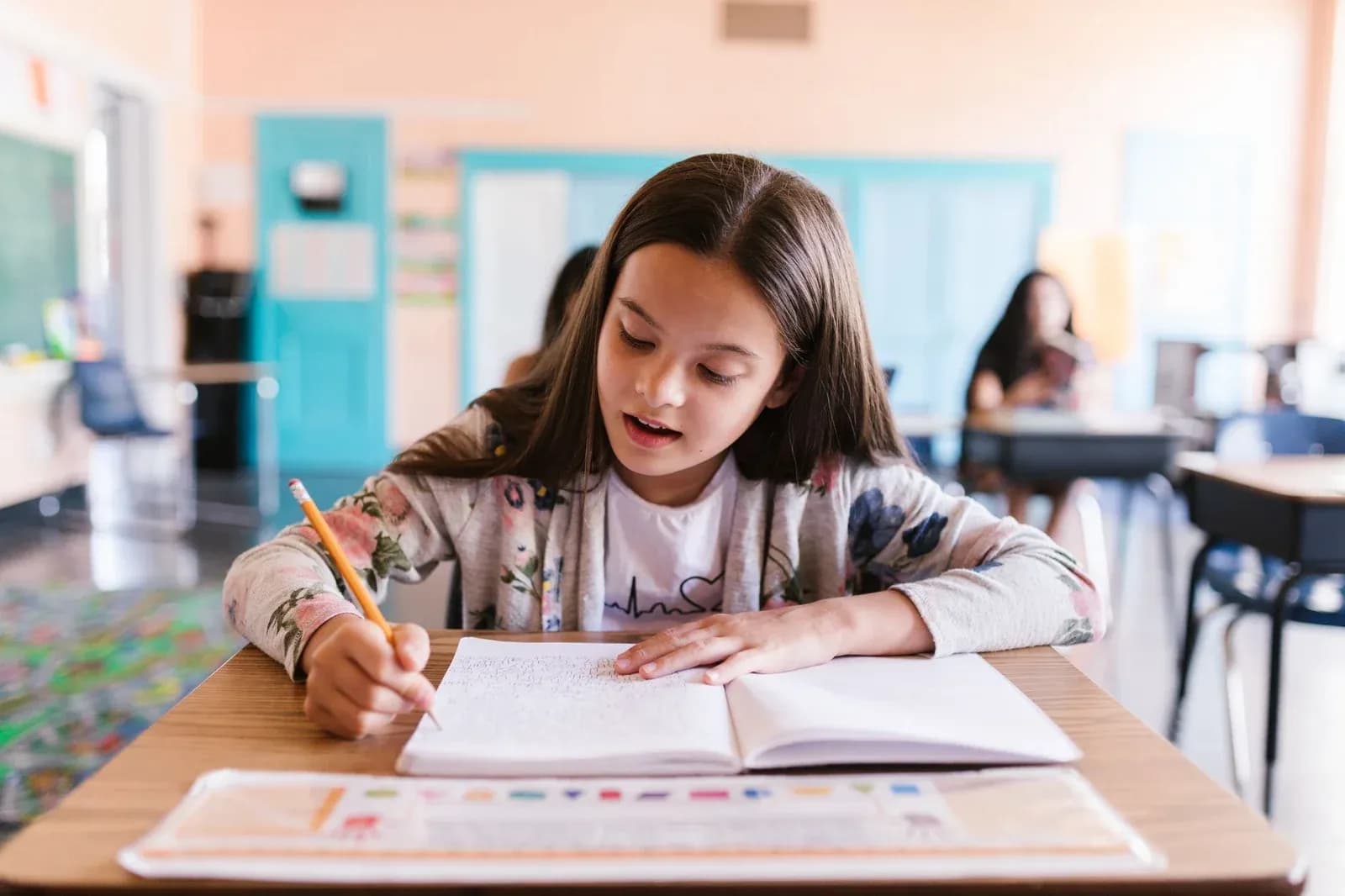
Photo: RDNE Stock project / Pexels
Before a new medicine reaches a child, it has to clear a long series of hurdles. Researchers first check it is safe in a small group, then whether it works, then run large randomised trials over months or years. Since 2007, European rules have also required companies to submit a separate paediatric plan, because children are not small adults and a drug that suits a 40-year-old can behave differently in a nine-year-old. After approval, doctors and parents keep reporting side effects through systems such as the UK's Yellow Card scheme, so problems that only show up in large numbers can be caught.
Generative AI went through none of this. ChatGPT launched at the end of 2022, and within four years it had become part of childhood. A Common Sense Media census published in June 2026 found that 86% of American children aged 9 to 17 use or interact with AI, and that 24% do so every day. The same survey found that more than eight in ten young users turn to it for schoolwork.
So it is fair to ask the question a doctor would ask about any new treatment. Has it been tested on children, at the doses they are taking, for long enough to know what it does? And if there are side effects, is anyone collecting the reports?
What the trial record looks like
In March 2026, researchers at Stanford University's SCALE Initiative published the most thorough audit so far of the evidence on AI in schools. They found more than 800 academic papers on AI in primary and secondary education. Only 20 met the standard for strong causal evidence, meaning a randomised trial or a comparable design that can show a tool caused a change rather than merely coinciding with one. None of those 20 studied pupils using AI in American school classrooms. Most of the student studies involved learners over 18, settings outside the United States, or short, controlled sessions. The review also found almost no rigorous research on what AI does to equity, wellbeing or social development.
In medical terms, that is a treatment with promising early-phase results and no large paediatric trial. The early results deserve attention, though, because they point in two directions at once.
The most cited trial took place at a large high school in Turkey during the 2023 to 2024 school year. Researchers from the University of Pennsylvania gave nearly 1,000 maths students one of three things during practice sessions: a plain GPT-4 chat window, a version of GPT-4 set up as a tutor that gave hints rather than answers, or no AI at all. With the plain chatbot, students solved 48% more practice problems than the control group. When the AI was taken away for the exam, they scored 17% worse. The tutor version lifted practice scores by 127% and left exam results level with the control group, so it did no harm, but it did not add learning either. Students in both AI groups believed they had learned more than they had.
A World Bank trial in Edo State, Nigeria, produced the opposite headline. Secondary school pupils aged roughly 12 to 17 attended a six-week after-school programme twice a week, using Microsoft Copilot as a tutor under teacher guidance, with prompts tied to the curriculum. They outperformed the control group by about 0.3 standard deviations, which the World Bank equates to roughly 1.5 to 2 years of typical schooling. The authors are careful to say the result belongs to the whole package of teachers, structured prompts, peers and AI, and that they cannot isolate the effect of the chatbot alone.
The OECD read the emerging research the same way in its Digital Education Outlook 2026, published in January. General-purpose chatbots tend to improve the work students hand in, and the advantage tends to disappear, or reverse, once the tool is removed. Tools built with a teaching purpose, and used under a teacher's direction, show more lasting gains. The OECD warned of what researchers call metacognitive laziness, where pupils stop monitoring their own understanding because something else is doing the thinking. It recommended that children develop skills first without AI, then with educational AI, and only then with general-purpose tools.
The study that alarmed parents most, from the MIT Media Lab in June 2025, recorded brain activity with EEG caps while 54 people wrote essays with ChatGPT, with a search engine or with no help. The ChatGPT group showed the weakest connectivity across brain networks and had trouble quoting what they had just written. The study was small and was released as a preprint before peer review, and its authors warned against reading it as proof of brain damage. Its participants were also university-age adults. Nobody has run the equivalent study on a ten-year-old.
Norway decided the trial had not been run
On 19th June 2026, Norway's Prime Minister, Jonas Gahr Støre, announced national recommendations that Reuters described as a near ban on generative AI for primary school pupils. From the school year that began in late August, children in grades one to seven, aged 6 to 13, are as a rule not given access to generative AI in their schoolwork. Pupils aged 14 to 16 may begin to use it gradually and carefully, and only once their teachers have been trained. Students aged 17 to 19 are taught to use it well, to prepare them for university and work.
'The most important thing in school is that our children learn to read, write and do mathematics,' Støre told reporters in Oslo. The government's statement argued that the youngest pupils do not yet have the knowledge, critical reflection or self-control needed to use AI well, and that uncritical use makes it more likely they will skip steps in learning that cannot be skipped. It also promised a law obliging municipalities to provide physical books in classrooms, and said previous governments had given digital media too much weight.
The decision makes more sense against Norway's own history. The country put computers into classrooms in the 1990s and replaced many textbooks with tablets after 2010. In its June statement the government said one in four Norwegian pupils now reads below the minimum the OECD considers necessary for further education and work. The PISA results published on 8th September 2026 then showed Norway's reading score falling 24 points since 2022, to its lowest level since the tests began, with maths also down. The OECD added a note that Norway had excluded 10.4% of eligible students from testing, above the permitted limit, which may have flattered the result.
Norway had already tried one withdrawal. In 2024 it banned smartphones from schools, by which time research by the economist Sara Abrahamsson of the Norwegian Institute of Public Health had caught politicians' attention. She tracked more than 400 middle schools that had brought in bans at different times. Girls at schools with bans made far fewer visits to specialists for psychological symptoms, a fall of almost 60% compared with before the ban, and bullying fell for both girls and boys. Girls from poorer homes gained most in grades. The study found no change in how many pupils were actually diagnosed with a condition, so the effect is better read as fewer consultations and less bullying than as a cure for anxiety. It was still enough to persuade politicians that taking a device out of the classroom could do measurable good.
New York City reached a similar conclusion three months later. On 2nd September 2026, Mayor Zohran Mamdani announced a one-year moratorium on all student-facing generative AI for pupils up to eighth grade, about 600,000 children, in the largest school system in the United States. Companion chatbots are banned in every grade, the city recommended daily screen time limits of 30 minutes for pupils in grades three to five and 45 minutes for grades six to eight, and a task force will report during the year. Los Angeles, the second largest district, is blocking generative AI on student devices while it writes a policy. Josh Golin of the children's advocacy group Fairplay argued that the burden of proof belongs with the AI companies, and that 'a year to evaluate is not nearly enough time.'
China teaches AI to six-year-olds but will not let them use it alone
China is usually presented as Norway's opposite, and on the surface it is. In November 2024 the Ministry of Education told primary and secondary schools to build AI into the curriculum, and Beijing made at least eight hours of AI teaching a year compulsory in its schools from autumn 2025, starting with six-year-olds. In April 2026 the ministry set a target of a complete AI education system across every stage of schooling by 2030.
Read the detail, though, and the two countries are closer than they look. Guidelines the ministry issued in May 2025 bar primary school pupils from using open-ended generative AI tools on their own. Teachers may use AI to help them teach, but are forbidden from handing their core teaching role to it, and pupils may not copy AI-generated content into homework. Middle school pupils may explore how generative AI reasons, and only in high school are students allowed to use it more broadly. The stated reason is the same one Oslo gave: to stop children weakening their capacity for independent thought by leaning on the machine too early.
The real difference is between learning about AI and learning with it. China wants every child to understand what AI is, how it works and how to build it, because it sees AI skills as a matter of national strength. It does not want a ten-year-old's homework written by a chatbot. Norway prefers to postpone both. Both governments, in other words, have reached the same view of a young child's mind, and disagree only about when to start the lessons.
The countries pressing ahead
Other governments have moved faster. The United Arab Emirates made AI a formal subject in all public schools from kindergarten to grade 12 in the 2025 to 2026 school year, with about 1,000 teachers delivering it. The youngest children meet AI through stories, play and visual activities. In the United States, President Donald Trump signed an executive order on 23rd April 2025 calling for AI to be integrated into education and for children to be exposed to AI concepts early, to build what the order calls an AI-ready workforce.
Estonia has tried to have it both ways. Its AI Leap programme started with teachers, who were trained from August 2025, and only gave students a purpose-built learning application from January 2026. It covers upper secondary pupils, about 20,000 of them in 154 of the country's 156 upper secondary schools, rather than young children. The Estonian government's own reasoning is that the experiment was already running without permission: before the programme began, between 64% and 90% of Estonian pupils in grades six to twelve were using AI. In the PISA results published in September, Estonia ranked first in Europe and sixth in the world.
England sits between these camps. The Department for Education published its first guidance on AI in schools in June 2025, focused mainly on cutting teachers' paperwork, and has announced trials of AI tutoring tools for disadvantaged pupils in secondary schools. The statutory safeguarding guidance that took effect on 1st September 2026 now lists generative AI among the online risks schools must manage.
South Korea recalled its AI textbooks after four months
The closest thing to a product recall has already happened. South Korea introduced AI-powered digital textbooks in March 2025 for English and maths in the third and fourth grades of primary school and for several subjects in secondary schools. Privacy International put the public cost at more than 1.2 trillion won, about £650 million. Teachers and pupils reported software failures, factual errors and lessons disrupted by glitches. On 4th August 2025 the National Assembly passed a law redefining a textbook as a printed or electronic book, which stripped the AI versions of their official status and funding. By then only about 30% of schools were using them.
South Korea's experience shows the cost of skipping the trial stage, both for children and for the companies that built the product. Publishers who had invested heavily said the policy had been reversed within a few years.
Why a young brain reacts differently
The psychology behind the age limits is older than ChatGPT. The researchers Robert and Elizabeth Bjork showed decades ago that learning sticks best when it involves what they called desirable difficulties: having to recall something rather than reread it, working out an answer rather than being handed it, spacing practice out rather than cramming. The effort is the mechanism. A tool designed to remove effort can therefore make work look better while leaving less behind in the learner's memory, which is exactly the pattern the Turkish trial recorded.
Children are also still building the capacities they would need to use AI wisely. The parts of the brain that handle planning, self-control and judging whether information is reliable keep developing well into the teenage years. That is the developmental argument behind Norway's ages, and behind UNESCO's 2023 guidance, which suggested 13 as a minimum age for AI tools in the classroom and urged schools to validate any system before pupils used it.
Then there is the relationship children form with the machine. In a study posted in December 2025, psychologists at the University of Denver and Ewha Womans University in Seoul watched 23 children aged five and six tell stories with an animated chatbot, with a parent, and with both together. The children credited the chatbot with being able to see, hear and know things, and 42% said they would rather tell stories with the AI alone next time. Brain scans showed different activity in the area linked to reading other minds when the parent was in the room, which suggests that a trusted adult changes how a small child makes sense of a talking machine.
The Harvard researcher Ying Xu, who has spent years testing AI reading companions with young children, has found that a well-designed system which reads a story aloud and asks the child questions can improve comprehension about as much as an adult reading partner. She has also argued that such results do not show AI can replace the real conversations children have with the people around them. The difference matters because those conversations do more than teach vocabulary. They teach a child how to take turns, read a face and repair a misunderstanding.
Older children show the attachment risk more clearly. In Common Sense Media's 2025 survey of 1,060 American teenagers, 72% had used an AI companion, and about a third had chosen to discuss something serious with one instead of with a person. Younger teenagers trusted the advice more than older ones. The 2026 census found that lonelier children used AI more often, and that among children who use it for homework, 16% said they struggle to start or finish homework without it.
The side effects nobody is recording
Medicine has a name for what happens after a product is approved: pharmacovigilance. Every unexpected reaction is reported and counted, so that a rare harm hidden in a trial of a few thousand people becomes visible across millions.
Nothing comparable exists for AI used by children. The Common Sense census found that one in six children who had used chatbots had seen something they felt was not meant for someone their age, and that most never told a trusted adult. Only about a third knew that AI cannot reliably tell fact from fiction. When the harms have been serious, they have surfaced through lawsuits and journalism rather than through any reporting system. Character.AI, one of the most popular companion apps with teenagers, ended open-ended chats for users under 18 from 25th November 2025, saying it had acted after reports and feedback from regulators, safety experts and parents.
Where the drug comparison breaks down
The comparison has limits, and the people who favour faster adoption make them well. Schools have never put textbooks, calculators, phonics schemes or the internet through drug-style trials, and children learned with all of them. Medicine itself also counts the cost of delay: a treatment held back for years of testing can harm the people who needed it while they wait. The Nigerian results suggest that for children in under-resourced schools, a teacher-guided AI tutor may be one of the cheapest ways to deliver extra learning yet found. Holding it back would carry a cost.
There is also the problem that, unlike a prescription drug, AI does not need a doctor to hand it out. Children already have it on their phones, at home, whatever their school decides. Estonia's argument is that a school that refuses to teach AI does not stop children using it, it only stops anyone showing them how to use it well. China's argument is that a country which waits will fall behind.
What the comparison does capture is the order in which things happened. The tools reached children first and the studies followed, and the studies that exist mostly involve older students, short periods and a single subject. Norway, New York and, in its own way, China have drawn the same practical line: teach children about AI if you like, but let young children build their reading, writing and reasoning with their own minds before handing them a machine that can do it for them. Whether that line sits at 12, 13 or 14 is a question the long-term trials have not yet answered, because nobody has run them.
What parents can ask their child's school
Parents do not need to wait for those trials to ask useful questions. Which AI tools do pupils use, at what age, and were they built for learning or are they general chatbots? Does a teacher direct the use, or are children left alone with it? Is homework designed so that the thinking still has to be done by the child? And if a child sees something upsetting from an AI tool, who should they tell, and does anyone keep a record?
Frequently asked questions
Should children use ChatGPT for homework?
Why is Norway banning AI in primary schools?
What is desirable difficulty in learning?
Is AI bad for children's brain development?
Enjoying this article?
Subscribe to our newsletter and never miss a story. No spam, ever.

Editor-in-Chief
Editor-in-Chief of Rich Woman Magazine, founder of Sovereign Magazine, author of many books, Dr Marina Nani is a social edification scientist coining a new industry, Social Edification. Passionately advocating to celebrate your human potential, she is well known for her trademark "Be Seen- Be Heard- Be You" running red carpet events and advanced courses like Blog Genius®, Book Genius®, Podcast Genius®, the cornerstones of her teaching. The constant practitioner of good news, she founded MAKE THE NEWS ( MTN) with the aim to diagnose and close the achievement gap globally. Founder of many publications, British Brands with global reach Marina believes that there is a genius ( Stardust) in each individual, regardless of past and present circumstances. "Not recognising your talent leaves society at loss. Sharing the good news makes a significant difference in your perception about yourself, your industry and your community."
Related Articles

More Than Half of Parents Say Their Child Avoids Creative Activities for Fear of Getting It Wrong
Almost One in Four Mothers Finds Birth Traumatic, and Far More Struggle Than a PTSD Diagnosis Shows

Nearly Half of UK Parents Are Skipping Meals to Pay for Christmas: How to Give Your Children a Happy One Without Going Into Debt