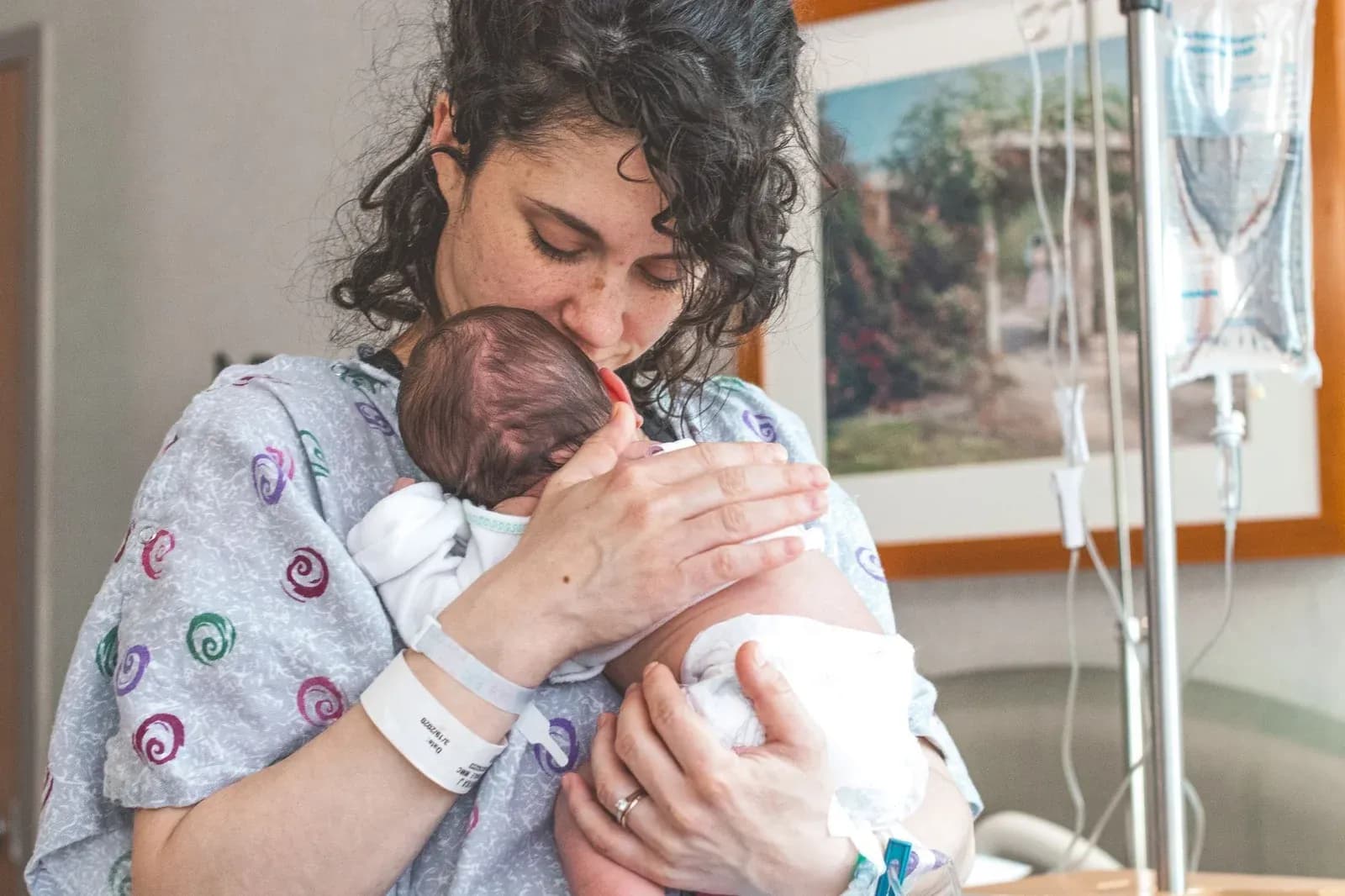

If you're expecting, the chance that your baby arrives before 37 weeks depends a lot on where you live. In March of Dimes' 2026 Report Card, released on November 17, Vermont had the lowest preterm birth rate in the country, 8.0%, and the best grade, an A- (no state earned a full A). Mississippi had the highest, 14.9%, and an F. You can look up your own state's grade and rate on March of Dimes' Report Card page.
Across the US, 10.4% of babies were born preterm in 2025, the same rate for the fourth year in a row, and the country got a D+ again. That came to nearly 380,000 babies born early. Half of all states received a D or an F, and only nine met the Healthy People 2030 target of 9.4%.
Seven states got an F: Mississippi, Louisiana (13.7%), Alabama (13.1%), West Virginia (12.7%), Arkansas and Georgia (both 11.9%) and South Carolina (11.8%). After Vermont, the lowest rates are in New Hampshire (8.3%), Idaho (8.6%), Oregon (8.8%) and Washington (8.9%). California gets a B- at 9.1%, New York a C+ at 9.5%, Florida a D+ at 10.7% and Texas a D- at 11.2%.
Maternal deaths have fallen back to pre-pandemic levels, at 17.9 for every 100,000 live births in 2024, and the share of mothers starting prenatal care in the first trimester has risen to 76.3%. March of Dimes says women insured through Medicaid account for most of that increase. Dr. Michael Warren, March of Dimes' chief medical and health officer, called these two results "bright spots" that "show that progress is possible."
March of Dimes says early and consistent prenatal care can help promote healthy pregnancies and reduce the risk of preterm delivery. The report card also tracks the conditions that make an early birth more likely: high blood pressure, diabetes, smoking and an unhealthy weight before pregnancy, and high blood pressure during it.
Nearly 100 Women a Day Have a Life-Threatening Complication at Birth
Life-threatening complications during labor and delivery, known as severe maternal morbidity, are rising, and they now affect nearly 100 women a day.
“Serious complications can have lasting consequences for a mother's health, and substantial racial disparities persist in maternal and infant health.”
— Dr. Michael Warren, Chief Medical and Health Officer, March of Dimes
March of Dimes reports that the share of births to mothers with diabetes before pregnancy, meaning type 1 or type 2 and not gestational diabetes, is up 7.7%. The share with high blood pressure before pregnancy is up 5.9%, and the share with high blood pressure during pregnancy, which includes preeclampsia, is up 5.8%.
About 1 in 4 first-time mothers with a low-risk pregnancy, meaning one full-term baby positioned head-down, now gives birth by Cesarean: 26.8%. That rate has crept up a little every year, and the latest increase was statistically significant, with more than 330,000 of these mothers having a C-section. March of Dimes says the trend can put more women at risk.
Black Mothers and Mothers on Medicaid Have Higher Preterm Birth Rates
Babies of mothers on Medicaid were born preterm at a rate about a fifth higher than babies of privately insured mothers over 2023 to 2025: 11.7% against 9.6%.
Among babies of Black mothers, 14.8% were born preterm over the same three years. The rate was 12.5% for babies of American Indian and Alaska Native mothers and also for babies of Pacific Islander mothers, 9.5% for babies of white mothers and 9.2% for babies of Asian mothers. Maternal death rates among Black and American Indian and Alaska Native women are 3 to 4 times the rate among Asian women, who have the lowest.
In Mississippi, the overall preterm rate fell from the year before, but 18.8% of babies born to Black mothers there arrived early, against 10.9% for babies of Hispanic mothers, the lowest in the state.
US Infant Mortality Fell Slightly to 5.5 Deaths per 1,000 Births
The US infant mortality rate was 5.5 deaths for every 1,000 live births in 2024, and more than 20,000 babies died before their first birthday. Among babies born to Black mothers, the infant mortality rate is twice the national rate. Rates are highest in the South and Midwest, and Mississippi, Arkansas, Delaware and Louisiana have some of the highest in the country. North Carolina cut its infant mortality rate by more than 10%, the only statistically significant improvement in any state, although March of Dimes says racial gaps there got worse.
49 States and DC Now Cover New Mothers on Medicaid for a Full Year After Birth
If you're on Medicaid, 49 states and DC let you keep that coverage for a full year after your baby is born. In 28 states and DC, Medicaid must pay for doula care, and only 10 states and DC give 12 weeks of paid family leave.
On the rise in high blood pressure and diabetes, Dr. Warren said: "We need consistent, coordinated care before, during, and after pregnancy to identify and manage conditions, such as hypertension and diabetes, and address gaps in care that leave too many moms and babies behind."
FAQ
How does March of Dimes grade preterm birth?
What is the difference between early and late preterm birth?
How is severe maternal morbidity measured?
How many births does Medicaid pay for?
Enjoying this article?
Subscribe to our newsletter and never miss a story. No spam, ever.